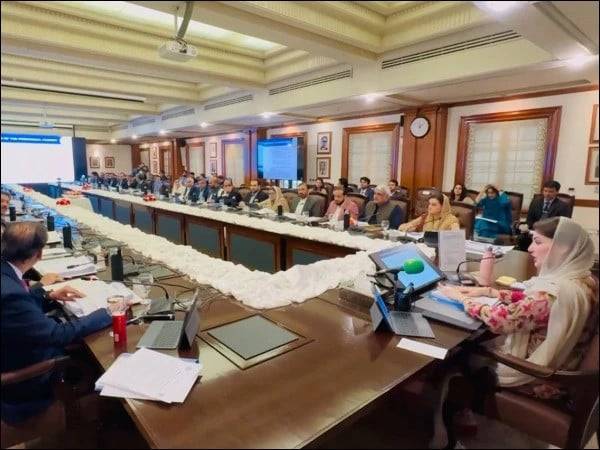

The Punjab cabinet, chaired by Chief Minister Maryam Nawaz, approved a wide range of policy decisions, development projects and legal reforms during a high-level meeting in Lahore while also paying tribute to the Prime Minister, the Field Marshal, and PML-N President Nawaz Sharif on the first anniversary of “Marka-e-Haq”.
During the meeting, the cabinet approved the recruitment of teaching staff on contract through a special selection committee and formally endorsed summer holidays for schools across Punjab from 22 May until 23 August, the 24NewsHD TV channel reported on Monday.
The cabinet also approved the “Apna Khet, Apna Rozgar” scheme for residents of Cholistan and riverine areas. The chief minister directed authorities to ensure that citizens could access complete information about the programme through a single online platform.
Among the major infrastructure decisions, the cabinet approved salaries and allowances for the project management unit established for the Murree Glass Train project. Changes to the eligibility criteria and financial allocation of the “Maryam Ko Batayein” programme were also approved.
The meeting endorsed the draft of the Punjab Autism School and Resource Centre (Amendment) Act 2026 and approved the Punjab Control of Goonda and Anti-Social Behaviour Act 2025.
The cabinet further cleared flood protection measures aimed at preventing river erosion, approved agricultural transformation projects and subsidies for the Potohar region, and authorised the restructuring and capacity enhancement of the Provincial Disaster Management Authority.
Amendments to the Counter Violent Extremism Centre of Excellence Act 2025 and the Anti-Terrorism Act 1997 were also approved, alongside the establishment of a modern provincial traffic management and command centre.
The cabinet agreed to place Data Darbar Hospital under the control of the Auqaf Department and approved the creation of the Punjab General Insurance Company. Rules relating to lease and rental arrangements for plots in Garment City and other industrial zones were also endorsed.
In another major economic decision, the cabinet approved amendments to Lahore Development Authority land use rules to facilitate Special Economic Zones across Punjab. It also lifted a ban on new recruitment within the Punjab Mass Transit Authority.
The meeting approved the establishment of the Aquaculture Authority of Punjab and allowed the transfer of forest land for shrimp estate projects. Funding was also cleared for the construction of a flood embankment on Deg Nullah, along with support for commodity trading and EWR systems for farmers.
The Annual Development Programme for 2025-26 was expanded to include hill torrent projects in Rajanpur and Dera Ghazi Khan. The cabinet also approved the restoration of original names for government colleges that had attained university status and endorsed revised benefits for judicial officers under the National Judicial Policy.
Additional approvals included compensation payments for land acquired for a sewage treatment plant, extra funding for the construction of the road from Lala Musa to Maiwana, and an extension in the lease of government land for the Sultan Foundation in Toba Tek Singh.
The cabinet also upgraded the UET sub-campus in Narowal into the University of Engineering and Technology, Narowal, and approved amendments to the Punjab Public-Private Partnership Rules 2025 and the Punjab Delegation of Financial Powers Rules 2016.
Several legal and administrative measures were endorsed, including amendments to the Motor Vehicle Rules 1969 and the issuance of juvenile driving permits. The cabinet also approved the establishment of an additional sessions judge court in Hazro, Attock district, and regularised the allotment policy for TDA quarters in Bhakkar’s Mandi Town.
Additional development schemes worth Rs500 million for Sheikhupura district were included in the Annual Development Programme, along with road rehabilitation projects in Sahiwal, Mianwali and Faisalabad. Donations to the prime minister’s Austerity Fund 2026 were also approved.
The cabinet approved the appointment of vice chancellors for HITEC University and Lahore Garrison University and authorised the initiation of consultation with the chief justice regarding the appointment of the chairperson of the Punjab Environmental Tribunal.
Other decisions included amendments to the Societies Registration Act 1860, the designation of the Bank of Punjab as the financial agent for the Clean Air Programme, and approval of Punjab’s New Energy Vehicle Policy.
The cabinet also approved reforms related to the Punjab Boilers and Pressure Vessels Safety Board, amendments to PSTS Rules 2012 and Punjab Electricity Duty Rules 2012, and changes to the Punjab Criminal Prosecution Service Inspectorate Act 2018.
Among additional measures, the cabinet relaxed land requirements for the establishment of a THQ hospital in Bhurban, Murree, approved a policy framework for deregulating Pakistan’s sugar sector, and authorised appointments of presiding officers in labour courts in Lahore and Rawalpindi.
The meeting further approved changes to the location and name of the first Shrimp Estate in Muzaffargarh, abolished transfer fees for motorcycles up to 150cc to provide relief against rising fuel prices, and sanctioned funds for operational needs of the Home Department.
Amendments to the Stamp Act 1899 and measures to rationalise stamp duty in rural areas were also approved.
Addressing the meeting, Maryam Nawaz said the Punjab government would fully support anyone interested in establishing industries in the province. She directed industrialists to bring forward their construction plans and ordered authorities to make the industrial setup process easier.
She further said there should be no unnecessary hurdles in obtaining no-objection certificates and other approvals for industrial projects. The chief minister also warned against spending public funds without prior approval, stating that all expenditures must be communicated in advance.
Maryam Nawaz added that she would not tolerate a culture of burdening the government with unpaid liabilities and directed departments to clear all outstanding dues promptly. She said it was unacceptable for the government to receive services and delay payments.