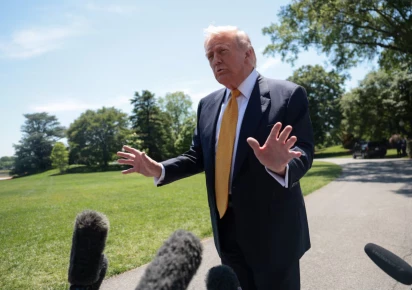

US President Donald Trump has said that he does not believe China’s involvement is necessary to resolve the ongoing conflict with Iran, as tensions continue to escalate in the Middle East.
Speaking to reporters ahead of his high-level visit to Beijing, Trump stated that the United States is capable of handling the situation independently. He added that the priority remains stopping Iran’s nuclear ambitions, even if it comes at economic cost for Americans.
“I don’t think we need any help with Iran,” Trump said. “We’ll handle it one way or another, peacefully or otherwise.”
The remarks come as hopes for a lasting ceasefire between the two sides continue to fade. More than a month after a temporary truce, no significant progress has been made toward a broader peace agreement.
At the same time, reports suggest Iran has strengthened its influence over the Strait of Hormuz, a key global oil shipping route. The waterway is crucial for nearly one-fifth of the world’s oil supply, raising concerns over global energy stability.
Iran has reportedly expanded its regional agreements with countries including Iraq and Pakistan to facilitate oil and gas shipments. This has added to concerns that Tehran is consolidating control over the strategic passage.
The US has maintained that no country should be allowed to impose control or tolls on maritime traffic through the strait. American and Chinese officials are said to have discussed the issue ahead of the upcoming summit.
Trump is expected to raise the Iran conflict directly with Chinese President Xi Jinping during talks in Beijing. Washington is also expected to urge Beijing to use its influence to pressure Tehran into negotiations.
US demands reportedly include curbing Iran’s nuclear programme and restoring freedom of navigation in the Strait of Hormuz. Iran, however, has made counter-demands including sanctions relief and compensation for war-related damages.
Trump also rejected concerns that rising economic pressure in the US could influence his approach to the conflict, saying domestic financial conditions would not affect his decisions on Iran.
The ongoing conflict has already disrupted global oil markets, pushing crude prices higher and increasing volatility in energy supplies.