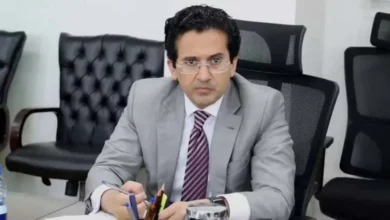
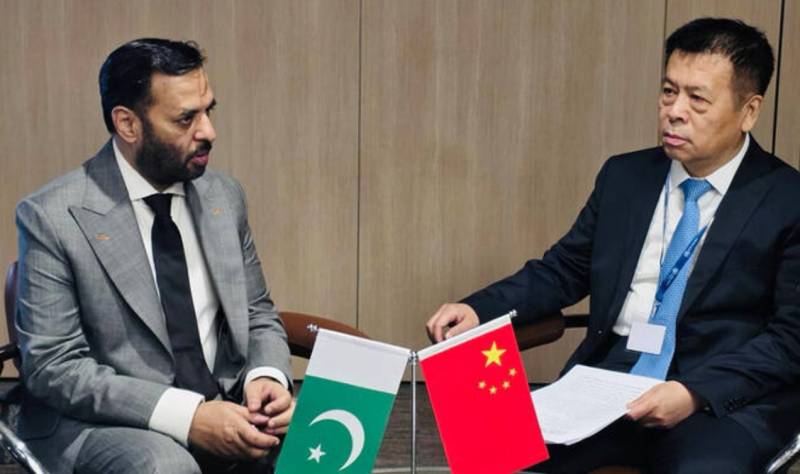

Federal Minister for National Health Services, Regulation and Coordination Syed Mustafa Kamal has proposed a joint vaccine production programme with China, stressing the need for urgent steps towards local production of pharmaceutical raw materials and active pharmaceutical ingredients (API).
Mustafa Kamal made these remarks during a meeting with China’s health minister on the sidelines of the 79th World Health Assembly in Geneva, where both sides discussed bilateral cooperation in the health sector and other issues of mutual interest.
He also discussed the promotion and importance of naphtha cracker projects in Pakistan, noting that 80 to 90 percent of pharmaceutical raw materials.
Mustafa Kamal said the Drug Regulatory Authority of Pakistan (DRAP) would achieve WHO Maturity Level Three status by early 2027, after which Pakistan’s pharmaceutical market would expand to 100 more countries.
The Chinese health minister said the friendship between Pakistan and China was based on strong and long-standing foundations and reaffirmed Beijing’s commitment to further expanding cooperation with Pakistan in the health sector.
He said China’s pharmaceutical industry would support Pakistan in enhancing its capacity for the production of raw materials and modern medicines.
The Chinese minister also announced that a global conference on traditional medicine would be held in October 2026 and said Mustafa Kamal would be formally invited to participate.
Both ministers reiterated their commitment to further strengthening the Pakistan-China “iron friendship.”
Hexavalent vaccine project
Mustafa Kamal also sought support from Gavi, the Vaccine Alliance for a pilot project introducing the hexavalent vaccine in remote and hard-to-reach areas, while also preparing for a future transition from the pentavalent vaccine to the hexavalent vaccine.
The minister made these remarks during a meeting with Dr Sania Nishtar on the sidelines of the 79th World Health Assembly to discuss vaccine coverage in Pakistan, future cooperation and measures to strengthen immunization services across the country.
The meeting also reviewed progress on vaccination coverage, implementation of the national vaccine policy, public awareness campaigns and Pakistan’s plans for local vaccine production.
Mustafa Kamal said Pakistan had approved its National Vaccine Policy and practical steps were under way for its implementation.
Pakistan wanted to benefit from the experiences of countries including Indonesia, China and Saudi Arabia in promoting local vaccine production and had requested technical guidance from Gavi, he said.
The minister thanked Gavi for its continued support and said protection of children’s health and expansion of vaccination coverage remained among the government’s top priorities.
He said Pakistan had fulfilled its co-financing commitment with Gavi, describing it as a sign of the government’s commitment and sustainability efforts.
Mustafa Kamal said the government would decide by mid-2027 on coordination and possible integration between the polio programme and the Expanded Programme on Immunization, adding that appointments to key positions had been completed to improve the performance of both programmes.
Dr Sania Nishtar thanked the health minister and said Pakistan remained a priority country for Gavi.
She said the organization would continue supporting Pakistan in increasing vaccination coverage and addressing resistance at the community level, while also stressing the importance of transparency and effective media campaigns.
Dr Nishtar assured support for the hexavalent vaccine pilot project in hard-to-reach areas and described Pakistan’s co-financing payment as a positive step towards government ownership and sustainability.
She said the Gavi team remained ready to support Pakistan in further strengthening its vaccination programme.