
Russian Ambassador to Pakistan Albert P Khorev has extended all-out support to Pakistan mediation efforts in the conflict between the US and Iran, saying Moscow supported all such steps which facilitate peaceful resolution of the dispute.
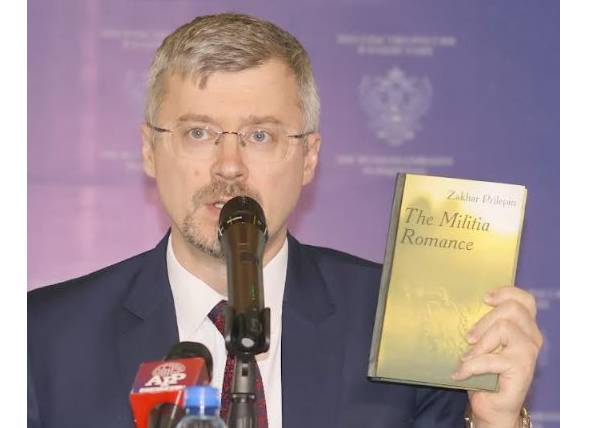
Addressing a news conference in Islamabad on Tuesday, Russian ambassador said Moscow will also back other initiatives which help in allaying the reservations of both Washington and Tehran.
Responding to a question regarding recruitment in Pakistan for fighting in Russia, the envoy said he cannot confirm such a report published in the Pakistani media.
He said the man who said to be was recruited here has not applied for a visa in the Russian Embassy so far. “Pakistani agencies are now investigating the matter. I hope result will be out soon,” he added.
Meanwhile, the envoy accused the Ukrainian leadership and its Western allies of prolonging the conflict in Ukraine, alleging widespread violations of ceasefire arrangements, forced mobilization, corruption, and disinformation campaigns against Russia.
Ambassador Khorev said Russia had recently commemorated the 81st anniversary of victory in the Great Patriotic War and reiterated Moscow’s stance against what he termed the “glorification of Nazism and neo-Nazism” in certain countries. He thanked Pakistan for supporting Russia-backed resolutions at the United Nations General Assembly aimed at combating Nazism and racial intolerance.
The envoy said Russia had declared a ceasefire from May 8 to May 11 as a goodwill gesture during Victory Day commemorations, but alleged that Ukrainian forces violated the truce more than 30,000 times. He claimed a similar pattern was witnessed during the Easter ceasefire in April.
According to the ambassador, Ukrainian President Volodymyr Zelensky was unwilling to end the conflict and continued pursuing large-scale mobilization despite growing public dissatisfaction. He alleged that Ukrainian authorities had issued hundreds of thousands of draft notices and that recruitment methods involved coercion and human rights abuses.
Ambassador Khorev also criticized Western countries, including members of North Atlantic Treaty Organization, for continuing military and financial support to Kiev. He claimed foreign mercenaries from several Western countries were participating in combat operations alongside Ukrainian forces and said additional Western military aid worth billions of dollars was under discussion for 2026.
The Russian envoy further accused Ukraine of targeting civilian and energy infrastructure, including attacks on the Turkish Stream and Blue Stream gas pipelines, as well as oil facilities linked to Kazakhstan’s exports. He warned such actions posed risks to regional energy security.
Raising concerns over internal conditions in Ukraine, Khorev alleged increasing cases of corruption, arms smuggling, narcotics trafficking, and human trafficking. He also accused senior Ukrainian officials of involvement in financial scandals and misuse of Western assistance.
The ambassador rejected international initiatives such as the “Register of Damage for Ukraine” and the proposed “Special Tribunal for the Crime of Aggression against Ukraine,” calling them politically motivated and legally invalid.
Referring to the 2022 killings in Bucha, Khorev described allegations against Russian forces as a “staged provocation” and part of what he termed a Western-led disinformation campaign against Russia.
He also revisited the issue of Ukrainian children transferred during the conflict, arguing that Russia had cooperated through mediation efforts involving Qatar and the Holy See to reunite children with their families.
The Russian ambassador further recalled the 2014 Odessa tragedy, in which dozens of anti-government protesters died during clashes following the Euromaidan unrest, saying those responsible had yet to be brought to justice.
Concluding his remarks, Khorev reaffirmed Russia’s position on Crimea, marking the anniversary of its reunification with the Russian Federation and criticizing the transfer of the “Scythian gold” archaeological collection from Dutch custody to Ukrainian authorities instead of Crimean museums.