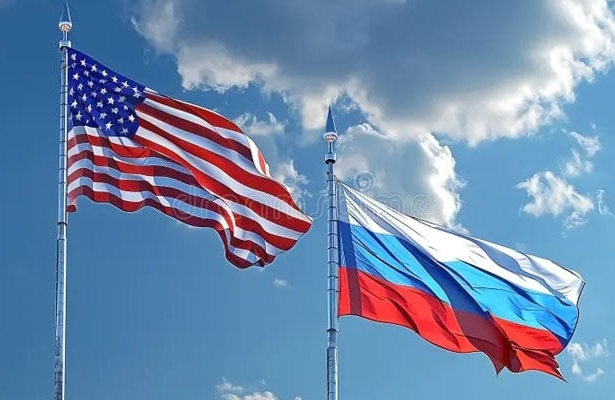

A new global security assessment has revealed that Russia and the United States together control nearly 82% of the world’s total nuclear weapons stockpile, underscoring the continued dominance of the two Cold War rivals in global strategic power.
According to the latest annual report released by the Stockholm International Peace Research Institute (SIPRI), Russia currently possesses approximately 4,380 nuclear warheads, while the United States holds around 3,700, placing them far ahead of other nuclear-armed states.
The report highlights that China has expanded its arsenal to around 620 warheads, followed by France with 290 and the United Kingdom with 225. In South Asia, India is estimated to have about 190 nuclear warheads, while Pakistan maintains approximately 170. Israel is believed to possess around 90, and North Korea holds an estimated 60 warheads.
Experts say the global nuclear landscape is undergoing a gradual but steady transformation, with several countries modernising their arsenals and investing in advanced delivery systems, including sea-based and air-launched capabilities.
SIPRI’s findings also draw attention to rising concerns over the integration of artificial intelligence into nuclear command-and-control systems. The institute warns that increased reliance on automated decision-making tools could introduce “new layers of uncertainty” and heighten the risk of miscalculation during crises.
The report specifically notes that South Asia remains one of the most sensitive nuclear regions in the world, where both Pakistan and India continue to expand and modernise their deterrence capabilities. As of January 2026, India’s arsenal is estimated at 190 warheads compared to Pakistan’s 170, with both countries advancing their nuclear triad capabilities across land, air, and sea platforms.

Despite these developments, analysts point out a key difference in strategic posture, with both nations adopting distinct doctrines and operational approaches shaped by regional security dynamics.
The SIPRI report warns that while global nuclear stockpiles have not increased dramatically in total number, the modernization of arsenals and the growing role of emerging technologies are reshaping the nature of nuclear deterrence.
Security experts emphasize that the combination of geopolitical tensions and technological change is creating a more complex and unpredictable global environment.
As major powers continue to invest in next-generation nuclear systems, the report calls for renewed diplomatic engagement and stronger arms control frameworks to reduce the risk of escalation in an already fragile international security landscape.