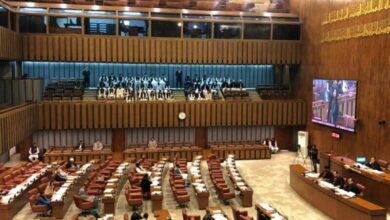
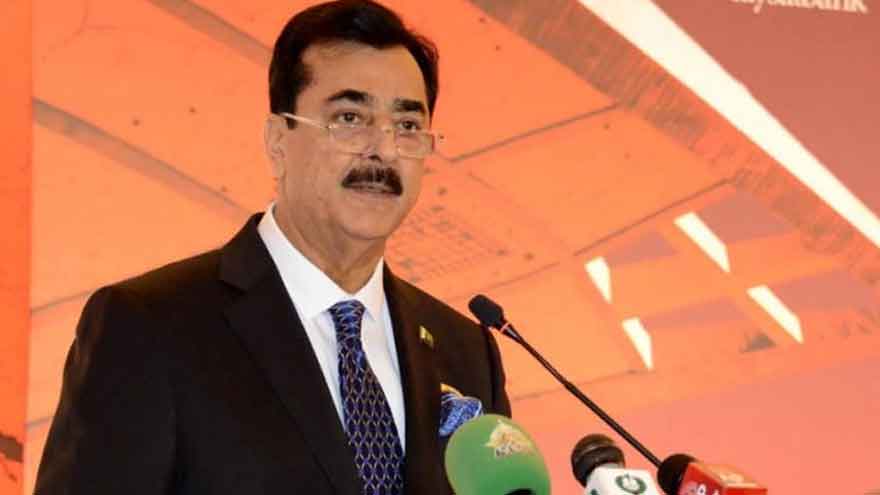

ISLAMABAD: Chairman Senate, Syed Yousaf Raza Gilani Monday urged the member states of the Organization of Islamic Cooperation (OIC) to move beyond declarations and translate their commitments into concrete measures for women’s economic empowerment, describing it as both an Islamic obligation and a prerequisite for sustainable development.
Addressing the opening session of the 9th OIC Ministerial Conference on Women as chief guest, held under the theme “Women’s Economic Empowerment for Sustainable Development,” Gilani said Islam had established the principles of justice, dignity and equal opportunity for women more than 1,400 years ago by guaranteeing their rights to education, property, inheritance, economic participation and social respect.
He said the teachings of the Holy Quran and the life of the Holy Prophet Muhammad (Peace Be Upon Him) continue to provide a timeless framework for ensuring women’s dignity and meaningful participation in society.
Welcoming ministers, parliamentarians, senior officials and delegates from OIC member states to Pakistan, the Chairman Senate paid tribute to the contributions of Muslim women in education, governance, business, science, diplomacy and public service.
He also hailed Shaheed Mohtarma Benazir Bhutto as the first woman Prime Minister of Pakistan and the Muslim world, saying her vision of women’s empowerment continues to inspire generations.
Gilani said women constitute nearly half of the population of OIC member states and stressed that no country could achieve inclusive growth while excluding half of its human capital from economic and political participation.
He reaffirmed Pakistan’s commitment to promoting women’s empowerment through education, entrepreneurship, digital inclusion, financial access and employment opportunities.
Highlighting Pakistan’s progress, he said the Benazir Income Support Programme (BISP) and Waseela-e-Taleem initiative had transformed the lives of millions of women by strengthening their economic security and improving girls’ access to education.
He also referred to initiatives supporting women-led enterprises, access to finance, digital skills and e-commerce, enabling women to contribute more effectively to national economic development.
The Chairman Senate said women’s meaningful participation in public life and decision-making was essential, noting that Pakistani women were serving with distinction as parliamentarians, judges, diplomats, civil servants, entrepreneurs, journalists and academics.
He emphasized that economic empowerment could not be achieved without ensuring women’s safety and protection.
He highlighted Pakistan’s strengthened legal and institutional framework, including legislation against workplace harassment, domestic violence and harmful traditional practices, as well as the establishment of women protection centres, helplines and gender-responsive support mechanisms.
He also described the Pakistan Women Parliamentary Leaders’ Portal as an important initiative to strengthen parliamentary collaboration and inclusive political participation.
Recalling his tenure as prime minister, Gilani highlighted landmark reforms, including the Protection against Harassment of Women at the Workplace Act, 2010, the Acid Control and Acid Crime Prevention Act, 2010, the Prevention of Anti-Women Practices Act, 2011, and the Women in Distress and Detention Fund (Amendment) Act, 2011. He said these measures laid a strong foundation for advancing women’s rights and protection in Pakistan.
He described the launch of BISP as one of Pakistan’s most transformative social protection initiatives, saying it empowered millions of women by placing financial resources directly in their hands. He also recalled that his government had declared December 22 as Working Women’s Day and established the Women’s Parliamentary Caucus to keep women’s issues at the forefront of parliamentary policymaking.
The Chairman Senate underscored that education and healthcare remained the cornerstones of sustainable women’s empowerment and highlighted Pakistan’s continued efforts to expand girls’ education through scholarships, stipends and targeted initiatives, alongside investments in maternal and community healthcare.
Expressing concern over the challenges faced by women affected by conflict, occupation, displacement, poverty, climate change and humanitarian crises, Gilani called for stronger cooperation among OIC member states to exchange best practices, mobilize resources and develop innovative policies to address the evolving needs of women across the Muslim world.
As the founding chairman of the Inter-Parliamentary Speakers’ Congress (ISC), he emphasized the importance of parliamentary diplomacy and reaffirmed Pakistan’s commitment to working closely with OIC member states and the Parliamentary Union of the OIC Member States (PUIC) to advance a shared agenda for women’s empowerment rooted in common Islamic values.
Gilani urged OIC member states to adopt measurable targets for expanding girls’ education, increasing women’s participation in leadership and the workforce, strengthening protection against gender-based violence, promoting financial inclusion, investing in digital skills and entrepreneurship, and ensuring effective accountability mechanisms to translate commitments into tangible progress.
He expressed confidence that through unity and collective action, the Muslim world could unlock the immense potential of millions of women and build a more prosperous, inclusive and peaceful future for generations to come.