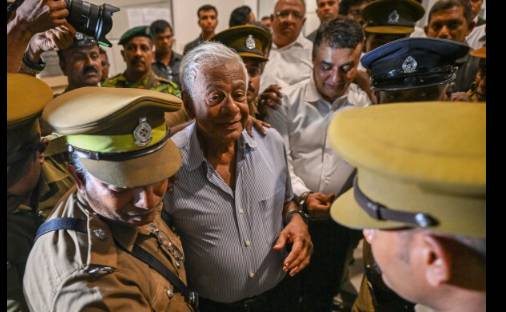

Two top former Sri Lankan security officials sentenced to death for failing to prevent the deadly 2019 Easter bombings will appeal against their convictions, their lawyer said on Saturday.
Former defence ministry secretary Hemasiri Fernando and former police inspector-general Pujith Jayasundara were sentenced to death by a three-judge bench of the Colombo High Court in a 2-1 decision on Friday.
The attacks, blamed on homegrown Islamist extremists, killed 279 people, including 45 foreigners, and wounded more than 500.
Lawyer Chaminda Athukorale said the pair would file an appeal in the Supreme Court within two weeks.
“The dissenting judgment explains why the two accused had no motive to kill and no links with the actual perpetrators of the bombings,” Athukorale told AFP.
Sri Lanka has not carried out a death sentence since 1976, maintaining an unofficial moratorium on capital punishment.
There are 817 people on death row, according to government figures shared with parliament in February, with sentences usually commuted to life imprisonment.
Fernando, 76, and Jayasundara, 66, are being held in a maximum-security prison in the capital.
They were found guilty at the special fast-track court on Friday of failing in their duties to stop the deadly attacks on April 21, 2019, that targeted three churches and three hotels.
The two men were discharged by another High Court ruling in February 2022 that found there was no evidence to try them for murder or for aiding and abetting the crime.
However, the state appealed against that decision and the Supreme Court ordered the retrial that resulted in Friday’s verdict and sentencing.
The court was told during the proceedings that an Indian intelligence agency had alerted Sri Lanka on April 4, 2019, to a possible suicide attack by Islamist extremists but authorities failed to act.
Under a previous civil action, Fernando and Jayasundara were ordered to pay 125 million rupees ($372,464) in damages to survivors of the attacks.