
A renewed debate over the creation of new provinces in Pakistan has gathered political momentum after two major coalition partners publicly endorsed Interior Minister Mohsin Naqvi’s proposal to restructure the country’s administrative system. However, the ruling Pakistan Muslim League-Nawaz (PML-N) has yet to officially comment, fueling speculation over its stance on the sensitive issue.
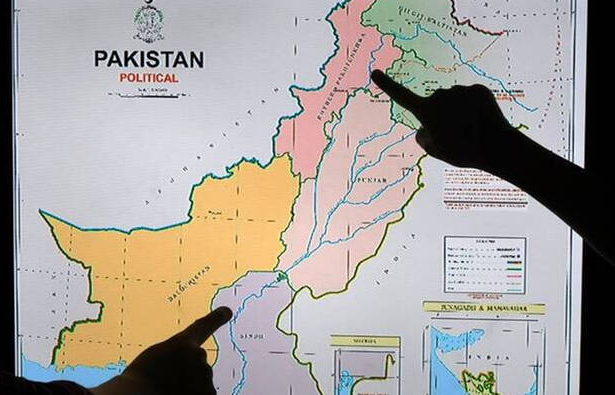
The discussion began after Naqvi argued that Pakistan’s existing administrative framework had become ineffective and called for a national consensus on establishing smaller provinces to improve governance and public service delivery. His remarks quickly drew support from coalition allies, including the Muttahida Qaumi Movement-Pakistan (MQM-P) and the Istehkam-e-Pakistan Party (IPP).
Federal Health Minister Mustafa Kamal described the proposal as an urgent national necessity rather than a political choice, stressing that decentralizing administrative powers was essential for effective governance. The MQM-P has long advocated the creation of an additional province in Sindh, making the party one of the strongest supporters of the initiative.
Privatization Minister Abdul Aleem Khan of the IPP also endorsed the proposal, suggesting that each of Pakistan’s four existing provinces could eventually be divided into three administrative regions. He argued that smaller provinces would bring government closer to the people and reduce the hardships faced by citizens traveling long distances to provincial capitals.
Despite growing support from coalition partners, the proposal faces significant constitutional and political challenges. Any change to provincial boundaries requires a two-thirds majority in the affected provincial assembly, making consensus difficult to achieve. The Pakistan Peoples Party (PPP), which governs Sindh and is also part of the federal coalition, has expressed strong reservations, warning that such a move could create more problems than solutions.
Opposition leaders have also criticized the proposal, arguing that the government lacks the political mandate for such a major constitutional change. They insist that strengthening democratic institutions and improving governance should take priority over redrawing provincial boundaries.
Political analysts have offered differing views on the initiative. Some believe creating new provinces could deepen ethnic and regional divisions, while others see the debate as an attempt to shift public attention away from pressing national issues, including recent unrest in Azad Jammu and Kashmir and ongoing security challenges in Balochistan.
Many experts argue that empowering local governments under the 18th Constitutional Amendment would be a more practical and effective way to improve governance without altering provincial boundaries. Mustafa Kamal also acknowledged that stronger local governments are essential regardless of whether new provinces are eventually created.
With the PML-N maintaining silence and key coalition partners taking opposing positions, the proposal has opened a fresh political debate that is likely to remain at the center of Pakistan’s national discourse in the coming months.