
Pakistan Tehreek-e-Insaf (PTI) has approached the Supreme Court with a contempt petition, alleging that its order to transfer party founder Imran Khan to Shifa International Hospital was not implemented.
The petition was filed by Imran Khan’s sister, Uzma Khan, through her lawyer Uzair Bhandari, with PTI Secretary-General Salman Akram Raja also appearing before the Supreme Court in connection with the case.
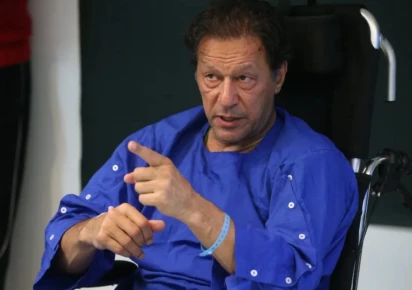
The development follows Imran’s transfer to the Pakistan Institute of Medical Sciences (PIMS) in the early hours of Friday for a medical examination. He was subsequently taken back to Adiala Jail after doctors declared him medically fit.
The government defended the decision to use PIMS instead of Shifa International Hospital, saying security concerns arising from the presence of PTI workers around the route and outside the private hospital made the transfer difficult.
Information Minister Attaullah Tarar said the medical examination was conducted by a team that included a physician, cardiologist and ophthalmologist. He later clarified that doctors from Shifa Hospital were also present at PIMS during the examination. Imran’s sister was also present.
However, the PTI petition maintained that the government had failed to comply with several directions issued by the Supreme Court. It specifically alleged that Imran was not transferred to Shifa International Hospital, the medical board ordered by the court was not properly constituted, the examination was not conducted at the designated hospital and Dr Faisal Sultan was not included on the board.
The petition asked the Supreme Court to initiate contempt proceedings against those responsible for the alleged non-compliance. It also sought show-cause notices, personal appearances of the respondents and appropriate punishment under the law.
The petition named Islamabad Chief Commissioner Sohail Ashraf, the interior secretary, inspector general of prisons and the superintendent of Adiala Jail. Prime Minister Shehbaz Sharif, Law Minister Azam Nazeer Tarar and Information Minister Attaullah Tarar were also named as respondents.
PTI argued that security concerns could not be used as a justification for disregarding a judicial directive. It also cited previous Supreme Court judgments to argue that responsibility for implementing court orders ultimately rests with the executive authorities.
Salman Akram Raja later described the contempt proceedings as a professional legal step rather than a political move by PTI. He said the Supreme Court’s order had effectively not been implemented.
Raja said the decision could not have been taken by a junior administrative official and argued that whoever made the decision would have to explain the circumstances before the court.
He also explained why Interior Minister Mohsin Naqvi was not named as a respondent. According to Raja, there must be evidence directly connecting an individual to the decision before that person can be included in contempt proceedings.
The PTI lawyer further rejected allegations that Imran’s health was being used for political purposes, pointing out that Uzma Khan was not a PTI office-bearer and had raised the matter in her capacity as Imran’s sister.
The controversy follows the Supreme Court’s August 18 directive ordering Imran’s temporary transfer to Shifa International Hospital for treatment and directing the government to facilitate weekly meetings between him and his family.
The government subsequently challenged the decision through a review petition, arguing that transferring a convicted prisoner to a private hospital was inconsistent with the Pakistan Prison Rules, 1978. The review plea was later returned after objections concerning the required paperwork.
Meanwhile, lawyers supporting Imran have also criticised the government’s handling of the matter.
Speaking at the Lahore High Court Bar Association, Imran’s counsel Barrister Salman Safdar alleged that his client had been denied basic facilities and kept in isolation despite repeated court directions.
LHC Bar Association President Babar Murtaza also alleged that Imran had spent an extended period in solitary confinement and said failure to follow judicial orders could amount to a violation of fundamental rights and contempt of court.
Senator Hamid Khan warned that continued disregard for constitutional and judicial authority could increase political instability and public unrest.
The dispute has emerged as opposition parties move towards greater coordination in Parliament. Opposition leaders recently agreed to establish a joint opposition platform, with JUI-F chief Maulana Fazlur Rehman saying the alliance would seek a stronger political role amid growing governance and law-and-order challenges.