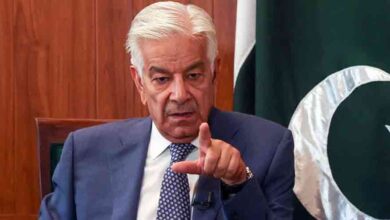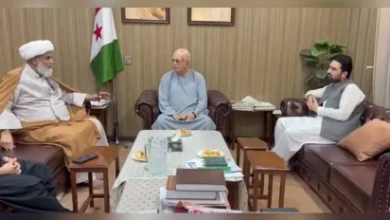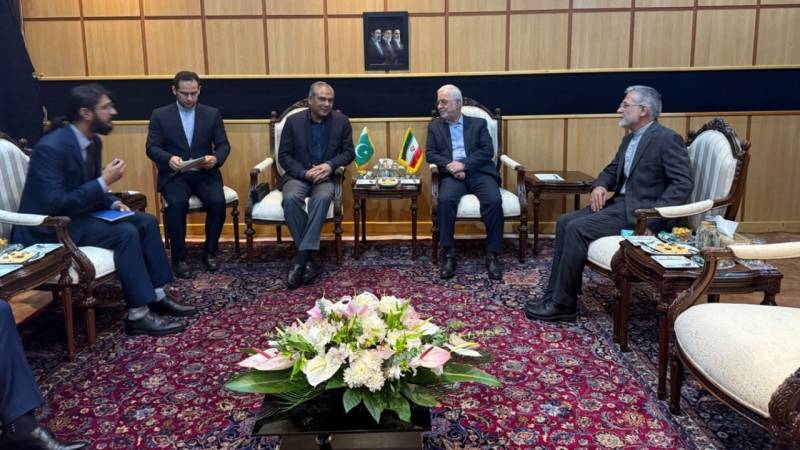

Federal Interior Minister Mohsin Naqvi arrived in Tehran on Monday on an official visit to Iran as diplomatic activity intensified over the months-long Iran-US conflict and the continued disruption of shipping through the Strait of Hormuz.
Iranian Interior Minister Eskandar Momeni received Naqvi on his arrival in the Iranian capital. The visit comes amid Pakistan’s efforts to support a negotiated settlement to the conflict and prevent further escalation in the region.
Pakistan has remained engaged with both sides during the crisis. During an earlier visit to Tehran in August, Naqvi said Pakistan and Iran had made “significant progress” in discussions aimed at de-escalating the conflict, reopening the Strait of Hormuz and moving towards a negotiated settlement.
Naqvi’s latest visit comes as Iran says it has conveyed through mediators its conditions for ending restrictions on the Strait of Hormuz, one of the world’s most important routes for oil and gas shipments.
Iranian parliament speaker Mohammad Bagher Ghalibaf, who has played a leading negotiating role, said Sunday that Tehran had clearly conveyed its conditions to Washington through intermediaries.
Ghalibaf said Iran would not return to the situation that existed before negotiations, including unrestricted passage through the strait, unless Tehran’s conditions were met and US commitments were honoured.
Iran and the United States remain locked in a confrontation nearly seven months after the conflict began with US-Israeli strikes on Iran on Feb. 28. Iran has restricted shipping through the Strait of Hormuz, while the United States has imposed its own naval pressure on Iranian ports and oil exports.
Mohsen Rezaei, secretary of Iran’s Supreme National Security Council, said Saturday that Tehran had communicated its conditions to the United States through Qatar.
Rezaei said the conditions included an end to the war on all fronts, the release of frozen Iranian funds and an end to the US naval blockade.
He also warned that Iran would respond with greater force if Washington launched further military action.
Rezaei said US military bases and commercial interests in the region could become targets of Iranian military and economic retaliation in the event of renewed attacks.
He said Iran was prepared for what he described as a “decisive war” if diplomacy failed.
The Iranian security official also claimed that Tehran had improved its military capabilities since the beginning of the conflict, including increasing the speed of some hypersonic missiles, strengthening air defences and developing electronic warfare systems.
Rezaei warned that US naval vessels could face Iranian attacks if another round of full-scale hostilities began and American forces remained deployed in waters near Iran.
Tensions rose further Monday when Iran’s Islamic Revolutionary Guard Corps warned that it would deploy new weapons and strike targets it had not previously attacked if the United States launched fresh military action.
IRGC spokesman Hossein Mohebbi said Iran had prepared for a prolonged conflict and would make significant changes to both its defensive and retaliatory operations in response to another attack.
He said any renewed fighting could involve new weapons, new targets and a wider geographical area.
The IRGC said some weapons developed by Iran had not yet been used during the conflict and could be deployed if fighting intensified.
The warnings came as low-level fighting continued around the Strait of Hormuz. Commercial shipping through the strategic waterway remains disrupted, although some traffic has resumed.
A tanker was struck by an unidentified projectile while entering the Strait of Hormuz on Monday, slightly injuring two crew members. The vessel was able to continue its journey.
Iran and the United States have maintained competing maritime restrictions as both sides seek leverage in possible negotiations.
Despite the tensions, diplomatic efforts have gained momentum ahead of this week’s United Nations General Assembly session in New York.
Iranian President Masoud Pezeshkian is expected to travel to New York to attend the 81st session of the UN General Assembly and is scheduled to address the gathering on Wednesday.
However, Iranian state media reported Monday that the United States had refused visas to some members of Pezeshkian’s delegation, including members of his communications team.
The United States has authorised visas for senior Iranian officials, including Pezeshkian and Foreign Minister Abbas Araghchi, but has imposed restrictions on the Iranian delegation’s movements and purchases while in New York.
Iranian media described the refusal to grant visas to some members of the delegation as a hostile move by the administration of US President Donald Trump.
Araghchi left Iran on Sunday evening and travelled to Qatar before his onward journey for the UN meetings.
The diplomatic activity comes as both Washington and Tehran publicly signal possible negotiations while continuing to exchange warnings over renewed military action.
Fighting has eased compared with earlier phases of the conflict, but sporadic incidents continue in and around the Strait of Hormuz.
The conflict has also widened tensions elsewhere in the Middle East. Iran-backed Houthi forces in Yemen have intensified fighting against forces supported by Saudi Arabia and have carried out missile and drone attacks on Saudi targets.
The escalation in Yemen and disruption of major energy routes have added pressure to international efforts to prevent another round of full-scale Iran-US fighting.
Oil prices have remained sensitive to developments around the Strait of Hormuz, although prices fell Monday as markets reacted to signs that diplomatic contacts between Washington and Tehran could intensify during the UN General Assembly meetings.
Naqvi’s arrival in Tehran therefore comes at a critical stage of the diplomatic push, with Pakistan continuing contacts with Iranian officials as regional and international efforts focus on restoring negotiations and preventing further escalation.