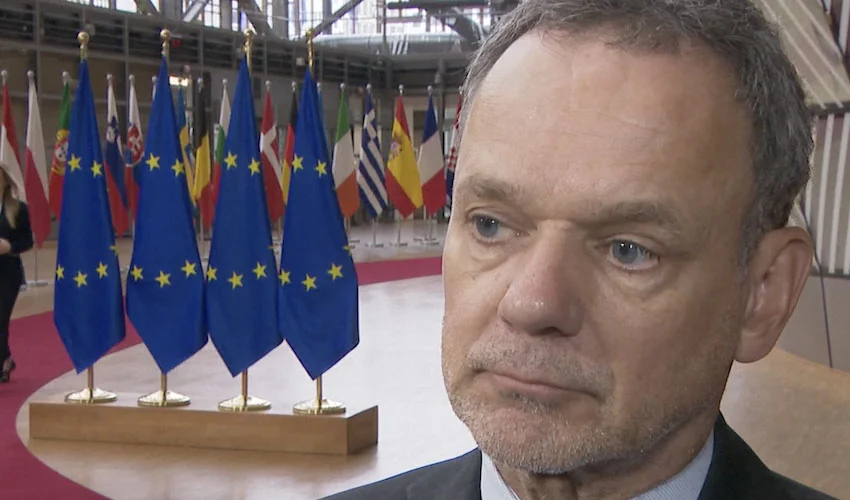

Dutch Foreign Minister Caspar Veldkamp has resigned after failing to convince his cabinet colleagues to adopt stricter sanctions against Israel over its military campaign in Gaza.
His departure deepens political uncertainty in the Netherlands as the caretaker government struggles to maintain unity ahead of October’s elections.
Veldkamp, a member of the New Social Contract party, said he faced “constant resistance” from fellow ministers when pushing for meaningful measures against Israel.
His proposals included:
-
Travel bans on far-right Israeli ministers Bezalel Smotrich and Itamar Ben-Gvir for inciting settler violence.
-
Revoking export permits for Dutch-made navy ship components, citing the risk of misuse in Gaza.
-
Calls for suspending the EU–Israel trade agreement, which Germany strongly opposed.
Speaking to reporters, Veldkamp said the escalating attack on Gaza City, Israeli settlement expansion in the West Bank, and building approvals in East Jerusalem made inaction unacceptable.
Pressure from parliament and EU dynamics
Veldkamp’s exit follows growing pressure from Dutch lawmakers—particularly opposition parties—who urged the government to take harsher measures independently if EU consensus remained blocked.
Al Jazeera’s Step Vaessen reported that Veldkamp’s frustration peaked as Germany blocked EU-wide sanctions, leaving the Netherlands hesitant while Israel’s military operations intensified.
Meanwhile, the Netherlands continues to play a role in Israel’s supply chain. Research cited by the Palestinian Youth Movement showed that components for F-35 fighter jets, used in Israeli airstrikes on Gaza, regularly pass through Rotterdam’s port.
Europe’s stance on settlement expansion
Earlier this week, the Netherlands joined 20 EU nations in condemning Israel’s approval of a major West Bank settlement expansion, calling it “unacceptable and contrary to international law.”
Despite these statements, critics argue that symbolic condemnations fall short of real sanctions, particularly as Gaza faces famine conditions confirmed by international hunger monitors.
No successor has been named, leaving the Netherlands without a foreign minister at a critical moment. The caretaker cabinet, in place since the coalition collapse on June 3, will likely manage foreign policy until a new coalition is formed after October elections—a process expected to take months.