
The Pakistan Telecommunication Authority (PTA) has announced that the 5G spectrum auction will take place on March 10. Officials said the schedule is unlikely to change. The government expects the sale to generate between $300 million and $700 million.
The auction will offer 597 MHz across several frequency bands. Three existing telecom operators are required to acquire a minimum of 100 MHz each. PTA Director General Licensing, Retired Brigadier Aamir Shahzad, explained that even a basic sale of 300 MHz without competitive bidding would yield $300 million. If all 597 MHz is sold competitively, revenues could reach $700 million, though that is considered less likely.
The auction will be conducted using a multi-round electronic clock format. The main allocation stage begins on March 10. During the first round, the 2600 MHz and 3500 MHz bands will be offered. Following the auction, the rollout of 5G services is expected to take three to six months, as additional infrastructure is needed.
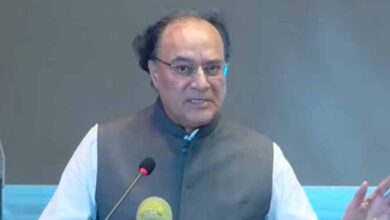
PTA Chairman Hafeezur Rehman said the auction will improve both service quality and data speeds. He highlighted that over the last five years, around 50 million new mobile users joined networks, but spectrum availability has grown slowly.
Rehman added that better data services and expanded coverage will also increase the average revenue per user (ARPU) for telecom operators. ARPU has risen from $0.7 to $1.3, and it is expected to grow further as subscribers use more data. The PTA expects mobile broadband speeds to increase by roughly 25% after the auction.
To encourage investment, the government has introduced several incentives. The annual right-of-way fee, previously Rs36,000 per kilometre, has been eliminated. Telecom operators have also placed orders for 5G equipment, and local manufacturing of 5G-enabled smartphones has begun, with 500,000–600,000 units already produced.
Operators will have one year to make capital investments without upfront spectrum payments. This allows them to focus on improving service quality. Additionally, they are required to expand 5G coverage beyond Islamabad, Karachi, Lahore, Peshawar, and Quetta. Fiber-to-the-site ratios will rise from 20% to 35% by 2035.
Minimum download speeds for 4G will increase from 4 Mbps to 20 Mbps by 2026–27, and 50 Mbps by 2030–35. For 5G, speeds will start at 50 Mbps and rise to 100 Mbps by 2030–35. Latency targets will be reduced to 35 milliseconds, while upload speeds will remain 20% of download speeds.