The Pakistan Stock Exchange (PSX) opened the week deep in the red on Monday as escalating US-Iran tensions, which have also roiled global equity markets, triggered panic selling.
The PSX’s benchmark KSE-100 Index settled at 151,972.99 points, down 16,089.17 points, or -9.57%, from the previous close of 168,062.16, marking its highest ever one-day fall.
The index touched an intraday high of 159,328.59 (down 8,733.57 points, or -7.23%) and a low of 151,747.96 (down 16,314.2 points, or -9.71%), compared with the previous close of 168,062.16.
It plunged over 15,000 points to start the session, prompting a trading halt for about an hour under the exchange’s risk-management rule before trading resumed.
“Due to panic selling, PSX fell 9%. Leveraged position coupled with Iran and Afghanistan positions added fuel to the fire,” Topline Securities CEO Mohammed Sohail said.
AAH Soomro, an independent investment and economic analyst, said: “This is panic mode. May last a few days. Keep an eye on Oil. Below 80 should settle the market by Friday.”
Trading was halted for 45 minutes till 10:27am before resuming.
Military strikes by the United States and Israel on Iran showed no sign of lessening, while Iran responded with missile barrages across the region.
Topline said the conflict has raised economic risks for Pakistan despite no direct involvement, primarily through the prospect of higher oil prices (given Pakistan’s reliance on imported energy), imported inflation, and weaker investor confidence as tensions flare on both the eastern and western sides of Pakistan.
In the Mid East, the UAE and Kuwait temporarily closed their stock markets citing “exceptional circumstances”.
For Europe, EUROSTOXX 50 futures shed 1.4% and DAX futures slid 1.3%. On Wall Street, S&P 500 futures and Nasdaq futures both lost 0.6%.
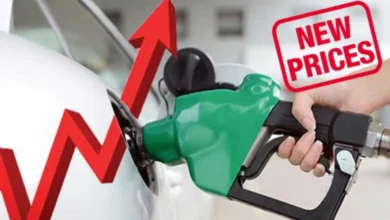
Meanwhile, oil prices soared as Brent briefly spiked almost 14% and West Texas Intermediate nearly 12% at the start of business after the attack on Iran, which martyred Supreme Leader Ayatollah Ali Khamenei and other senior officials.
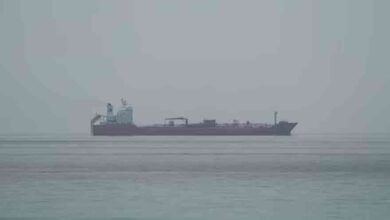
The bombings have also seen the vital Strait of Hormuz — through which around 20% of global seaborne oil passes — effectively shut and several ships attacked, fanning supply fears. In a note, Topline Research warned the Strait of Hormuz risk remains central.
Topline said crude prices rose 6–7% during Monday’s session and have increased about 15% over the last seven sessions amid heightened volatility.
On inflation, the note said a 10% rise in crude oil prices could lift inflation estimates by 40–50 basis points, with indirect effects expected to filter through over subsequent days and weeks.
On the external account, Topline estimated Pakistan’s annual petroleum imports (crude, refined products, liquefied natural gas and liquefied petroleum gas) at $15–16 billion, and said every 10% move in oil prices could add $1.5–1.6 billion to the import bill.
It also flagged other oil-linked imports such as edible oil ($4 billion), coal ($1 billion) and rubber/tyres (under $1 billion).
Topline also said the Pakistan rupee could face pressure if higher imports coincide with growing uncertainty in the Middle East, a region it noted accounts for more than half of Pakistan’s remittances, though it viewed the State Bank of Pakistan (SBP) foreign exchange reserves as “comfortable” due to proactive interventions and improved buffers.
From a valuation standpoint, Topline said the market’s decline has pushed it back to what it described as an “attractive level,” estimating it is now trading at below 6.5x FY2027 price-to-earnings (PE) for its universe against a historic average of 6.9x, arguing that further weakness could create selective entry points if volatility stabilises.
On Friday, KSE-100 fell by 830.92 points or 0.49% to 168,062.17 points from 168,893.09 points. The highest index of the day was recorded at 169,379.97 points, while the lowest was 165,811.88 points.
Topline said the market has now fallen about 19% from its recent peak of 189,000 reached on January 23, 2026, with volatility likely to persist given the evolving nature of the conflict and the involvement of multiple countries.