
European Commission President Ursula von der Leyen has called for urgent action to restore freedom of navigation in the Strait of Hormuz, warning that the ongoing closure of the vital waterway is causing severe damage to global trade and energy security.
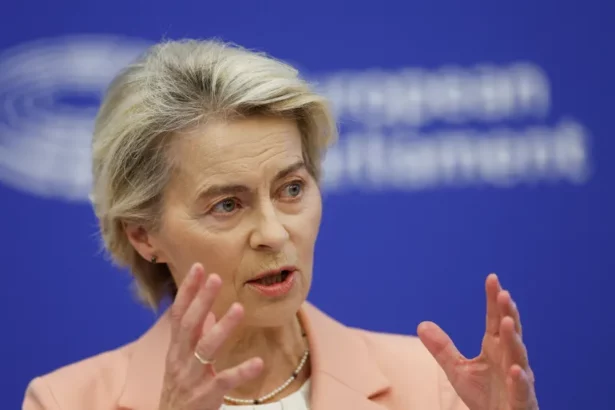
Speaking on Friday, von der Leyen described the situation as “paramount” for Europe and the wider international community. “The ongoing closure of the Strait of Hormuz is greatly damaging. The restoration of the freedom of navigation is of paramount importance for us,” she said.
The Strait of Hormuz, a narrow passage linking the Persian Gulf with the Arabian Sea, serves as one of the most critical chokepoints for global oil and gas shipments. Any disruption in its operations has immediate consequences for energy markets and international trade. With tensions in the Middle East escalating, the closure has already triggered concerns about rising costs and supply shortages.
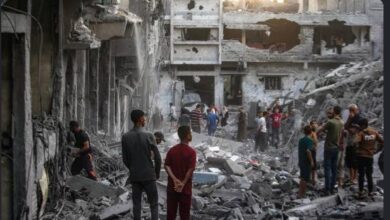
Von der Leyen also addressed the broader regional instability, pointing to Israel’s bombardment of Lebanon as a major obstacle to peace. “There can be no stability in the Middle East while Lebanon continues to be bombarded,” she said, linking the humanitarian crisis to the wider geopolitical turmoil.
Her remarks come at a time when European nations are grappling with the economic fallout of energy disruptions. Analysts warn that prolonged instability in the Strait of Hormuz could push oil prices higher, strain supply chains, and undermine recovery efforts across Europe. The European Union has long emphasized the importance of secure maritime routes, and von der Leyen’s comments reinforce the urgency of coordinated international action.
Diplomatic observers note that the EU’s position reflects both economic necessity and humanitarian concern. By highlighting Lebanon’s suffering alongside the strategic importance of Hormuz, von der Leyen underscored the interconnected nature of regional conflicts and their global impact.
The call for restoring navigation rights also aligns with international law, which guarantees freedom of passage through straits used for global commerce. Any prolonged closure not only disrupts trade but also risks escalating military tensions among regional powers.
European leaders have increasingly voiced frustration over the lack of progress in stabilizing the Middle East. Von der Leyen’s intervention signals a stronger push from Brussels to ensure that humanitarian and economic priorities remain central to international diplomacy.
For Europe, the stakes are high. Energy imports from the Gulf region remain vital, and disruptions in Hormuz directly affect households and industries across the continent. Von der Leyen’s remarks highlight the EU’s determination to safeguard its interests while pressing for peace in a region that continues to face devastating conflict.
Her statement also reflects the EU’s broader strategy of balancing economic resilience with moral responsibility. By linking freedom of navigation to human suffering in Lebanon, she framed the crisis not only as a matter of trade but also as a test of international solidarity.
As tensions persist, the EU’s call for urgent restoration of navigation in Hormuz may serve as a rallying point for global partners seeking stability. Whether the appeal translates into concrete action remains uncertain, but von der Leyen’s message leaves little doubt about Europe’s priorities: secure trade routes, respect for humanitarian law, and a renewed push for peace in the Middle East.