
The recent US–Israel confrontation with Iran has acted as a geopolitical inflection point, reshaping both regional alignments and broader international strategic calculations. Iran’s demonstrated resilience, coupled with its capacity for calibrated yet forceful retaliation, has disrupted long-standing assumptions about power asymmetry in the Middle East. What was widely perceived as a swift, decisive campaign has instead evolved into a protracted and destabilizing confrontation with far-reaching consequences.
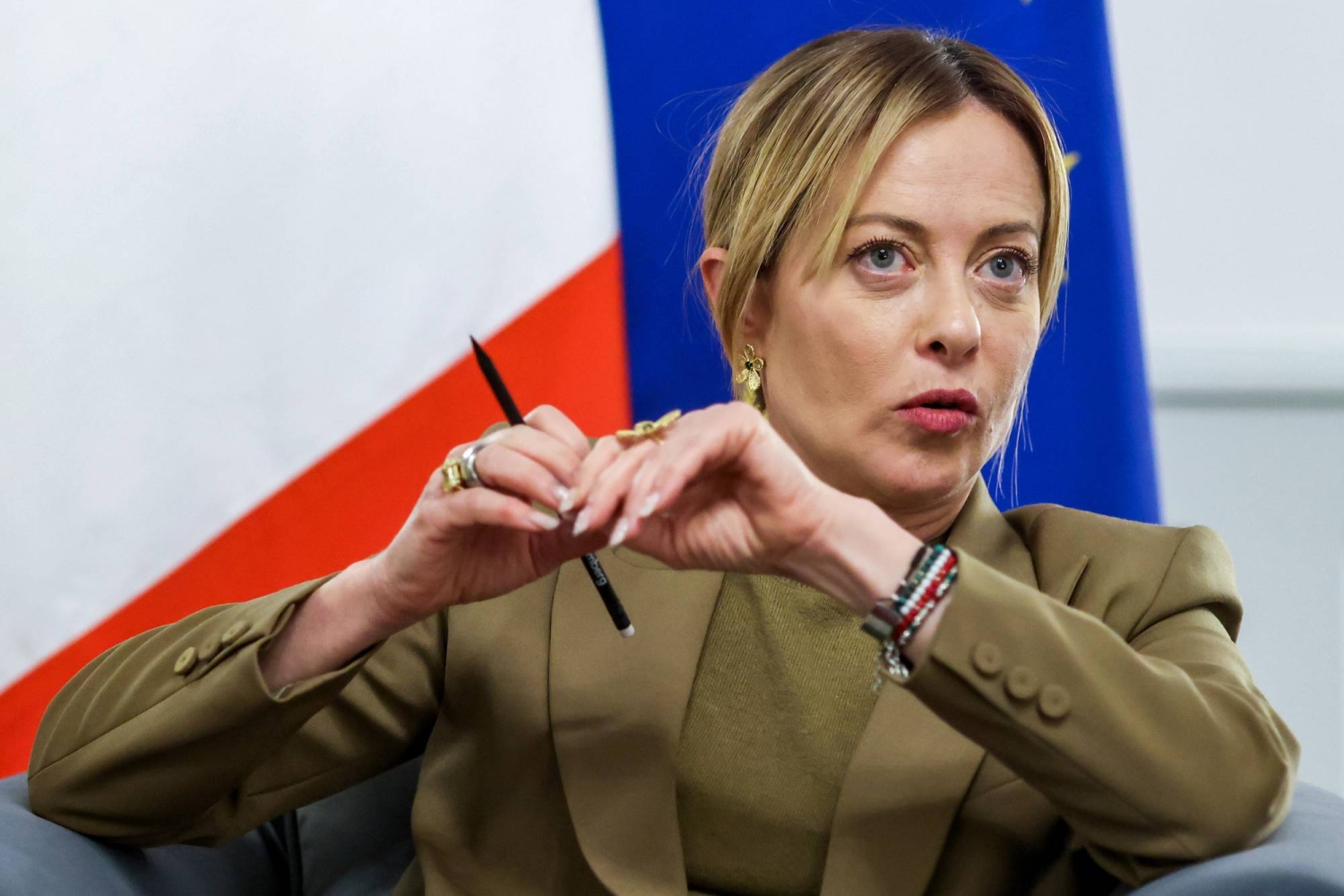
Notably, the war—widely seen as having been initiated under the influence of Benjamin Netanyahu—failed to secure meaningful international endorsement. Even the NATO alliance refrained from direct involvement, reflecting a broader reluctance among Western powers to be drawn into an open-ended conflict. Within the Muslim world, responses have been fragmented and largely rhetorical; while certain Gulf states initially appeared receptive to strategic alignment against Iran, the evolving military and economic risks—particularly Iranian strikes targeting US-linked assets in the Gulf—have prompted a more cautious recalibration. Against this backdrop of global hesitation and strategic ambiguity, a striking development has emerged within Europe. Countries such as Spain, Italy, France, and UK, which had already shown reluctance to endorse the war, are increasingly perceived as willing to challenge the prevailing US–Israel posture. At the centre of this shift stands Giorgia Meloni, whose recent actions have drawn both scrutiny and admiration.
Meloni’s decision to suspend the automatic renewal of a longstanding defence cooperation agreement with Israel represents a significant and calculated departure from Italy’s traditionally steadfast alignment. Far from being a symbolic gesture, the move signals a deliberate willingness to reassess entrenched alliances in light of evolving geopolitical and humanitarian considerations. It is, by any measure, a politically consequential act—one that has invited sharp criticism from figures such as Donald Trump while simultaneously repositioning Italy within the European diplomatic landscape.
Meloni’s government, once regarded as among Israel’s closest partners in Europe, has in recent weeks adopted an increasingly critical stance, particularly in response to Israeli military operations in Lebanon, which have resulted in significant civilian casualties and infrastructural devastation. Tensions escalated further following reports that Israeli forces fired warning shots at Italian troops operating under a United Nations mandate—an incident that not only heightened diplomatic friction but also underscored the risks of continued alignment. Speaking in Verona, Meloni articulated a doctrine of conditional partnership: alignment, she implied, is neither unconditional nor immune to reassessment. Her government’s decision to halt the defence agreement reflects this principle—an assertion that strategic cooperation must remain contingent upon evolving realities rather than historical inertia.
Yet, the broader significance of this development lies in the contrast it invites. While a European leader—historically aligned with Israel—has demonstrated a readiness to translate concern into concrete policy, much of the Muslim world, despite possessing deeper cultural, religious, and geopolitical stakes, continues to exhibit a pattern of cautious restraint – a shameful inaction. Responses have largely remained confined to diplomatic statements, with limited evidence of coordinated or sustained strategic action.
This disparity highlights enduring structural challenges within the Muslim world: political fragmentation, competing national priorities, and a reliance on external power structures that collectively constrain decisive action. Institutions such as the Organisation of Islamic Cooperation, envisioned as vehicles for collective diplomacy, have often struggled to transcend declaratory consensus and deliver unified, actionable policy frameworks.
Meloni’s move, undertaken in consultation with senior figures including Antonio Tajani, Guido Crosetto, and Matteo Salvini, also reflects acute domestic political awareness. Analysts such as Lorenzo Castellani note that segments of Italy’s electorate—even within the centre-right—are increasingly critical of Israeli actions and apprehensive about the broader economic and security implications of regional instability, particularly in relation to Iran.
Israel, for its part, has sought to downplay the significance of Italy’s decision, characterising the suspended agreement as largely symbolic. However, symbolism in international relations often carries strategic weight. Coming on the heels of Meloni’s public criticism of Trump and amid escalating tensions under Netanyahu’s leadership, the decision contributes to a perceptible shift in the diplomatic tone of Western alliances.
This shift was further underscored when Trump issued a notably blunt public rebuke of Meloni in an interview with Corriere della Sera, accusing her of lacking resolve and expressing disappointment in what he described as her departure from expected transatlantic solidarity. He criticised her refusal to support efforts to reopen the strategically vital Strait of Hormuz, underscoring a widening divergence in strategic priorities.
Despite the criticism, Meloni has received robust backing within Italy. Figures such as Tajani, leader of Forza Italia, have reaffirmed the importance of maintaining alliances grounded not merely in loyalty, but in mutual respect and candour—principles that implicitly justify Rome’s recent posture. Originally signed in 2003 under Silvio Berlusconi and enacted in 2006, the Italy–Israel defence agreement encompassed cooperation in procurement, training, and military exchanges, with provisions for automatic renewal every five years. Its suspension therefore constitutes not just a procedural adjustment but a deliberate and strategically communicative act.
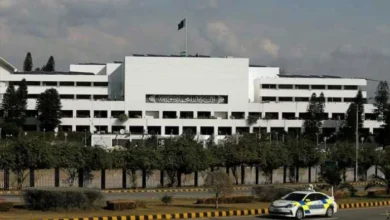
Against this complex and rapidly evolving backdrop, Pakistan has emerged as an increasingly adept and pragmatic diplomatic intermediary, positioning itself as a credible channel for de-escalation. Through calibrated engagement and sustained backchannel diplomacy, Islamabad has reportedly played a constructive role in facilitating a ceasefire, thereby creating space for high-level negotiations between United States and Iran. These diplomatic efforts have now progressed to engagements at the highest echelons, involving senior leadership including the Iranian parliamentary speaker Mohammad Bagher Ghalibaf and Foreign Minister Abbas Araqchi, alongside counterparts linked to the US administration. The dialogue reflects a cautious but tangible shift from confrontation toward negotiation.
At the centre of Pakistan’s mediation initiative are its top civilian and military leaders, notably Asif Munir and the Prime Minister, whose coordinated and assertive diplomatic outreach underscores Islamabad’s intent to play a stabilising role in a volatile situation. Their approach combines strategic urgency with political discretion, aiming to bridge entrenched divides while safeguarding regional equilibrium. While the outcome of these negotiations remains uncertain, the intensity and level of engagement suggest a meaningful opportunity for de-escalation. Should these efforts bear fruit, Pakistan’s role may well be recognised as a pivotal contribution to diffusing one of the most consequential geopolitical crises of the moment.
In an era increasingly defined by fluid alliances and pragmatic recalibration, Italy’s evolving stance illustrates that even deeply rooted partnerships are subject to revision when political, moral, and strategic costs begin to outweigh their benefits. Conversely, the comparatively muted and fragmented response of the Muslim world risks reinforcing perceptions of diplomatic inertia at a moment when cohesive and principled engagement could prove in shaping the regional order.
In sum, the unfolding crisis has laid bare a profound reordering of global politics—one in which traditional alliances are no longer immutable, and where strategic autonomy is increasingly asserted even by long-standing partners. The actions of leaders such as Giorgia Meloni demonstrate that political courage, when aligned with shifting public sentiment and geopolitical realities, can recalibrate the course of international relations. At the same time, the mediation efforts of Pakistan signal the emergence of new diplomatic actors capable of bridging divides that more established powers have struggled to manage. Yet, this moment of transformation also carries an implicit indictment. The continued fragmentation and hesitancy within the Muslim world—despite its direct stakes in the conflict involving Iran—underscore a persistent inability to convert collective concern into coherent strategic action. In a crisis that demands unity, clarity, and resolve, rhetorical solidarity has too often substituted for meaningful engagement.
Ultimately, the trajectory of this conflict will not be determined solely on the battlefield, but in the realm of diplomacy, political will, and moral positioning. Whether through Europe’s recalibration, Washington’s strategic reassessments, or Islamabad’s mediation, the contours of a new regional order are being negotiated in real time. The question that remains is not merely who will shape this order, but who will rise to the occasion, and who will remain a passive observer as history is decisively rewritten.