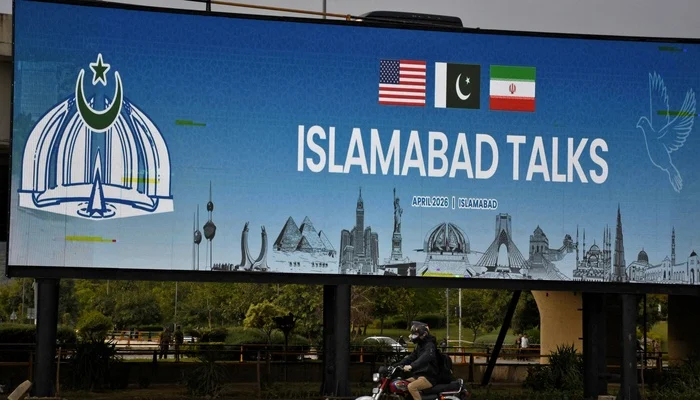

The absence of a formal agreement after just one day of direct engagement between Iran and the US – their first high-level face-to-face interaction since 1979 – should not be interpreted as a diplomatic failure. Instead, it is more accurately viewed as an important early-stage achievement for Pakistan in its role as facilitator and host.
In international diplomacy, especially where relationships are defined by deep mistrust, ideological hostility and decades of broken communication, the first and most difficult step is often not agreement but access: getting adversaries to sit together and speak directly after years of silence.
A closer examination of the Islamabad meetings supports this reading. Pakistan succeeded in convening senior representatives from both Washington and Tehran in the same setting for direct talks. This in itself is a notable accomplishment. The US and Iran have lacked formal diplomatic relations for decades, and even indirect communication between them has often been inconsistent. Against this backdrop, creating conditions in which both parties agreed to engage face-to-face at a senior level reflects a high degree of confidence in Pakistan’s neutrality, diplomatic credibility and ability to manage a sensitive and potentially volatile environment.
Equally important is the acknowledgement Pakistan received from both sides of the table. When rival states independently credit a third country for enabling dialogue, it shows that the host has maintained a careful balance. That balance is especially difficult to sustain in a negotiation between the US and Iran, given the broader regional and global alignments surrounding both actors.
Statements of appreciation directed towards Pakistan’s civilian and military leadership, including Prime Minister Shehbaz Sharif and Army Chief Field Marshal Asim Munir, further reinforced this perception. While such acknowledgements may sometimes appear procedural, they nonetheless carry diplomatic significance. They suggest that Pakistan is being viewed not simply as a convenient venue, but as an actor capable of shaping conditions for dialogue between adversaries.
It is also significant that Pakistan’s role drew favourable attention from other international stakeholders as well. In a global environment increasingly characterised by competing narratives and fragmented alignments, it is not easy for any diplomatic initiative to receive broad approval. Yet the Islamabad talks appear to have generated positive reactions from multiple countries that see de-escalation between Washington and Tehran as an important regional stabilising factor.
Another noteworthy element is that the Islamabad engagement appeared to go beyond a purely ceremonial exercise. The discussions had a more substantive and structured character, with Pakistan actively engaged in sustaining momentum and managing the flow of communication between the two sides. Rather than acting as a passive host providing only logistical support, Islamabad was visibly involved in facilitating continuity and encouraging a more constructive tone throughout the proceedings. This distinction is important in diplomatic terms, as it separates mere hosting from active facilitation that contributes to the dynamics of negotiation itself.
At the same time, Pakistan managed to preserve a careful equilibrium in its broader foreign policy relationships. These include longstanding strategic ties with China, deepening cooperation with Saudi Arabia and complex but necessary engagement with both Iran and the US. Balancing these relationships simultaneously requires consistent diplomatic calibration, particularly when some of these partners have divergent regional priorities. Pakistan’s ability to remain acceptable to all relevant parties during such a sensitive diplomatic exercise reflects a level of strategic flexibility that is often underestimated.
Naturally, from a purely outcome-oriented perspective, it would have been preferable for the talks to produce a tangible agreement or at least a clear roadmap for further progress. There is no doubt that a breakthrough between the US and Iran would have represented the most favourable possible outcome for regional stability, as well as for Pakistan itself. The country continues to face significant economic pressures, including reliance on imported energy and external financial support from regional partners, particularly in the Gulf. In such circumstances, stability in the broader Middle East is an economic necessity.
Pakistan’s economic ties with the Gulf states further this point. Energy supplies, investment flows, and financial assistance from countries such as Saudi Arabia and Qatar have repeatedly played a stabilising role in Pakistan’s external account position. At various critical moments, such support has helped Pakistan manage external payment obligations and avoid acute balance-of-payments stress. Any deterioration in regional security or escalation of tensions between major regional actors would therefore have immediate and direct consequences for Pakistan’s economic outlook.
The security implications of a wider Iran-US escalation are equally serious. A broader conflict could easily draw in regional powers, including Saudi Arabia, placing Pakistan in a highly complex strategic environment. Given Pakistan’s longstanding defence cooperation and security relationship with the Saudis, Islamabad could come under pressure to respond to unfolding regional dynamics in ways that carry both diplomatic and operational consequences.
Pakistan has previously contributed personnel and support within the framework of bilateral defence arrangements with Saudi Arabia, reflecting the depth and sensitivity of that relationship. In the event of escalation, such commitments could become significantly more complicated to manage.
However, the absence of a comprehensive agreement should not be conflated with failure. That interpretation misunderstands the nature of diplomatic processes in deeply entrenched conflicts. In situations involving prolonged hostility and mistrust, initial rounds of engagement are rarely designed to deliver final outcomes. Instead, they serve a different but essential function: reopening channels of communication, clarifying positions and establishing a baseline of engagement that can support future negotiations.
Seen from this perspective, Pakistan’s role in the Islamabad talks takes on added significance. By enabling direct engagement after nearly five decades of estrangement, Islamabad helped restore a diplomatic channel that had long been closed. Even without an immediate breakthrough, this facilitation carries intrinsic value. It reduces the risk of miscalculation, lowers the temperature of confrontation, and creates the possibility of future diplomatic progress.
Ultimately, Pakistan’s involvement in the Islamabad process has reinforced its standing as a credible and capable diplomatic intermediary. It has demonstrated an ability to manage multiple relationships simultaneously, navigate complex geopolitical sensitivities and facilitate dialogue between adversaries with a long history of hostility.
While some may focus narrowly on the absence of an immediate agreement, such a view overlooks the incremental nature of diplomacy. Major breakthroughs are rarely isolated events; they are usually preceded by careful, often quiet steps that make engagement possible in the first place. On that measure, Pakistan’s role in Islamabad represents a meaningful diplomatic achievement – subtle in appearance, but potentially significant in its longer-term implications.