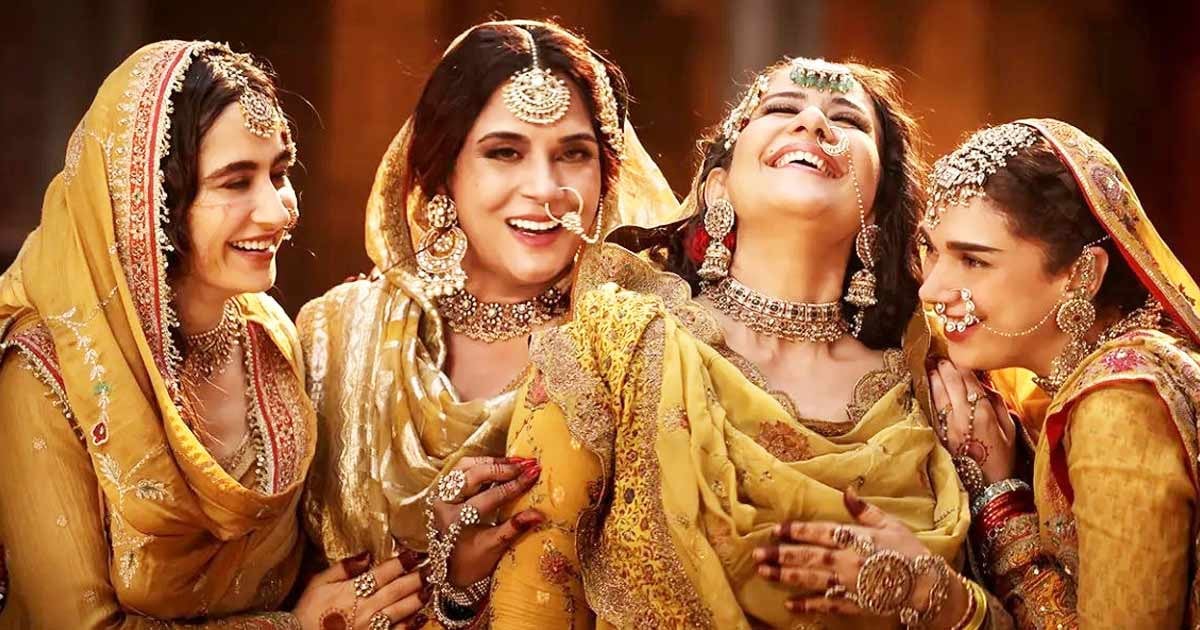

On a breezy December night, Safiya Gul, a 48-year-old mother, beamed with a radiant smile. It was a special day for her, as her eldest daughter, Aisha, was tying the knot. As a proud mother who raised three daughters after her husband’s passing, Gul prepared for the day ever since she gave birth to her. At the wedding, she made sure the arrangements remained up to the mark. Guests were properly looked after. Every tiny detail involved in the marriage preparations was on her mind, except for gold.
The precious metal is arguably the most important asset parents gift their daughters on the occasion of their marriage in the South Asian culture. But for Gul, her savings and her own gold, inherited from her mother, were enough to calm her worries.
It was the year 2020. Fast-forward to 2026, Gul’s youngest daughter, Amna, is set to be wed. Arrangements are similar to those made at her eldest daughter’s wedding. But what was glaringly missing was gold.
“Five years ago, I married off my first daughter using my own savings and jewellery; I felt no pressure,” she recalled, adding, “But today? I’ve had to take out a loan just to afford a single set for my daughter.”
Gold is baked into the tradition revolving around weddings in Pakistan. But when the price of a single tola of gold hovers near Rs500,000, many Pakistani middle-class families, like Gul’s, are forced to bear the brunt of this long-time tradition.
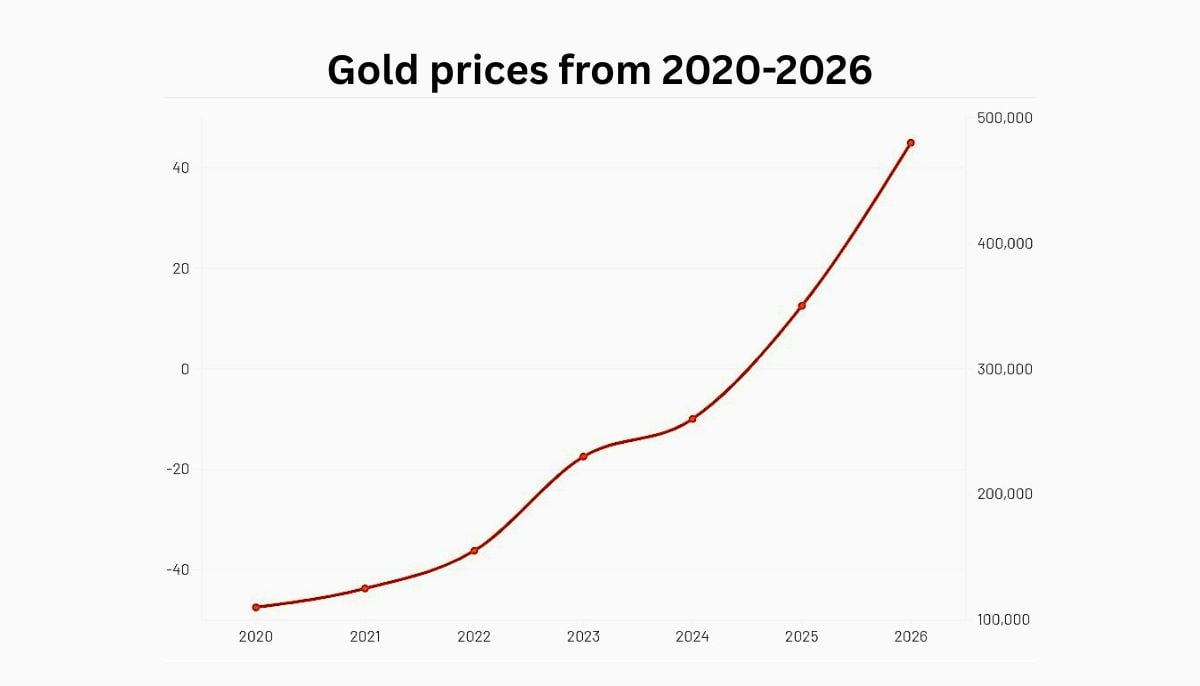
But it is crucial to understand why gold prices exploded in Pakistan. Uncertainty and geopolitical tensions are the two factors triggering gold prices to reach an all-time high, according to Adnan Sami Sheikh, vice president at the Pakistan Kuwait Investment Company.
“Historically, gold is considered a safe-haven asset. In times of uncertainty, gold’s value will certainly remain.”
Sheikh then linked the uncertainty to the current geopolitical upheaval in the Middle East, which threatened to upend the financial markets’ stability.
“This geopolitical tension is all over the world. One day it was Ukraine, then it was Russia, then Venezuela, then Israel, and now Iran,” he maintained.
Why did middle class almost exit gold market?
Arbaz Khan, a jeweller who has been managing his family’s business for years, knows who to blame for this spike in gold prices, naming major economies such as the US. According to him, the victims of these price hikes will be the middle class.
“The middle and lower-middle classes have completely exited the game; they are out of the purchasing loop,” Khan achingly shared.
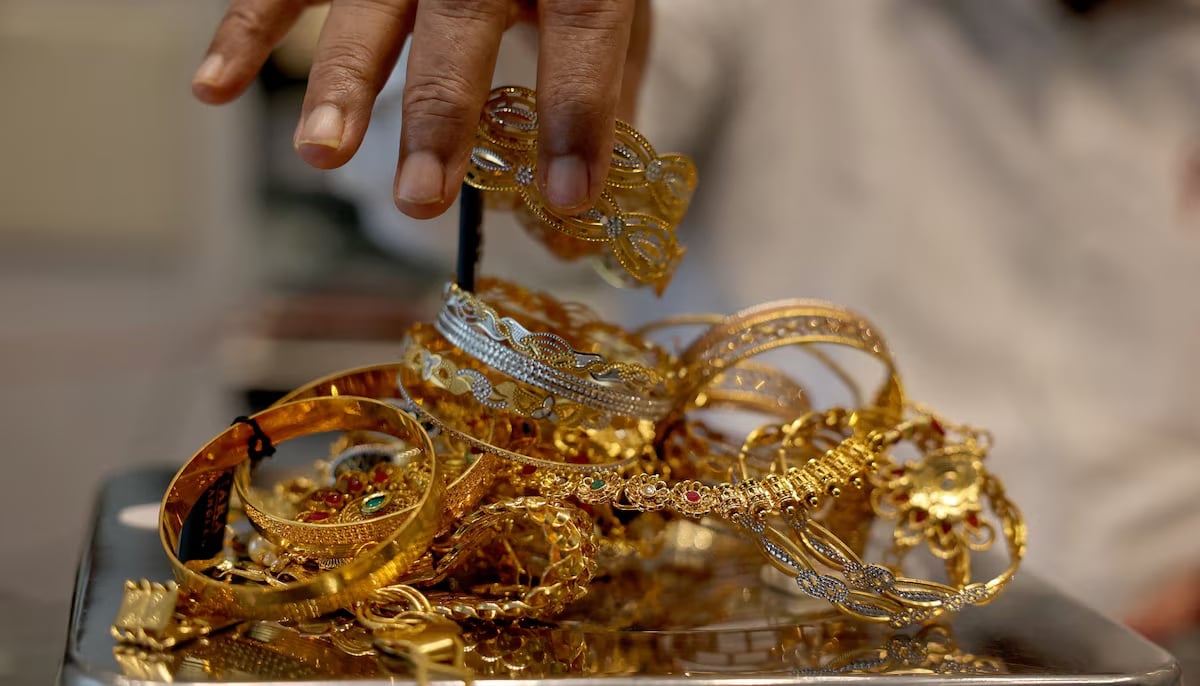
Even those who possess purchasing power have cut back on gold. “People who used to order three, four or five tolas are now down to one or two tolas,” he said.
Tradition under pressure
It is not just Gul’s dream that has been crushed under the weight of soaring gold prices. Even those belonging to the upper-middle class are feeling the pinch. Sadan Ali Arain is the eldest of four siblings, while his background is rooted in an agrarian economy. In his family, there is an old custom: to gift 20 tolas to a daughter-in-law and 10 to a daughter.
This has become somewhat of a standard, explains Arain, an engineer by profession. In weddings taking place in his family, a benchmark of social standing that has to be met. But then the prices of gold crossed Rs500,000. Now, Arain, whose sister is set to marry next month, is faced with a stark choice: either protect the family’s custom or quietly abandon it. He chose the latter.
“We can’t follow that standard anymore. The inflation rate is right before you. Now, just to save face, we will give something from what we already have in reserves,” said the 28-year-old with a stoic acceptance in his voice.
Gen-Z questions long-held tradition
In 1947, a tola was priced at Rs57. Gul recalled a faint memory of her mother forking out less than Rs100 to buy the gold in the 1960s as an heirloom.
Growing up, the mother-of-four saw gold as an expression of love, security and expectation.
“As a parent, I felt I had to do it,” stated the mother, who is now in debt for buying gold for her youngest daughter’s wedding.
Yet, her desperation to acquire it for her family, despite its value being out of reach, clashed with her second-born daughter’s idea on the custom. Fatima, a working woman, shared a practical take on the long-cherished tradition.
“In 2026, if you have gold, that’s fine, give it. If you don’t, then it’s not the end of the world,” she firmly said. Fatima, however, is critical of the tradition that her mother’s generation is clinging to, even though it is rapidly becoming unaffordable.
When asked if this tradition will ever break or will people continue to buy the metal despite its rising rates, Fatima grudgingly added, “People will still give it [as a wedding gift]. Just look at my mother. People will pull the money from anywhere [to do so].”
New brides challenge norms
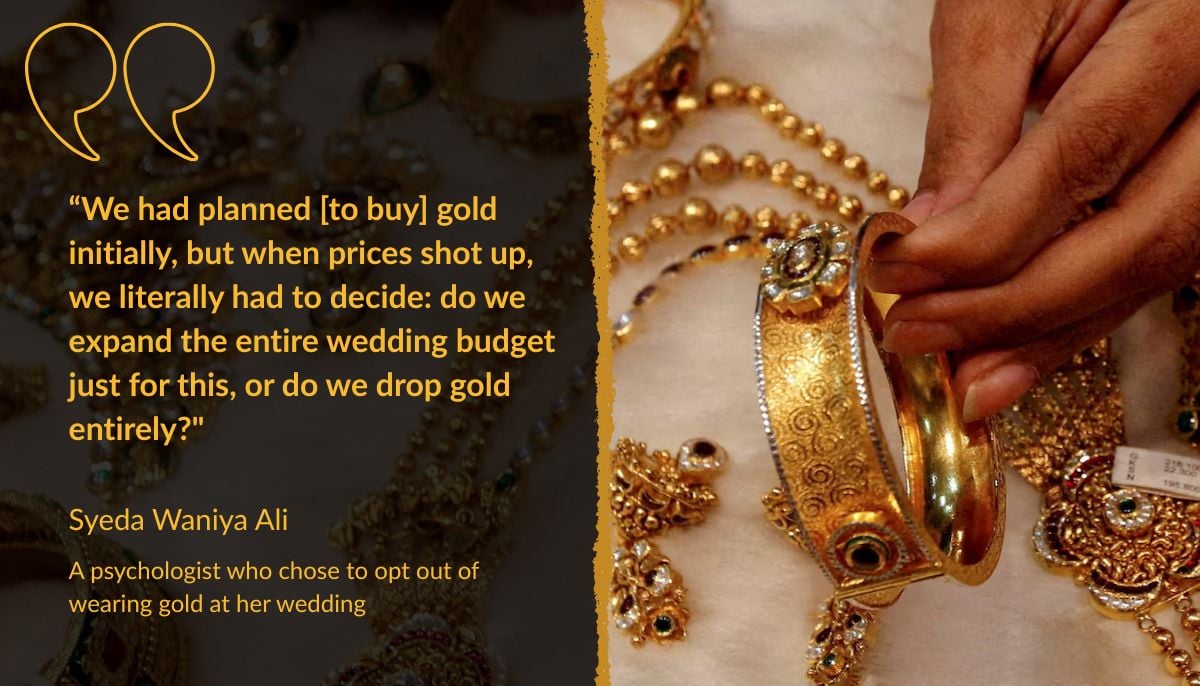
Syeda Waniya was all smiles at her wedding a few months ago. Relatives and friends offered warm wishes to her on the special day. Her stark, bright-red outfit with a floral design matched the golden jewellery she was wearing. Except that the jewellery was artificial, not made of gold.
One of the reasons why artificial jewellery is now in vogue is due to the skyrocketing prices of gold, something that forced Waniya to give up on buying the expensive metal.
“We had planned [to buy] gold initially, but when prices shot up, we literally had to decide: do we expand the entire wedding budget just for this, or do we drop gold entirely?”
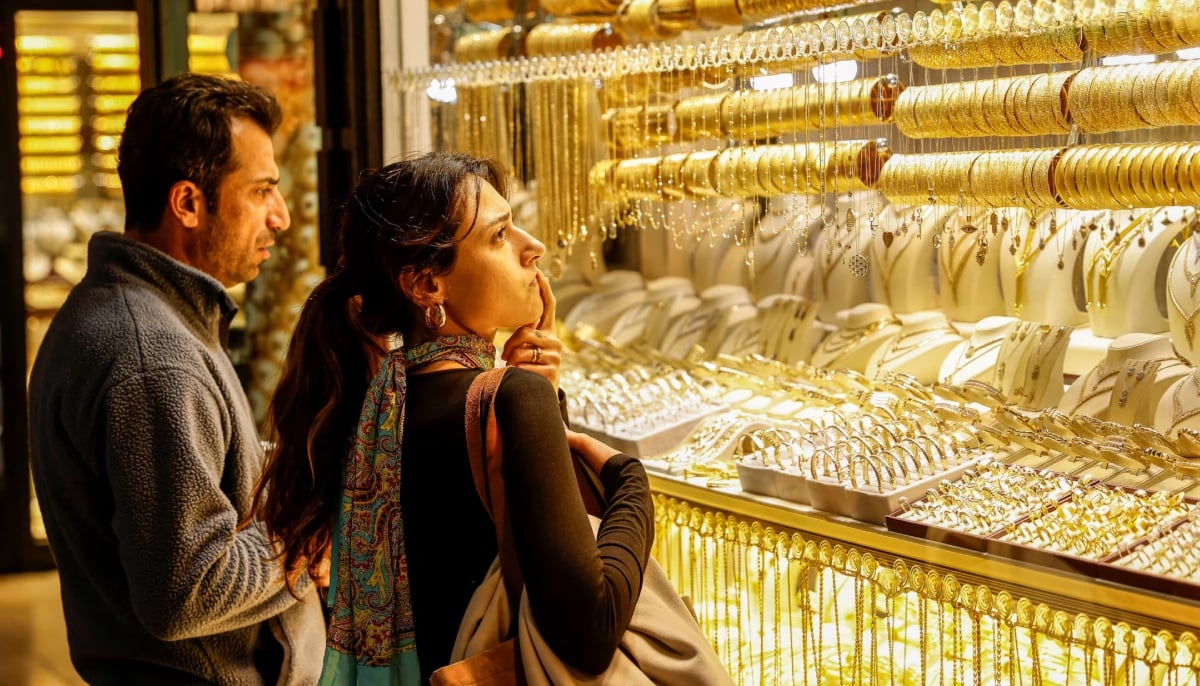
Waniya, a psychologist by education, did not have a hard time choosing an option.
“There was definitely pressure from those around my relatives and me because, for some reason, gold is treated as a mandatory wedding requirement,” the 26-year-old stated.
The psychologist valued mental peace the most, particularly when it came to giving up on an unwanted burden of a tradition.
“It was financially stressful, but I tried not to focus on it too much or let it mess with our heads. I just moved on.”
A bold step like this required emotional support. And Syed Mutaher Ali, Waniya’s husband, provided that to her. “There was no demand from our side,” he candidly shared, adding, “It is a dying tradition, and rising costs will only speed up its end.”
Young couples redefine age-old tradition
Waniya and Mutahter’s story crystallised a growing trend: marriage sans gold and a cultural shift of decision-making to younger couples.
Mohsin Sayeed, an ex-journalist-turned-fashion designer, tends to agree with the social shift.
“I have friends whose children, the son and daughter-in-law, flatly refused the traditional circus. They told their mothers, “We will do our wedding our own way. Amma, you don’t need to worry about the arrangements; just get dressed and show up,” he said, recalling the instance.
He added that one of his friend’s daughters got married at a small resort near Islamabad during the previous wedding season. “The girl said, ‘I don’t want the gold and the massive show. I only want the people I love to be there,’” he shared an anecdote from the time he attended the wedding.
New way of showing love and wealth
Gul’s generation is conditioned to see gold as timeless. On the contrary, the younger lot grew up in the fast-fashion cycle, beginning to view it as a relic of the past. As gold continues to rapidly slip out of the common folk’s hands, Sabahat Zakariya, a culture critic and writer, observed an explicit digital shift in the manner in which people express love and display wealth.
It is social media, Zakariya explains, that has taken over gold in weddings as something used to “show off”.
“There was a time when gold was the ultimate symbol of wealth. It was the yardstick used to judge how much you gave your daughter and how rich you were,” Zakariya stated.
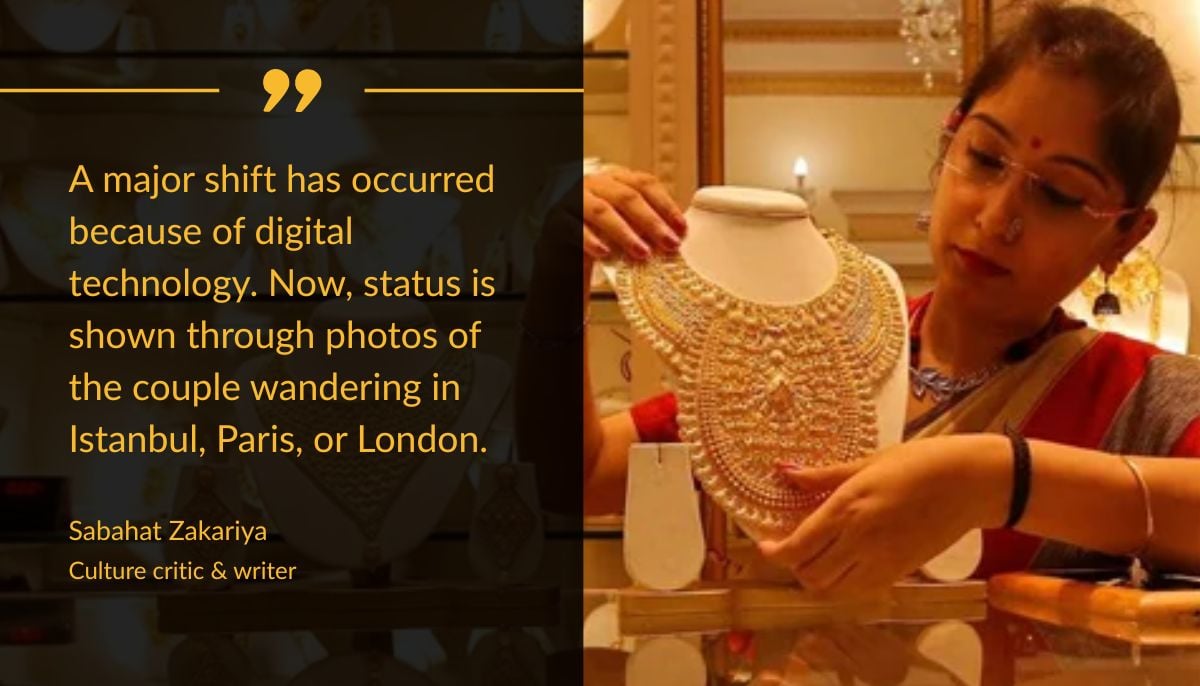
“A major shift has occurred because of digital technology,” she continued, “Now, status is shown through photos of the couple wandering in Istanbul, Paris, or London.”
The critic added that things which were previously indicated only by gold are now indicated by pictures, hinting at a recent wedding of former prime minister Nawaz Sharif’s grandson, Muhammad Junaid Safdar. Zakariya said the focus of the event was more on the grandeur, instead of the jewellery, which was likely made of gold.
With the digital shift in upswing and gold rising beyond the reach of many Pakistanis, Zakariya sounds the death knell for the long-held wedding tradition. “It has already broken.”