
In an age where geopolitics is increasingly shaped by noise rather than nuance, countries are often pushed into artificial binaries.
The expectation that every state must ‘choose a side’ has become almost reflexive, particularly in times of crisis. Pakistan, amid the ongoing tensions in the Gulf, has been subjected to exactly this kind of pressure. A mix of online partisans, ideological commentators, and even some Western analysts have tried to cast its role in stark, either-or terms.
Alongside this is a related claim: that Pakistan is doing more than merely mediating; it is quietly extending assurances or guarantees to one party or another. These assertions, however, are not grounded in verifiable facts. They rely largely on anonymous sources and conjecture, rather than any formal position or credible evidence.
Such interpretations miss the point entirely. Pakistan’s approach is neither unclear nor opportunistic. It is shaped by a straightforward and pressing national interest: the need for peace.
Any suggestion that Pakistan stands to benefit from fully aligning with one side in the Gulf conflict reflects a misunderstanding of its strategic realities. Pakistan is not a distant observer, shielded from the consequences of instability. Its long border with Iran, combined with deep cultural and historical linkages, means that turmoil in Iran would have immediate and tangible repercussions for Pakistan’s own security and social cohesion.
For Pakistan, therefore, the stakes are not abstract but immediate. This imperative is reinforced by economic considerations. Pakistan’s dependence on imported energy leaves it particularly exposed to volatility in global oil and gas markets. Escalation in the Gulf has a direct impact on energy prices, which quickly translates into inflation, rising transport costs and increased pressure on households. For a developing economy already navigating tight constraints, such shocks can be especially difficult to absorb. In that sense, a prolonged conflict is unsustainable.
At the same time, the case for de-escalation extends well beyond Pakistan’s own circumstances. A reduction in tensions in the Gulf would stabilise energy markets, ease inflationary pressures and restore a degree of predictability to global supply chains. These benefits would be widely shared, including by countries like India, whose economic stability is also closely tied to affordable energy imports.
Despite this overlap of interests, public discourse – particularly in more strident segments of Indian media and social platforms – rarely reflects this shared vulnerability. Instead, rivalry tends to overshadow economic pragmatism.
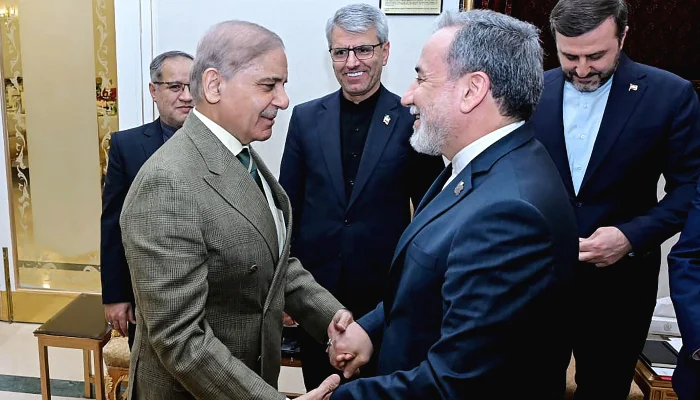
What distinguishes Pakistan in this context is not only its stake in the outcome, but also its diplomatic positioning. Unlike states firmly anchored within specific geopolitical blocs, Pakistan has maintained a degree of strategic flexibility. It engages with major global powers such as the US, Russia and China, while also preserving important ties with regional actors like Iran. This posture is not accidental; it reflects a deliberate effort to balance relationships rather than be constrained by them. It is precisely this positioning that allows Pakistan to act as a mediator.
That role, however, is often misunderstood. Mediation does not involve imposing outcomes or offering guarantees. No mediator can credibly promise how one party will behave, nor can it dictate the terms of a final settlement. What it can do is facilitate dialogue, build confidence over time, and help create the conditions necessary for resolution. This nuance is frequently lost in commentary that either overstates Pakistan’s influence or dismisses it altogether. For those who view Pakistan’s actions through a lens of suspicion, a simple question is worth considering: what does Pakistan gain from a prolonged or intensified conflict? The answer, on close examination, is nothing.
There is no strategic dividend, no economic upside and no political advantage in a destabilised region and a volatile global energy environment. Peace, by contrast, offers immediate and tangible benefits.
It is also important to note the tendency of some external observers to define Pakistan’s interests on its behalf. Western commentators, often working with pre-set narratives, can reduce complex regional dynamics into simplified soundbites. In doing so, they overlook the fact that for countries like Pakistan, the consequences of geopolitical instability are not theoretical – they are deeply felt.
At home, too, there are voices that call for taking sides, whether driven by ideology or misplaced strategic thinking. But foreign policy cannot be guided solely by sentiment. National interest must remain the central consideration, and that requires pragmatism over emotion.
Pakistan’s approach, then, is not indecision but intent. By resisting the pressure to conform to binary frameworks, Pakistan is pursuing a more measured and responsible course. It is prioritising stability over spectacle, dialogue over division and long-term outcomes over short-term positioning.
At a time when many actors appear willing to escalate tensions for advantage, this may not make for dramatic headlines. But it is precisely this steady and calibrated approach that offers the best chance for a lasting resolution.
Pakistan is neither neutral in the sense of indifference nor aligned in the sense of partisanship. It is, quite simply, committed to peace.