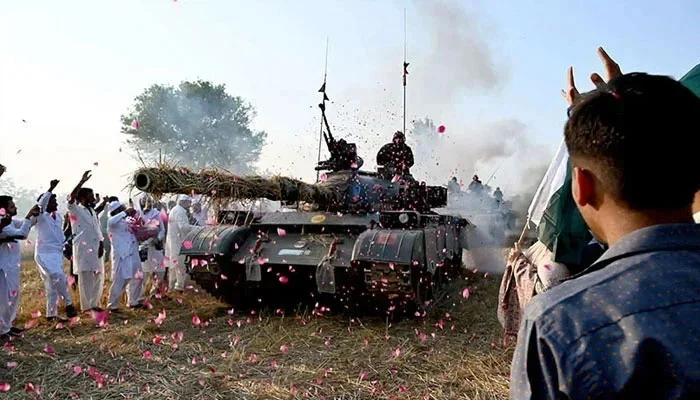

As Pakistan marks one year of Operation Bunyanum Marsoos, it is a moment of reflection, resolve and national pride. This episode stands as a testament to the professionalism, discipline and unwavering commitment of the Pakistan armed forces.
The chain of events began with the Pahalgam incident. In its immediate aftermath, India and sections of its media hastily attributed blame to Pakistan, even before credible facts had emerged. Within hours, a narrative was constructed and amplified, based more on assumption than evidence.
Pakistan, in contrast, acted with restraint and responsibility. It unequivocally condemned terrorism in all its forms, and extended a clear offer for an independent and transparent investigation by a neutral third party. This was a principled position. However, the offer was not accepted. Instead, India chose escalation over engagement.
What followed was an unfortunate escalation. Under the pretext of unverified allegations, strikes were launched that impacted civilian areas, resulting in the loss of innocent lives, including children, and damage to places of worship. These actions raised serious concerns about proportionality and adherence to international norms that govern conduct in conflict situations.
Even then, Pakistan maintained restraint. Diplomatic channels remained open, and space was provided for international efforts to reduce tensions. However, when it became evident that restraint was not being reciprocated, Pakistan was compelled to respond.
On May 10, in a matter of hours, Operation Bunyanum Marsoos unfolded as a calibrated and decisive response. It was not an act of escalation, but of strategic clarity and deterrence, meant to restore balance and reaffirm the principle that sovereignty will always be defended.
The operation can rightly be described as classic in its execution, defining in its message, and consequential in its long-term impact.
It reflected a level of operational readiness and coordination that underscored the evolution of modern warfare. Precision, intelligence integration and multi-domain coordination ensured that the response was swift, effective, and controlled. It demonstrated the professionalism of Pakistan’s defence apparatus and its ability to respond with clarity under pressure.
This clarity of response was underpinned by the visionary leadership of Chief of Army Staff Field Marshal Syed Asim Munir, together with the chief of air staff and chief of naval staff, reflecting true tri-services synergy.
At the same time, it carried a message that went beyond the immediate theatre of action. It reinforced a fundamental principle: Pakistan seeks peace, but peace must be grounded in dignity, mutual respect and adherence to international norms. Restraint is a choice – and when tested, that restraint is backed by resolve.
In its broader implications, the operation reshaped perceptions of Pakistan’s strategic posture. Pakistan demonstrated that it remains a capable, responsible and credible regional power. The episode reaffirmed deterrence, restored equilibrium and strengthened the understanding that stability in the region depends on measured conduct and mutual respect.
Beyond the military dimension, the significance of this moment lies in what it revealed about national character. It reflected patience under pressure, clarity in decision-making and unity in the face of challenge. It also reaffirmed that national defence is not only the responsibility of institutions, but a shared national resolve.
As we mark one year of Operation Bunyanum Marsoos, the nation stands united in pride and gratitude for the valour, professionalism and unmatched resolve of the armed forces. In a defining moment of our history, our brave defenders responded with precision, strength and unwavering courage. Their swift and decisive action demonstrated to the world that while Pakistan seeks peace with dignity, it stands fully prepared to defend every inch of its homeland.
The day is a tribute to the spirit of Pakistan, the sacrifices of its people and the unity that defines us. We salute our armed forces.