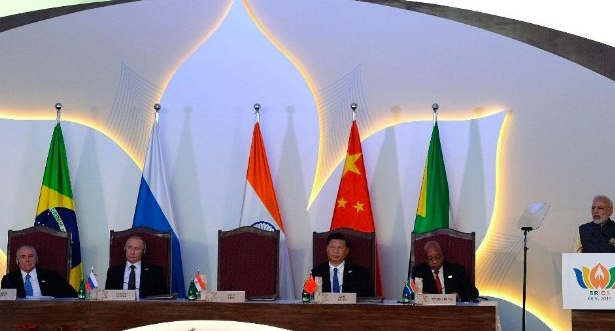

The ongoing Iran conflict, involving US and Israeli military actions in the Gulf region, is expected to dominate discussions as foreign ministers from the expanded BRICS bloc gather in New Delhi for a high-stakes two-day meeting beginning Thursday.
The meeting, hosted by India in its role as BRICS chair for 2026, comes at a time when deep geopolitical divisions threaten to undermine the group’s ability to issue a unified joint statement—long considered a key symbol of its collective influence in global affairs.
The BRICS grouping—originally made up of Brazil, Russia, India, China, and South Africa—has expanded significantly in recent years to include Egypt, Ethiopia, Indonesia, Iran, and the United Arab Emirates, reflecting its ambition to represent the broader Global South. But that expansion has also brought new and often conflicting political alignments into the fold.
At the centre of the tensions is the ongoing Iran war, which Tehran says began with US-Israeli strikes on February 28. Iran has urged India and other BRICS members to use the platform to build consensus condemning what it calls “aggression” in the Gulf.
Iran’s Foreign Minister Abbas Araghchi is expected to arrive in Delhi late Wednesday to participate in the talks. His presence alone is likely to shape the tone of the discussions, as Tehran pushes for stronger language from the bloc in support of its position.
However, consensus remains uncertain. The United Arab Emirates, which has taken a sharply opposing stance in the conflict, is also part of the expanded BRICS group. Reports suggest tensions have escalated further after allegations of cross-border strikes involving regional powers, adding another layer of complexity to already strained diplomatic relations.
It remains unclear who will represent the UAE at the meeting, raising speculation about possible disagreements or diplomatic caution ahead of sensitive negotiations.
Russia’s Foreign Minister Sergey Lavrov is also expected to attend, while China will send its ambassador to India, Xu Feihong, as Foreign Minister Wang Yi is reportedly unable to travel due to scheduling constraints linked to US President Donald Trump’s visit to Beijing.
India finds itself in a delicate balancing role. As host and chair, New Delhi is pushing for unity within the bloc while acknowledging the difficulty of reconciling sharply diverging positions.
In March, India’s foreign ministry had already warned that internal divisions linked to the Iran conflict could make consensus difficult. Officials have since been working behind the scenes to prevent a breakdown in negotiations and salvage a joint statement.
A senior Indian diplomat described the meeting as an opportunity rather than a certainty. “The fact that all these countries are coming together is itself significant,” the official said, noting that even limited dialogue could help reduce tensions.
Former Indian diplomat Manjeev Singh Puri also struck a cautiously optimistic tone, saying the gathering reflects continued engagement among emerging economies despite geopolitical fractures.
“Political solutions are difficult, but the fact that they are meeting is positive,” he said.
Beyond diplomacy, the conflict is already having tangible economic consequences. Rising energy prices triggered by instability in the Gulf have forced several BRICS members, including India, to adopt emergency measures to protect consumers and stabilize domestic markets.
China, meanwhile, continues to maintain a carefully calibrated neutral position, balancing its strategic partnerships with both Iran and Gulf Arab states. Its decision to send only its ambassador highlights its attempt to avoid deeper entanglement while still maintaining influence within BRICS discussions.
As ministers arrive in New Delhi, expectations remain mixed. While some see the meeting as a chance to reaffirm cooperation among Global South nations, others fear the Iran conflict may expose deeper fractures within the bloc.
Whether BRICS can bridge those divides—or merely reflect them—may define the outcome of this crucial diplomatic gathering.