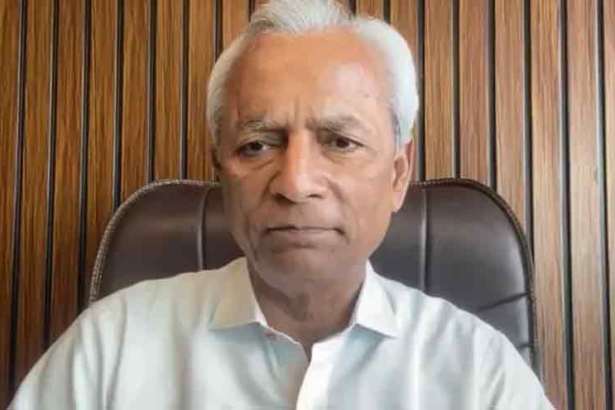

Sindh Governor Syed Muhammad Nihal Hashmi has said that any attempt to suspend or block the Indus Waters Treaty (IWT) would ultimately backfire on India itself, stressing that the agreement cannot be revoked unilaterally.
He stated that the Indus Waters Treaty is an internationally recognised accord that governs the distribution of river waters between Pakistan and India, and no single country has the authority to terminate it on its own.
The governor said that the Indus River system has been flowing for centuries and cannot be stopped by political statements or unilateral decisions. He warned that any attempt to interfere with the natural flow of water would create serious consequences, not only for Pakistan but also for India.
He added that international treaties include defined legal procedures for review or withdrawal, and these mechanisms must be followed in accordance with global law. According to him, India is not in a position to unilaterally seek changes to the agreement.
Hashmi criticised recent remarks attributed to Indian leadership regarding the suspension of water flows, calling them impractical and politically driven. He said such statements do not reflect legal or geographical realities.
Addressing Indian Prime Minister Narendra Modi, he urged him to better understand the historical and technical aspects of the treaty before making public comments. He said informed decision-making is essential when dealing with shared natural resources.
The governor further argued that any disruption to the Indus water system would have wider regional and environmental consequences. He maintained that stability in water-sharing arrangements is in the interest of both countries and regional peace.
He reiterated that the treaty remains binding under international law and cannot be set aside through unilateral declarations, warning that attempts to do so would create more harm than benefit.