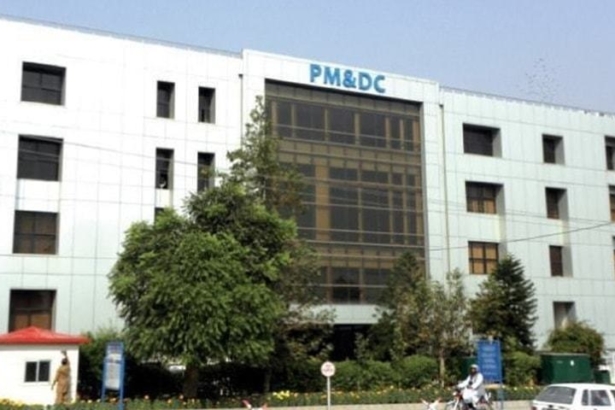

The Pakistan Medical & Dental Council (PMDC) is under intense scrutiny following revelations that 114 doctors have had their licenses suspended due to professional negligence, unauthorized procedures, and non appearance before the Disciplinary Committee.
The committee session, chaired by Senator Aamir Waliuddin Chishti, exposed systemic delays in licensing, regulatory confusion, and a major bottleneck in the National Registration Exam (NRE) for foreign medical graduates, raising concerns over public health and medical standards.
The PMDC Disciplinary Committee, chaired by Prof. M. Zubair Khan and including members Barrister Sultan Mansoor, Prof. Dr. Mahmud Aurangzeb, and Mr. Jawad Amin Khan, is responsible for evaluating complaints of medical negligence, quackery, and professional misconduct. Officials revealed that out of 498 complaints registered over the last three years, all but 32 have been resolved.
A significant portion of license suspensions 114 in total, including 50 MBBS doctors and 9 post graduate specialists were due to absence at hearings, while others were penalized for performing unauthorized procedures, including C sections that led to maternal and infant deaths.
The session also highlighted discrepancies in reported numbers: initial documents stated 59 suspensions, but PMDC clarified that an additional 55 licenses were suspended in the May 22-24, 2026 meeting and are pending formal Council approval.
The Senate committee demanded a complete list of suspended doctors and full transparency on the implementation of disciplinary actions.Licensing delays remain a major concern. Out of 29,134 licenses issued, 21 provisional licenses for Foreign Medical Graduates are pending due to delays in foreign university verification, and 240 local House Job certificates await hospital verification.
The chairman highlighted specific cases where verification of degrees from top universities such as Queen Mary University (London) and Fudan University (China) was stalled for months, calling the PMDC tracking system “unacceptable and unreliable”.The National Registration Exam (NRE) for foreign graduates, conducted by NUMS, revealed alarming results: pass rates for students from certain Central Asian countries are below 1%.
Currently, approximately 6,000 students apply every six months, mainly from Central Asian countries. The stringent 70% passing requirement is maintained to prevent underqualified doctors from entering Pakistan’s healthcare system, though it leaves tens of thousands of eligible students without local medical seats.The committee also addressed the broader medical seat crisis.
With 142,200 students taking the MDCAT and only 95,000 passing, Pakistan has merely 22,000 medical college seats, forcing around 40,000 students to study abroad and resulting in an estimated $800 million USD leaving the country annually.
A moratorium on opening new medical colleges was cited, attributed to a lack of teaching faculty and fraudulent practices where colleges shared faculty across multiple campuses.Additional scrutiny was placed on government doctors conducting private practice.
While legally permitted if they forgo the “Non Practicing Allowance,” officials admitted that there is no monitoring mechanism to prevent conflicts of interest, including the diversion of patients from government hospitals to private clinics.
Finally, the committee requested the PMDC to produce the “Standard Setting Report” for the NRE exam to ensure fairness and non discrimination against foreign graduates, and demanded a full five year record of licensing, disciplinary actions, and pending complaints to be submitted for review.