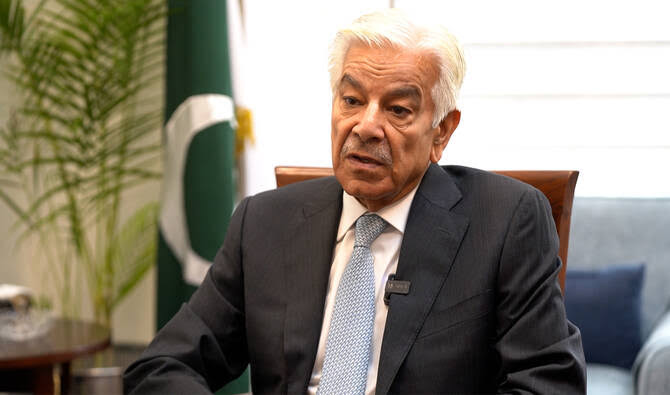

Defence Minister Khawaja Asif told the National Assembly that Pakistan’s economy has moved out of a critical phase and is now showing clear signs of recovery. He said the country is no longer in an “insolvency situation” and is gradually moving toward stability after difficult economic conditions in previous years.
He said the government’s reform measures supported by the International Monetary Fund helped stabilise the economy under strict conditions. According to him, Pakistan is now in a phase where economic indicators are improving, although full recovery has not yet been achieved.
Khawaja Asif said inflation and fuel prices remain linked to global markets. He noted that domestic relief in petroleum prices is limited because international energy rates have not come down significantly. He added that the economy is improving but still requires sustained reforms to achieve long-term stability.
He expressed optimism that Pakistan could achieve 6 to 7 percent growth in the coming years if current economic trends continue. He said the country is gradually rebuilding economic strength after a period of severe pressure.
On taxation, the defence minister said Pakistan’s tax system is complicated and includes multiple layers of levies. He stressed the need to expand the tax base instead of increasing pressure on existing taxpayers. He said true stability can only come when more citizens contribute to the national tax system.
He added that the government aims to create an environment where people willingly pay taxes and consider it a national responsibility. He said reforms are needed to simplify the system and improve compliance.
The minister also spoke about Pakistan’s role in recent US-Iran developments. He said Pakistan’s diplomatic efforts were recognised internationally and helped support dialogue at a critical regional moment. He described it as a moment of national achievement and praised both civil and military leadership for their role.
He said improved relations between Pakistan and Iran and easing sanctions on Tehran could create new economic opportunities. He added that Pakistan, especially Balochistan, could benefit from future cooperation in trade and energy sectors.
On Afghanistan, Khawaja Asif said Pakistan has held multiple rounds of talks with the Afghan Taliban leadership over several years. He said Pakistan’s main concern is cross-border terrorism and the lack of guarantees that Afghan territory will not be used against Pakistan.
He said senior officials, including security and intelligence representatives, have repeatedly engaged with Afghan authorities. However, he said discussions have not produced written commitments or lasting results.
The defence minister said Pakistan remains open to dialogue but expects practical outcomes. He said engagement must lead to concrete assurances regarding security and stability.
Speaking about Balochistan and Khyber Pakhtunkhwa, he said terrorism in these regions is a national issue and not the responsibility of any single political party. He said instability has deep historical roots and requires collective political ownership to resolve.
He highlighted the sacrifices of security forces, saying they are facing difficult conditions and continuing operations against terrorism. He said their efforts must be recognised at the national level.
Khawaja Asif urged political leaders to avoid blame games and focus on national unity. He said Pakistan’s challenges require cooperation rather than division and stressed that parliament must speak in the interest of the federation.