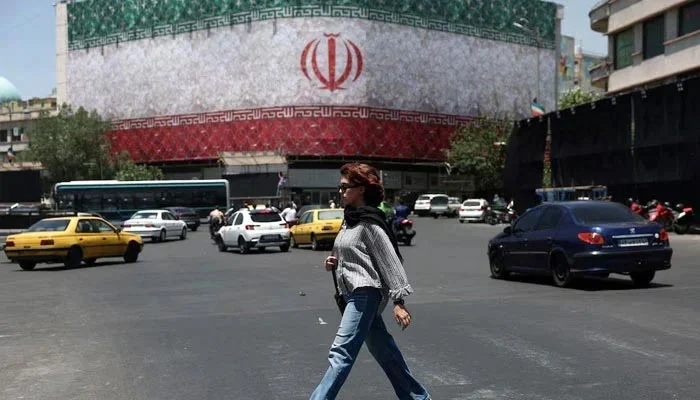

The world witnessed on June 15 the initial conclusion of the US-Israeli war of aggression against Iran. While there are no victors and vanquished yet, the US has been left deeply humbled – in its military power, technology, strategy and assessments; hence, it has lost in strategic terms. Iran has gained a whole lot. Ostracised for 45 years, it dominates the global strategic scene for now. And against this backdrop, Pakistan, the adept mediator and geostrategic strategist, having delivered engagement over war, surfaces as the master of classical diplomacy.
The US has gained little and lost considerably. Its direct military involvement did not produce strategic submission from Iran. It did not collapse Iran’s will. It did not deliver a new regional order on American or Israeli terms. Instead, it pushed the world to the edge of a wider war, threatened the security of the Strait of Hormuz, unsettled global energy markets and exposed the limits of military coercion when dealing with a state that cannot be excluded from any serious regional security framework. Israel, the principal driver of this US-Israel aggression, failed to achieve its strategic objective of Iran’s devastation and of trapping the region in war logic while expanding its control in pursuit of its diabolical Greater Israel dream.
The signing of the MOU marks the end, for now, of a dangerous war cycle and opens the door to the next round of talks on the nuclear question, uranium enrichment, sanctions relief and de-escalation.Iran appears to have secured commitments towards de-escalation, gradual easing of sanctions pressure and movement on the release of frozen Iranian assets, including those held in Qatar and even the UAE.
For the world, the most immediate gain is the opening and securing of the Strait of Hormuz. Its closure had led to energy price shocks, inflation, shipping uncertainty, pressure on oil-importing economies and broader economic instability. The MOU has, for now, pulled the world back from that edge. The 107-day blunder did not continue into a Vietnam-like prolonged disaster for the US, Iran or the region. Pakistan’s sustained, credible, and multi-layered engagement, its diplomacy of keeping channels of communication open throughout the war, made this possible.
Pakistan’s message from day one was that war is no answer; dialogue is indispensable; and weapons don’t build real security. This was Pakistan’s global message. Engagement, recognition of all sides’ stakes and a regional commitment to peace and stability do. Pakistan made this happen. The irony is that Pakistan’s diplomat-in-chief in this crisis was COAS-CDF Field Marshal Asim Munir. In a classical diplomatic sense, he became the key Pakistani figure piloting a complex process in which war, deterrence, regional politics, great-power pressure, and backchannel negotiation all converged. Pakistan’s decades of experiential wisdom in handling complex security crises through dialogue, engagement, and restraint came to the fore.
Significantly, the April 11 meeting in Islamabad was a crucial moment. The talks were substantive. It was a near-deal, or at least the architecture of a deal was within reach. Pakistan’s groundwork and multiple incessant dialogues had worked. Then came the disruptive factor: Israel. Threats of imminent military steps generated panic and the talks were scuttled. Trump had less to do with it, and Netanyahu more. There was intelligence and concern that Israel could target senior Iranian figures, including Iran’s military leadership and foreign minister. It was an immediate security threat that could have destroyed the negotiation track altogether.
It was in this environment that Pakistan’s role became crucial. Pakistan did not allow the diplomatic space to collapse. It kept channels open. It helped manage the security anxieties around Iranian officials and supported the safe movement of senior Iranian leadership at a time when the threat of Israeli action was real.
Pakistan was managing a broader regional crisis involving Gulf anxieties, Iran-Saudi and Iran-UAE tensions, maritime security, Hormuz and the fear that a single spark could ignite a far wider war. It engaged Iran and the United States while remaining attentive to Saudi Arabia, the UAE, Turkiye, Egypt and other concerned states. It had to understand Iran’s legitimate security concerns while also managing Arab fears of escalation. It had to oppose Israeli aggression and genocide while still pushing for restraint.
Beijing publicly supported Pakistan’s initiatives and subsequently joined Pakistan. As a global power, it advocated for dialogue most substantively.
As the war developed, a new regional consultation pattern also emerged. Pakistan, Turkiye, Saudi Arabia and Egypt – an emerging R4 of regional powers – were actively engaging and assessing the crisis. This mattered because the region could not afford to leave its fate entirely to external powers or to Israel’s war agenda. Regional security must be owned by regional states, and Pakistan’s role within this consultation was strengthened by its unique position: a nuclear-armed Muslim state with military weight, diplomatic experience, and credible channels across multiple capitals.
In the last 107 days, Pakistan has clearly emerged as a middle power with impactful convening and engagement capabilities. It has shown that classical diplomacy still matters: quiet conversations, strategic reassurance, crisis management, staying away from soundbite point-scoring, credible intermediaries, protection of negotiating space and the ability to persuade adversaries that dialogue serves their own interests.
A recent illustration of Pakistan’s growing credibility was the visit of the Lebanese army chief to Pakistan and his meeting with Pakistan’s air chief. This is another signal of Pakistan’s growing relevance beyond the immediate US-Iran track. From Iran to Lebanon and from the Gulf to wider West Asia, Pakistan is increasingly being seen as a country that can convene, advise, engage and mediate.
Meanwhile, the Iran-US MOU has created an opening, but Israel is desperate to disrupt it, whether through Lebanon or through its occupation of and killings in Palestinian lands. Talks are vulnerable to continued Iran-US distrust as well as to US domestic politics. And Pakistan’s role remains critical. The ceasefire too is vulnerable, as is the Strait of Hormuz. Iran’s economic relief must be real enough to keep diplomacy alive. Also, within the wider regional context, including Israeli aggression, Iran-Gulf relations, Yemen’s dynamic, maritime security and Israeli aggression, challenges will remain active.
However, after 107 days, the scorecard reads clearly: Iran’s gains are the acknowledgement that, despite sanctions, attacks and pressure, it cannot be pushed aside. Iran is integral to any framework that seeks regional stability, prosperity or development. A policy built only on isolating Iran has failed. A policy built only on military pressure has failed. Engagement is not a favour to Iran; it’s a requirement for peace.
And finally, Pakistan’s achievement: it helped bring the bruised and blundering US and the region back to the crucial understanding that dialogue alone works. It helped contain war when escalation was possible. It showed that a state can be principled and pragmatic at the same time.
For Pakistan, the task is clear: continue to actively facilitate the ceasefire into a negotiations process enabling an Iran-US agreement. Indeed, it is the moment to recognise that Pakistan’s quiet, firm and sustained diplomacy has helped shape one of the most consequential diplomatic openings in contemporary global history.