
For years, women and girls in Pakistan paid extra for something they could not choose, avoid or postpone.
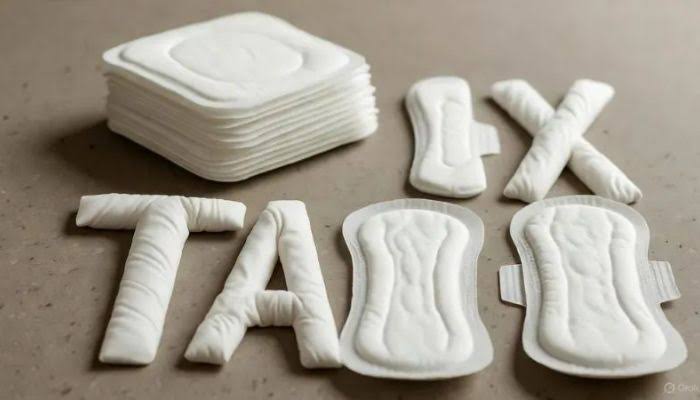
Every month, millions rely on sanitary pads and other menstrual hygiene products to manage a natural biological process. Yet these products remained subject to taxation, making them more expensive and less accessible for many families already struggling with rising costs. While periods are a fact of life, the products needed to manage them were treated as taxable consumer goods rather than essential necessities.
The Federal Government’s decision to remove sales tax on sanitary products is therefore much more than a budgetary measure. It is a recognition that menstrual health is not a luxury and should never have been treated as one.
The debate over the so-called “period tax” was never simply about revenue. It was about fairness. Menstruation affects roughly half the population, yet the financial burden of managing it falls exclusively on women and girls. Every tax imposed on sanitary products effectively increased the cost of participation in daily life, whether in schools, workplaces or public spaces.
For many families, the cost of menstrual products is not insignificant. In lower-income households, girls and women are often forced to ration sanitary products or resort to unhygienic alternatives. The consequences can be serious, affecting health, confidence, education and overall well-being.
Access to menstrual hygiene products is closely connected to the right to education. Across Pakistan, many girls miss classes during their periods because they cannot afford adequate menstrual products or because schools lack proper facilities. What begins as a health issue often becomes an educational issue, limiting opportunities and reinforcing inequality.
The tax also reflected a deeper problem: the continued discomfort surrounding conversations about menstruation. For decades, menstrual health has remained largely absent from public policy discussions. Issues affecting women are frequently treated as private matters rather than public concerns deserving government attention. The removal of the tax signals a welcome shift in that mindset.
Menstrual products are not discretionary purchases. They are necessities in the same way that medicines, healthcare supplies and other essential products are necessities. Recognizing this reality brings Pakistan closer to a growing international movement that views menstrual health as a matter of dignity, equality and public health.
The decision should also be viewed through the lens of economic justice. Women should not face additional financial burdens because of a biological process beyond their control. When governments tax products that are essential for managing menstruation, the burden falls disproportionately on one section of society. Removing that burden is a step towards a more equitable system.
At the same time, ending the period tax should be seen as the beginning rather than the conclusion of reform. Affordability remains a challenge for many households, particularly in rural and underserved communities. Access to menstrual health education, sanitation facilities and healthcare support continues to vary widely across the country.
The next conversation must focus on ensuring that every girl can attend school with dignity, every woman can access affordable menstrual products, and menstrual health is integrated into broader public health and education policies.
Still, the abolition of the period tax deserves recognition as an important and long overdue reform. It acknowledges a simple truth: menstrual products are not luxuries. They are necessities required by millions of women and girls every day.
A fair society does not penalize people for natural biological realities. By removing the tax on sanitary products, Pakistan has taken a meaningful step towards greater equality, dignity and inclusion for women across the country.