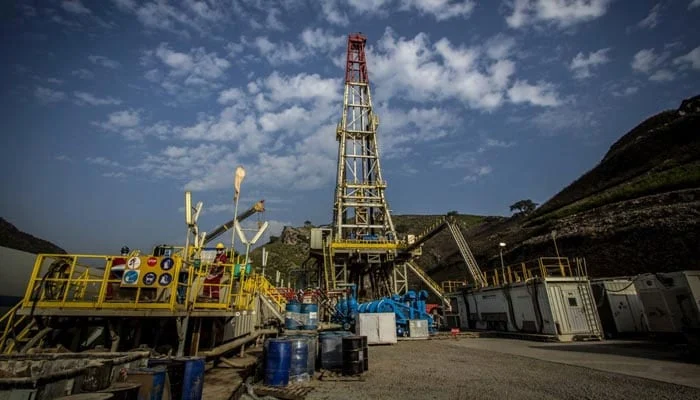

Pakistan’s domestic gas sector was once one of the country’s greatest economic strengths. For over five decades, locally produced natural gas supported industry, fertiliser production, power generation, urban growth and household welfare.
Pakistan was among the few developing countries that were blessed with such an extensive gas transmission and distribution network. Indigenous gas from Sindh, Balochistan and Khyber Pakhtunkhwa moved through a national system that became central to economic development. That advantage is now being squandered through non-payment, poor implementation, distorted pricing and policy uncertainty.
Local production is falling. Exploration has slowed. Foreign oil and gas companies have exited or reduced their exposure. Imported LNG is expensive, dollar-linked and exposed to geopolitical shocks. The Sui companies are financially stretched. Exploration and production companies are not being paid on time for gas that has already been delivered. Exporters have been priced out and circular debt has become a structural disease.
The tragedy is that Pakistan does not lack infrastructure, demand or policy papers. It has pipelines, industrial consumers, geological potential and companies capable of developing additional gas if the commercial framework is credible. It also has policies that recognise the need for open access, market-based pricing, payment discipline, rational allocation and private-sector participation. What it lacks is implementation.
The first principle of reform is simple: gas already produced and delivered must be paid for. Exploration and production entail high-risk capital deployment. Wells fail. Discoveries require field development, processing, compression and connection to the network. Investors take these risks only when contracts are honoured, payments are made and policy is reasonably predictable.
Pakistan has violated this commercial logic for far too long. Exploration activity has weakened, domestic production has declined and investor confidence has eroded. Foreign E&P companies that once brought capital, technology and technical capability have left or reduced their exposure. Pakistan now complains about falling supply while maintaining a system that discourages the investment required to discover and produce more gas.
A country cannot demand more exploration while weakening contract sanctity. It cannot ask producers to invest while failing to clear receivables. If Pakistan wants more domestic gas, it must restore confidence in the upstream sector through timely payment, enforceable contracts, credible pricing, clear allocation rules and reduced bureaucratic discretion.
The damage caused by the non-implementation of good policies is now spreading through the entire gas chain. One of the most serious consequences is the rising cost of gas transportation in both Sui Northern and Sui Southern. The fixed cost of maintaining transmission and distribution infrastructure is spread over a shrinking volume of gas. Throughput is falling because domestic production is declining and demand has been eroded in productive sectors by unaffordable prices, excessive levies, and policy uncertainty. This has created a tariff spiral. Lower throughput raises the per-unit cost of transportation. Higher delivered prices reduce industrial demand further. Reduced demand lowers throughput again. A pipeline network that was once a national strength risks becoming under-utilised and increasingly expensive to sustain.
The Sui companies are trapped in an impossible role. They are expected to buy, sell and transport gas while also absorbing subsidies, political allocations, delayed recoveries and receivables. Their networks must be commercially sustained, but this cannot be done by loading higher fixed costs onto a shrinking base of consumers. The sustainable answer is to increase throughput, revive domestic production, restore productive demand, reduce losses, and reform the sector’s commercial structure.
The efficiency challenge is equally serious. Unaccounted-for gas (UFG) in the Sui networks remains extremely high by international standards and is estimated at roughly 400-500 MMCFD. This is lost supply, lost revenue and lost competitiveness. The Sui companies need a far stronger efficiency drive, including loss reduction, metering discipline, theft control, network rehabilitation, better pressure management and sharper commercial accountability.
A credible gas market also requires private parties to be able to buy and sell gas directly under transparent rules. This cannot happen while transportation and gas sales remain bundled inside the same utility structure. The Sui companies need to be restructured by separating the pipeline transportation function from the gas trading and sales function, so that the network operates as an open, regulated carrier rather than a monopoly gatekeeper. This reform has been on the anvil for years, with strong support from donors and repeated recommendations in sector studies, yet it remains stuck in implementation limbo.
Circular debt is the clearest evidence that the present model has failed. It weakens gas utilities, delays payments to E&P companies, discourages fresh drilling, raises consumer tariffs and damages the credibility of the entire energy sector. It is the greatest financial expression of a broken policy model.
The recent instability in the Gulf is a reminder of Pakistan’s vulnerability. Oil and LNG supply routes can be disrupted by war, sanctions, shipping constraints, insurance costs and sudden price spikes. A country with chronic foreign-exchange constraints cannot build its industrial future on imported energy alone.
Indigenous Natural Gas is therefore a strategic national asset. Every additional molecule saves foreign exchange, reduces import dependence, supports production, improves energy security and strengthens the economy. But domestic gas must be explored, drilled, produced, processed and delivered. That requires investment, and investment requires payment discipline, contract sanctity and an implementable commercial framework.
Pakistan must place local gas exploration at the centre of energy security. This means clearing producer receivables, ensuring timely payment for future supplies, encouraging development of new and marginal fields, allowing commercially viable gas to reach productive users and removing the bureaucratic obstacles that have discouraged upstream investment. It also means using the existing pipeline network more intelligently. Pakistan cannot afford the declining utilisation of expensive gas infrastructure. The system must be supplied with more domestic gas where available, marginal fields must be developed and productive consumers must not be forced out of the network through irrational pricing.
Household consumers must also be treated honestly. Low-income consumers need protection, but that protection should be direct, transparent and properly funded. It should not be hidden within a distorted pricing system that discourages exploration, harms exporters, weakens gas companies, and creates circular debt. There is also a fairness problem in domestic gas policy. Only around one-quarter to one-third of Pakistan’s population has access to piped gas. The rest rely on the LPG, firewood, kerosene or other fuels, often at a far higher effective cost. The majority of Pakistanis already pay more for household energy, while a minority enjoys access to a subsidised network.
Future policy must recognise this inequity. New affluent housing schemes and high-income enclaves should not automatically receive subsidised pipeline gas. The gas system should not be expanded merely to create another privileged class of subsidised consumers. Such consumers should be supplied with natural gas on commercial terms.
Existing domestic commitments can be managed carefully. New gas, additional gas, marginal gas and commercially developed gas should be directed toward uses that generate economic value, support exports, preserve network throughput and reduce pressure on foreign exchange.
The way forward is practical. E&P companies must be paid on time for gas already delivered, and future supplies must be backed by enforceable payment security. Exploration confidence must be restored through contract sanctity, credible pricing and reduced bureaucratic discretion. Productive gas demand must be revived by removing irrational charges and policy uncertainty. Consumers need reliable and reasonably priced energy. Producers need payment and confidence. Pipeline companies need sustainable throughput. Transportation costs in Sui Northern and Sui Southern must be contained by increasing throughput, reducing system losses and avoiding the loading of fixed network costs onto a shrinking consumer base. The government needs lower circular debt.
Pakistan’s gas sector can still be rescued, but only through payment discipline, commercial pricing, lower losses, higher throughput and the implementation of reforms that have already been studied. The indigenous local natural gas can be turned from a circular-debt creator into a revenue-generating asset.