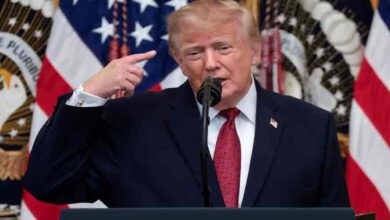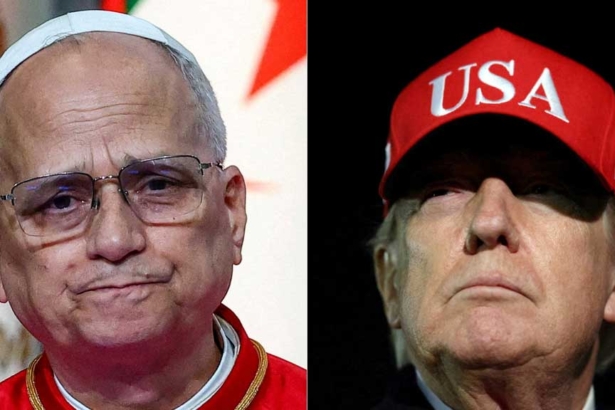

U.S. President Donald Trump has intensified his public criticism of Pope Leo, reigniting tensions between the White House-aligned political narrative and the Vatican’s increasingly vocal stance on global conflicts, particularly the war involving Iran.

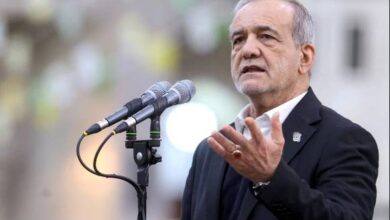
In a late-night post on Truth Social on Tuesday, Trump urged that “someone please tell Pope Leo” about what he described as the killings of protesters in Iran, while strongly reiterating his position that Iran must never be allowed to obtain a nuclear weapon.
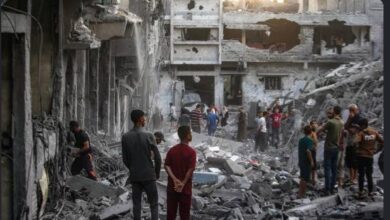
The remarks come amid escalating geopolitical tensions following the outbreak of the Iran-Israel conflict, which has drawn in regional and global powers. Since late February, military exchanges involving the United States, Israel, and Iran have left thousands dead and displaced millions across Iran, Israel, and parts of the Middle East, including Lebanon.
Trump’s comments directly challenge Pope Leo’s earlier warning about the dangers of democracies drifting into what he called “majoritarian tyranny.” In a formal Vatican letter, the Pope argued that democratic systems remain legitimate only when grounded in moral responsibility and human dignity.
The Pope, the first American to lead the Roman Catholic Church, has increasingly taken positions that appear to contrast sharply with Trump’s foreign policy rhetoric. He has criticised the U.S.-led strikes on Iran, warning that “violence cannot bring peace” and suggesting that those who wage war risk moral accountability.
In one of his most pointed remarks, Pope Leo said that prayers lose meaning when they come from leaders who “have hands full of blood,” a statement widely interpreted as a rebuke of ongoing military campaigns in the Middle East.
He has also previously rejected participation in Trump’s proposed “Board of Peace” initiative for Gaza, signalling a widening gap between the Vatican’s diplomatic moral messaging and the former president’s security-driven foreign policy approach.
Trump, meanwhile, has maintained a hardline position on Iran, arguing that its nuclear ambitions pose an “unacceptable global threat.” While Western governments have long accused Tehran of seeking nuclear weapons capability, Iran continues to insist that its nuclear programme is peaceful and compliant with the Nuclear Non-Proliferation Treaty.
The nuclear issue remains one of the most sensitive flashpoints in global diplomacy. Israel is widely believed to be the only nuclear-armed state in the Middle East, while the United States continues to maintain a vast nuclear arsenal.
The latest exchange between Trump and Pope Leo follows earlier remarks in which Trump described the pontiff as “weak” and “terrible” on issues of crime and foreign policy. The Vatican has not officially responded to the latest comments, but senior Church figures have repeatedly urged restraint and dialogue over confrontation.
Analysts say the public feud highlights a rare intersection of religion, global security, and political messaging, with both figures commanding large international followings. As the conflict in the Middle East continues to intensify, their opposing narratives reflect deeper divisions over how peace, power, and morality should shape global decision-making.
For now, the war in rhetoric appears to be running parallel to the war on the ground—each escalating in its own direction, with little sign of immediate de-escalation.