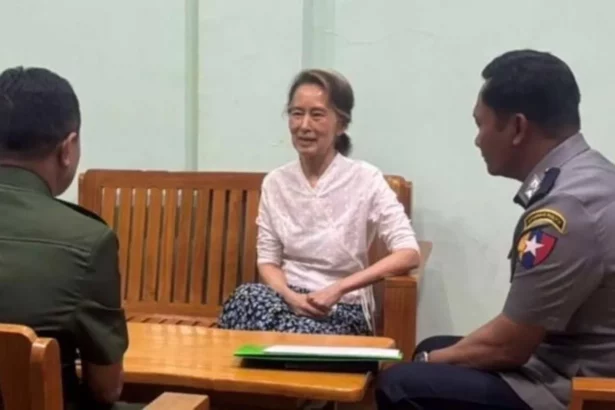

Myanmar’s military authorities have announced that former state leader and Nobel Peace Prize laureate Aung San Suu Kyi has been moved from detention to house arrest, marking a significant but still uncertain shift in her long period of confinement following the 2021 coup.
According to state media, the 80-year-old leader—who was previously believed to be held in a prison facility in the capital Naypyidaw—has had the remainder of her sentence “commuted” and will now serve it at a designated residence under military supervision. The announcement was made by junta chief Min Aung Hlaing, who led the coup that removed her elected government from power in 2021.
Suu Kyi, a central figure in Myanmar’s pro-democracy movement, first rose to international prominence through decades of resistance against military rule and spent years under earlier forms of house arrest before becoming the country’s civilian leader in 2015. However, her political career was abruptly cut short when the military seized control, detaining her on multiple charges that international observers have widely criticized as politically motivated.
Since her arrest, very little verified information has emerged about her condition. She has not been seen publicly since a court appearance in 2021, and communication with her family and legal team has been almost completely cut off for years. Reports suggest her long sentence has been repeatedly reduced, but details about her health and living conditions remain unclear.
The latest development has been met with caution rather than celebration. Her son, Kim Aris, has expressed skepticism, saying he has received no independent confirmation that she is even safe or alive, and noting that the only available image circulating appears to be outdated. Her legal representatives have also said they were not officially informed about the change in her status.
International analysts view the announcement as part of a broader effort by Myanmar’s military government to improve its global image and reduce diplomatic isolation. The junta has recently taken steps it claims are aimed at political normalization, including a tightly controlled election process that still leaves military leaders firmly in power.
Observers suggest the move could signal preparations for a gradual easing of Suu Kyi’s detention or a symbolic gesture aimed at international audiences. However, doubts remain high due to the lack of transparency and independent verification.
Aung San Suu Kyi remains a deeply influential and controversial figure. Once celebrated globally as a symbol of peaceful resistance and democracy, her reputation was later damaged internationally by her defense of Myanmar’s military actions against the Rohingya Muslim minority at the International Court of Justice.