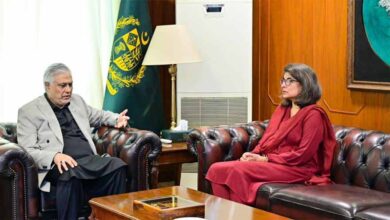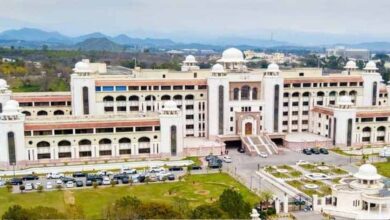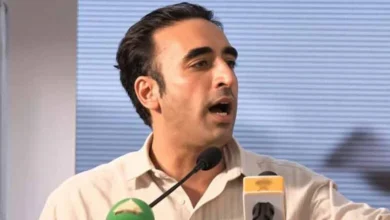


A heated meeting of the Senate Standing Committee on National Health Services, Regulations and Coordination turned into a sharp confrontation after senators accused formula milk companies of running a “Rs150 billion mafia” by misleading parents through aggressive advertising campaigns.
The committee, chaired by Senator Amir Waliuddin Chishti, expressed anger over what lawmakers described as false claims in formula milk advertisements that make parents believe artificial milk can make children smarter, taller and more successful than breastfed babies.
Senators warned that companies were “selling a mother’s love” through emotional marketing and ordered immediate action against advertisements that do not clearly state that mother’s milk is the best food for babies.
The controversy erupted when committee members discovered that an important compliance report, referred to as “Annexure C” in the working papers, had not even been shared with senators before the meeting.
A DRAP official admitted the report was not circulated earlier and claimed he had been instructed to provide it during the session instead. The response triggered strong anger from the chairman, who accused officials of ignoring Senate directives for nearly a year.
The chairman reminded officials that parliamentary committees have the legal authority to take action against departments that fail to implement orders or hide important documents.
During the discussion, senators strongly criticized formula milk advertisements shown on television and social media.
The chairman mocked advertisements suggesting that formula milk creates unusually intelligent and tall children.
“We are all sitting here as healthy six foot men and we did not drink formula milk. We drank our mother’s milk,” he remarked during the session.
Another committee member Senator Agha Shahzaib Durrani directly quoted slogans used in advertisements, including claims such as “advanced IQ,” “brain connection,” and “faster learning.” He said these advertisements falsely convince parents that formula milk can turn children into “Superman.”
The committee warned that such advertising campaigns are misleading millions of parents across Pakistan.
The Senate body repeated its earlier order that every formula milk advertisement must prominently display the warning: “There is no better nutrition than mother’s milk.”
The chairman said this warning should be made compulsory in the same way cigarette packets carry health warnings.
The committee also revisited its earlier recommendation that formula milk should not be freely sold at grocery stores, petrol pumps or general retail outlets.
Lawmakers insisted that baby formula should only be available at pharmacies and medical stores and only through a doctor’s prescription.
DRAP officials attempted to defend themselves by claiming that awareness campaigns were actually the responsibility of the Ministry of National Health Services, not DRAP.
Officials further informed the committee that DRAP had tried to restrict formula milk sales and had even raised the issue before the Special Investment Facilitation Council. However, the matter was reportedly handed over to provincial food authorities instead of DRAP.
The chairman criticized provincial food authorities, saying they had already failed to stop widespread milk adulteration and unsafe food practices.
DRAP officials also revealed that formula milk companies had approached the Supreme Court regarding the issue.
The chairman immediately asked whether the court had issued any stay order stopping implementation of HighCourt directives. After being told that no stay order existed, he ordered authorities to continue enforcement without delay.
In its final decisions, the committee directed that an official letter be sent to Pakistan Electronic Media Regulatory Authority asking the regulator to ban all formula milk advertisements that fail to display the mandatory “Mother’s milk is the best” warning.
The committee also hinted at future legislation related to the nursing sector and child nutrition, saying more reforms may follow in upcoming meetings.
Later, a storm erupted in the Senate Standing Committee on National Health Services, Regulations and Coordination after lawmakers were told that prices of several commonly used medicines increased by up to 1621 percent following the government’s controversial drug deregulation policy.
The committee warned pharmaceutical companies that the government could cancel deregulation and bring all medicines back under strict price control if companies fail to justify what senators described as “massive profiteering.”
During the meeting chaired by Senator Amir Waliuddin Chishti, lawmakers questioned officials from the Drug Regulatory Authority of Pakistan over skyrocketing medicine prices, fears of cartelization, black market sales and the growing burden on ordinary patients.
The committee was informed that in February 2024, the caretaker government divided medicines into two categories: essential and non essential drugs. Prices of 429 essential medicines remained under government control, while prices of non essential medicines were completely deregulated and handed over to market forces.
A detailed survey conducted by DRAP through an international consultant covering 771 medicine brands in six cities and 192 retail outlets showed alarming price increases after deregulation.
According to the survey, 55 percent of medicines became more expensive after deregulation, while only 2.2 percent saw no change in price. Another 42 percent were sold at lower rates due to market competition.
The most shocking case discussed in the meeting was Coldrex tablets. The medicine’s price jumped by 1621 percent, increasing from just Rs27.60 per 100 tablets to Rs475 per 100 tablets.
Another medicine, Kalv tablets, used for calcium and vitamin D deficiency, reportedly increased by more than 302 percent, rising from Rs330 to Rs1326 for 30 tablets. Senators questioned how companies could charge such high prices for calcium supplements when calcium raw material is cheaply available in Pakistan.
The committee was further informed that many other commonly used medicines also recorded huge increases, including Avil injections with a 246 percent rise, Brufen Cream with a 244 percent increase, Librax tablets with a 241 percent jump and Polyfax eye ointment with a 233 percent increase.
Several cough syrups, painkillers, stomach medicines, antibiotics, diabetes drugs and asthma inhalers were also listed among medicines whose prices rose by 50 to 200 percent after deregulation.
The meeting turned heated when senators questioned why medicine prices were still increasing despite inflation dropping sharply in recent years.
DRAP officials defended the annual price adjustment formula linked to the Consumer Price Index, saying inflation calculations are cumulative and prices do not automatically decrease when inflation slows down.
However, senators strongly rejected the explanation and accused officials of using technical formulas to justify continuous price hikes while ordinary Pakistanis struggle to buy medicines.
The committee was told that around 350 hardship cases are pending where pharmaceutical companies claim they can no longer manufacture regulated medicines due to rising costs. Officials admitted that not a single hardship increase has been approved during the last three years.
Health officials also revealed a disturbing example involving a cancer medicine. According to the minister, the government refused to approve a price increase from Rs160,000 to Rs185,000, after which the company stopped supplying the drug. Patients are now allegedly forced to buy the same medicine from the black market for around Rs450,000 without certainty about whether the product is genuine or fake.
Senators repeatedly warned that deregulation may have encouraged cartelization in the pharmaceutical industry, where companies could secretly coordinate prices for higher profits. The minister acknowledged the concern and stated that the industry had already been warned four times that deregulation could be reversed “with the stroke of a pen.”
The committee also raised concerns over multinational pharmaceutical companies leaving Pakistan despite deregulation, while local firms continue taking over businesses and increasing profits.
The Senate body decided to involve the Competition Commission of Pakistan to investigate possible cartelization and unjustified price increases in the pharmaceutical sector.
Lawmakers further demanded complete records of pharmaceutical companies’ marketing budgets, Corporate Social Responsibility spending and Workers Welfare Fund contributions. Senators argued that companies must explain how they are making such huge profits while patients across Pakistan cannot afford treatment.
The committee agreed to form a sub committee to review the February 2024 deregulation policy and assess its impact on medicine prices over the last two years.