
PESHAWAR: The opposition parties in the Khyber Pakhtunkhwa (KP) Assembly have strongly criticized the provincial government’s budget, describing it as an anti-poor financial plan and a jugglery of words that fails to address the needs of ordinary citizens.
Speaking to reporters after the budget presentation, opposition lawmakers accused the Pakistan Tehreek-e-Insaf (PTI)-led provincial government of neglecting underprivileged communities and concentrating development funds in a limited number of districts.
Member of the Provincial Assembly (MPA) Sobia Khan alleged that a significant portion of development projects announced in the budget had been allocated to only a few districts, particularly District Khyber. She argued that the budget lacked meaningful initiatives aimed at improving the living conditions of disadvantaged segments of society.
“The government has not announced any substantial relief measures for the underprivileged,” she said, adding that people of KP facing economic hardships had expected greater support in the new fiscal plan.
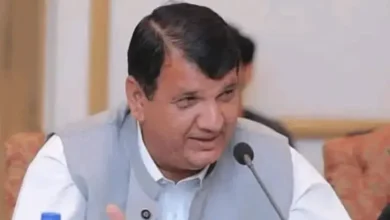
Leader of the Opposition in the KP Assembly, Dr. Ebad Khan, also rejected the budget, claiming that it had failed to provide relief to the poor despite the government’s repeated promises of development and change.
He described the financial plan as a budget for District Khyber, suggesting that other parts of the province had been overlooked.
Dr. Ebad Khan further criticized the government for what he called its failure to address the concerns of the merged tribal districts. According to him, residents of these areas continue to face numerous socio-economic challenges, yet the budget offers little in terms of targeted assistance or development support.
The opposition leader also questioned the government’s performance in key sectors such as education and employment. He said that despite receiving a public mandate and making commitments during previous elections, the provincial administration had not introduced a uniform education system across the province nor created sufficient employment opportunities for low-income families.
Opposition members accused the PTI government of attempting to project an overly positive picture of its performance through what they termed misleading statistics. They argued that the public was fully aware of the realities on the ground and would not be convinced by official claims that did not match people’s experiences.
Another concern raised by opposition lawmakers was the financial condition of public-sector universities. They noted that institutions such as University of Peshawar are facing serious financial difficulties, yet the budget did not provide a significant increase in funding for higher education.
The provincial government has defended the budget as a development-oriented plan designed to promote economic growth and improve public services. However, the opposition insists that the budget falls short of addressing the pressing needs of the province’s poorest and most vulnerable citizens.
The debate over the budget is expected to continue in the KP Assembly in the coming days, with both government and opposition members set to present their detailed views on the province’s financial priorities and development strategy for the new fiscal year.