

The Indus Waters Treaty (IWT), signed in 1960 between India and Pakistan, has been a benchmark of transboundary water governance, ensuring decades of relative stability in one of the world’s most sensitive river basins. Allocating the eastern rivers to India and granting primary rights over the western rivers to Pakistan, the treaty established robust legal and institutional mechanisms, including the Permanent Indus Commission and structured dispute resolution through neutral experts and arbitration courts. This architecture has historically enabled both countries to manage conflicts without escalation.
In April 2025, India declared the treaty in “abeyance”, a term that, while sounding legalistic, in practice allows unilateral suspension of treaty obligations. Unlike formal suspension, this manoeuvre bypasses established procedures for dispute resolution. Analysts argue that India’s use of abeyance effectively violates the treaty’s binding commitments while avoiding international scrutiny, raising serious concerns about transparency, equity, and legality in water governance.
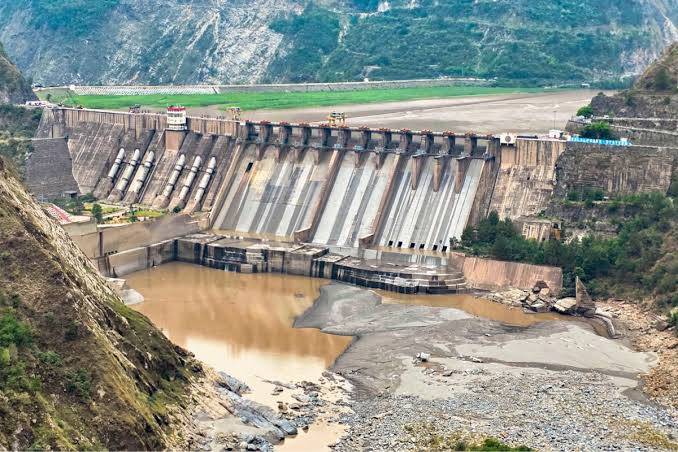
The impacts are both immediate and structural. Millions in Pakistan rely on the Indus, Jhelum, and Chenab rivers for irrigation, hydropower, and potable water. Upstream infrastructure projects, including Baglihar, Salal, Kishanganga, and Ratle dams, combined with reservoir manipulation, alter seasonal flows, jeopardising agriculture, energy production, and downstream ecosystems. Even minor deviations in river flow disproportionately affect rural economies, threatening food security and livelihoods.
Environmental and public health considerations compound these risks. Beyond hydropower and storage disputes, Indian industrial and urban expansion along shared rivers has led to untreated sewage discharge and industrial effluents flowing downstream into Pakistan. These discharges degrade water quality, harm aquatic ecosystems, and increase the incidence of waterborne diseases, yet they remain largely unreported in the Pakistani mainstream media. The treaty’s abeyance conceals the broader environmental consequences of upstream mismanagement, highlighting a systematic disregard for ecological and human rights obligations.
Legally, India’s unilateral action undermines the principle of pacta sunt servanda, which obliges treaty parties to honour agreements. By circumventing the Permanent Indus Commission and neutral expert review, India sets a dangerous precedent, weakening confidence in international treaty compliance globally. Critics within India have themselves argued that historical allocations favoured Pakistan excessively, yet domestic debates do not justify violating an internationally recognised treaty, nor do they mitigate downstream human and environmental costs.
Human rights frameworks underscore the gravity of these actions. Predictable access to water is essential for health, nutrition, and economic stability. By altering flows without consultation, India imposes tangible harm on vulnerable populations, raising questions about international accountability and compliance with rights-based governance principles.
Climate change further exacerbates these vulnerabilities. Accelerated glacial melt, shifting monsoon patterns, and extreme weather events make predictable water flows essential for resilience. Unilateral actions by India intensify uncertainty, undermining coordinated adaptation and management strategies.
The international community must scrutinise this development closely. Upholding treaty obligations, promoting transparency, and protecting downstream communities are crucial not only for Pakistan but also for global norms of transboundary water management. India’s use of legal terminology to mask substantive violations highlights the need for international monitoring, advocacy, and dialogue to ensure that shared rivers remain tools of cooperation rather than instruments of unilateral advantage.
In conclusion, India’s abeyance of the IWT is a blatant breach of international law, with cascading legal, environmental, and human rights consequences. Immediate international engagement is necessary to restore treaty compliance, safeguard downstream populations, and maintain the integrity of one of the world’s most strategically important river basins.