
The Islamabad High Court (IHC) on Thursday reserved its verdict on the maintainability of a petition challenging the delay in the approval of judicial appointments for high courts across the country.
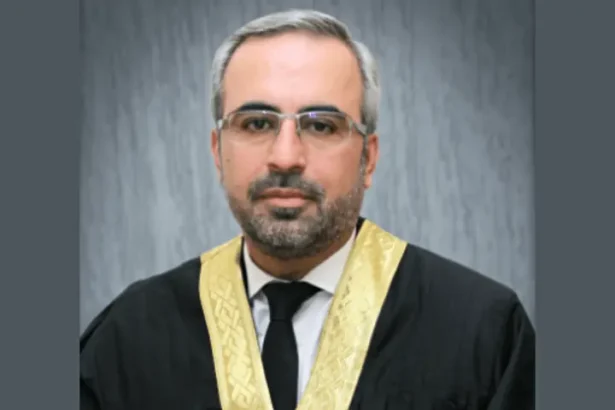
Justice Arbab Muhammad Tahir heard the petition filed by advocate Luqman Zafar Chaudhary through his counsel Zahid Asif Chaudhry. The petitioner requested the court to direct President Asif Ali Zardari to approve a summary forwarded by the prime minister for the appointment of 19 additional judges and the confirmation of five judges in the Islamabad, Lahore, Sindh, Balochistan and Peshawar high courts.
During the hearing, the petitioner’s lawyer argued that the Judicial Commission of Pakistan (JCP) had recommended the appointments during its meetings held on July 20 and 21. He said the summary was later sent to the president for approval, but no decision has been made despite the passage of more than two weeks.
The counsel maintained that the delay is affecting the functioning of the superior judiciary. He informed the court that the tenure of an additional judge of the Sindh High Court has already expired, while the terms of four additional judges of the Peshawar High Court are expected to end within the coming days.
The lawyer also told the court that reports suggest the government may issue notifications regarding the appointments within the next 48 hours.
Justice Tahir repeatedly questioned whether a constitutional petition could legally be maintained against the president. He asked the petitioner’s counsel to cite any previous court ruling in which a writ had been issued against the president regarding the exercise of constitutional powers.
The court observed that the judgments presented by the petitioner did not support the argument that courts could direct the president in matters governed by Article 48 of the Constitution. Justice Tahir asked whether any legal precedent existed requiring the president to act on such matters through a judicial order.
The petitioner’s counsel argued that Article 48 requires the president to act on the advice of the prime minister or the cabinet. He maintained that the president has no independent authority to indefinitely delay judicial appointments once the Judicial Commission has completed its recommendations.
The lawyer further argued that the Ministry of Law is the competent authority to issue appointment notifications after the completion of the constitutional process. He claimed that the president’s role in the appointment process is largely formal and that unnecessary delays should not hinder the functioning of the judiciary.
The petitioner requested the court to seek responses from the federal government, the Prime Minister’s Office and the Ministry of Law regarding the status of the pending summary. However, the court declined to issue notices at this stage.