
Pakistan is increasingly positioning itself as a strategically important “hinge power” capable of dealing simultaneously with the United States, China, Gulf states and Iran as shifting alliances reshape global politics, according to an analysis published by the Financial Times.
In an article titled Pakistan and the new great game of Risk, the Financial Times argues that Pakistan’s growing diplomatic activism is giving the nuclear-armed country greater weight in an emerging international order driven increasingly by strategic partnerships, security arrangements and transactional diplomacy.
The article uses the geopolitical board game Risk as an analogy, arguing that control of strategically located “hinge” states can provide influence far beyond their geographical size. In the real-world contest among major and regional powers, it says, Pakistan is attempting to establish itself in precisely such a position.
The Financial Times points to the recent defence agreement involving Pakistan, Saudi Arabia and Türkiye as the latest example of Islamabad seeking a role extending beyond its traditional South Asian security environment.
Pakistan’s ability to work across rival blocs
A central element of Pakistan’s emerging strategic importance, according to the analysis, is its unusual ability to maintain relationships with countries that are themselves strategic competitors.
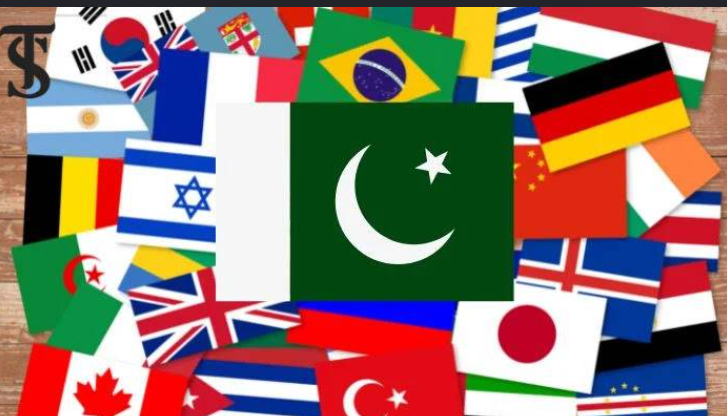
Pakistan retains a longstanding relationship with China while simultaneously seeking closer political, security and commercial ties with Washington. At the same time, Islamabad maintains strong relations with Sunni Gulf countries, particularly Saudi Arabia, while keeping diplomatic channels open with Iran.
The Financial Times describes Pakistan, at least on paper, as an “à la carte” middle power — a country capable of choosing where and when to cooperate with Washington or Beijing rather than aligning itself completely with either camp.
That flexibility could become increasingly valuable as the international system moves away from clearly defined blocs and towards overlapping alliances based on defence, energy, trade, technology and regional security interests.
US-Iran diplomacy highlighted as example
The newspaper identifies Pakistan’s attempt to facilitate direct engagement between Washington and Tehran as one of the clearest demonstrations of Islamabad’s ambitions.
Pakistan used its relationships with the United States, China and regional states to host the first direct US-Iran talks since Iran’s 1979 Islamic Revolution, according to the article.
Although those talks failed to produce a breakthrough and Qatar subsequently assumed a larger mediation role, the Financial Times argues that Pakistan had nevertheless sent an important diplomatic signal: Islamabad wanted to demonstrate that it could operate as a facilitator in major international disputes rather than remain confined to tensions in South Asia.
Saudi-Türkiye-Pakistan pact adds another dimension
The Financial Times sees the new defence arrangement with Saudi Arabia and Türkiye as another important step in that strategy.
It argues that upheaval in the Middle East has encouraged regional countries to diversify their security relationships and reduce complete dependence on the traditional American security umbrella.
The agreement’s emphasis on collective deterrence reflects that changing environment, although the newspaper notes that the effectiveness of the arrangement has yet to be tested in practice.
For Pakistan, however, the significance could extend beyond defence.
Closer strategic integration with Saudi Arabia and Türkiye potentially connects Pakistan more firmly with the Gulf, Middle East and eastern Mediterranean while complementing its long-established strategic relationship with China and improving its ability to engage Washington.
Taken together, the relationships potentially give Islamabad access to several different centres of economic and geopolitical power without requiring it to choose only one.
Geography again becoming Pakistan’s strategic asset
The analysis also suggests that Pakistan’s geography — often viewed primarily through the security challenges posed by India, Afghanistan and Iran — could become an economic and geopolitical advantage.
Pakistani officials envisage transport links connecting Central Asia with Pakistani ports, potentially giving landlocked regional economies greater access to the Arabian Sea and opening new markets for Pakistan.
The Financial Times says policymakers also hope that stronger Saudi backing and renewed international interest could encourage investors to reassess Pakistan as an investment destination.
Such ambitions would place Pakistan at the intersection of South Asia, Central Asia, China, the Gulf and the Middle East — a geographical position that could become increasingly significant as new trade and security corridors develop.
Economic and security weaknesses remain major constraint
The article does not portray Pakistan’s rising diplomatic profile without reservations.
It draws a sharp contrast between Islamabad’s growing foreign-policy activism and the country’s continuing domestic economic, political and security challenges.
The Financial Times points to Pakistan’s dependence on IMF assistance and criticises aspects of its governance and political system, arguing that these weaknesses could limit the country’s ability to translate diplomatic visibility into lasting geopolitical influence.
Security presents an equally serious obstacle.
Pakistan continues to face militancy and instability along its western frontier, tensions with Afghanistan and the continuing possibility of renewed confrontation with India. The article also highlights security concerns affecting international interest in Pakistan’s mineral sector.
The implication is that Pakistan’s external ambitions will ultimately depend on whether it can establish sufficient internal security and economic stability to support them.
From frontline state to multi-aligned middle power
The larger significance of the Financial Times assessment is its portrayal of Pakistan not simply as a country positioned between India and Afghanistan, but as a state potentially capable of operating across several geopolitical theatres.
For decades, Pakistan’s international importance was frequently defined by individual conflicts — the Cold War, the Soviet war in Afghanistan, the post-9/11 campaign against terrorism and rivalry with India.
The emerging model described by the Financial Times is different.
Pakistan is seeking simultaneously to maintain its strategic partnership with China, rebuild influence in Washington, strengthen security relationships with Saudi Arabia and Türkiye, retain access to Iran, connect with Central Asia and attract Western and Gulf investment.
That does not make Pakistan a global great power. But it potentially gives Islamabad something increasingly valuable in a fragmented international system: strategic optionality.
In that sense, the Financial Times’ “hinge power” description may be more significant than conventional measures of economic or military ranking. A hinge power derives influence not merely from its own resources but from its ability to connect competing regions, alliances and major powers.
The newspaper ultimately presents a paradox. Pakistan’s diplomatic relevance appears to be increasing at a time when significant economic, political and security problems remain unresolved at home. It argues that Pakistan has nevertheless made enough geopolitical moves to warrant greater recognition as an important player on the emerging international chessboard.