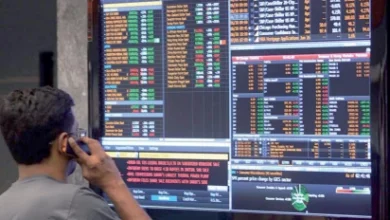
Financial literacy across the world has evolved beyond traditional models of investment, and now encompasses awareness and the ability to tango with new coming ventures, that being a cryptocurrency. As the competition of job placement and security is on the rise, people look towards making their money work for them instead of vice versa, leading to greater experimentation of investment. While the risk mounts skyscrapers, the payoff has attracted great attention. However, which is it that Pakistan has just initiated ventures into opportunities for investment?
To understand the current financial market and tides of consumers, the myriad of prior concerns must be unpacked. The culture of Pakistan has historically favored investment in real estate and gold, with the exception of active income generators like the agricultural sector (Tirmizi, 2020). In fact, the State Bank of Pakistan has demonstrated that the industry accounts for almost 2% of the country’s national GDP and that the industry is as a whole, worth a staggering $300-$400 billion as of 2020 (Atiq, 2020). However, recently the surplus of investment is towards stocks it is now trending towards stocks.
The previous need to invest in tangible products stemmed from the cultural norm which was induced by the looming poverty level and thus the great risk for the average citizen. Culture dictates that an individuals’ eventual goal should align with the norms of their country (Brickner, 2020), thus the long-term cultural aim of owning a residence to retire in and hand-over to next of kin is that adopted by the general population. Hence, people’s savings were invested in their strive to own a home at the end of their respective careers. In fact, data provided by Zameen.com proves that over a twenty-one-year period real estate has yielded an average annual price increase of approximately 11.3% per year, higher than the inflation rate of 7.6% (Tirmizi, 2020). Moreover, the nature of the inflation-beat price appreciation draws temptation for the elder generations as it offers them another stable source of income, from rentals.
In addition, such acts were also a cause of the persistent political instability, “ for example, four democratically elected governments between 1988-99 were dislodged prematurely, on one pretext or the other. During this period investment activity remained sluggish” (Abbas et al 2019) and so people took to less risk, and hence fewer reward options. As political uncertainty plays a major role in the discontent with investing in stocks or venture capitalism (Khan & Ullah, 2015), with inflation on the rise due to conflicting foreign and internal affairs, and disposable income at an all-time low, the general investor has become ambivalent towards intangible equities. Moreover, the ban placed on imports from India affected the produce and medicine industry of Pakistan significantly (Khan, 2019), leading to an increased average household spending. Creating an intensive desire for security and dependency which is culturally seen as fulfilled by owning a home, ignorant of how such narrow-minded decision-making leads to lacking diversification and thus risk in intangible equities.
However, as mentioned, recent years depict a trend towards rising interest in funding start-ups, purchasing long-term equities, and acquiring cryptocurrency; however, underlying issues have not been tackled (Waheed & Ghumman, 2019).
Firstly, the banking sector and subsequently, their customers are caged by the legislative sanctions that chain the free flow of cash. Ishrat Husain’s piece on banking reforms in Pakistan deliberated on the direct and indirect governmental involvement that stunted financial diversification of portfolios among the population (Husain, 2005). With most of the deposits made being corralled for governmental use to offset their fiscal deficit, the banks stood at a disadvantage should they provide venture capital for SMEs. Moreover, most banks were under the purview of the government, thus, employee output was low and the recovery rate was only 25% (Husain, 2005). Banks were also facing higher tax rates than other corporations at 58% against their 35%. In the early 2000s, the reforms introduced radically changed the banking system (Husain, 2005). According to the IMF review in 2004, the state-dominated sector was slowly replaced by private institutions as the legislative framework became more narrowed, leaving less room for ambiguity. Although banks are more stabilized and the financial sector is less susceptible to shocks, it would take years for the sector itself to be completely overhauled.