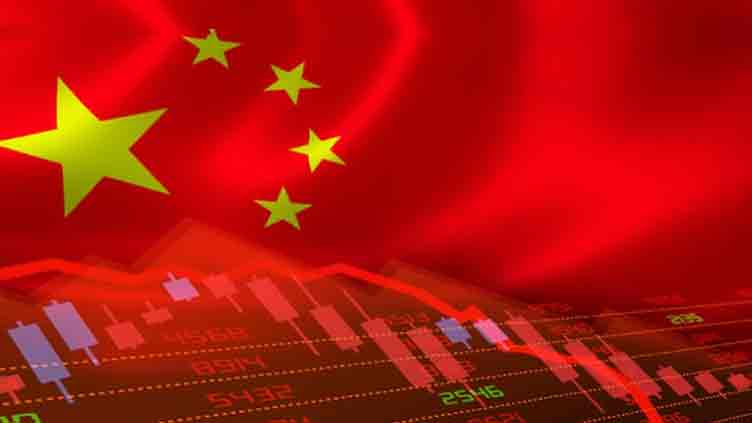

China posted one of its slowest rates of economic growth in decades on Friday, as leaders nervously eye a potential trade standoff with incoming US president Donald Trump.
Beijing has announced in recent months its most aggressive support measures in years in a bid to reignite an economy suffering on multiple fronts, including a prolonged property market debt crisis and sluggish consumer spending.
However, calls for even further policy help came after official figures showed the Chinese economy grew five per cent in 2024.
While the reading from Beijing’s National Bureau of Statistics (NBS) was slightly above the 4.9pc forecast in an AFP survey of analysts, it was still short of the 5.2pc increase recorded in 2023.
The growth took place in the face of a “complicated and severe environment with increasing external pressures and internal difficulties”, the NBS said.
Retail sales, a key gauge of consumer sentiment, rose 3.5pc – a major slump from the 7.2pc growth seen in 2023 – although industrial output increased 5.8pc from 4.6pc the previous year.
However, the 5.4pc jump in economic growth seen in the final four months far outpaced the five percent forecast in a Bloomberg survey and was much better than the same period in 2023.
The data provided “mixed messages”, said Zhiwei Zhang, president of Pinpoint Asset Management.
Beijing’s recent policy shift had “helped the economy to stabilise in (the fourth quarter), but it requires large and persistent policy stimulus to boost economic momentum and sustain the recovery”, he said.
Zichun Huang, China economist at Capital Economics, said she expected growth to “continue accelerating in the coming months”.
“The government’s property support measures seem to be providing some relief, with the pace of house price falls slowing and new home sales showing some recovery,” she said.
Trouble ahead?
The GDP growth rate is the lowest recorded by China since 1990, excluding the financially tumultuous years of the Covid-19 pandemic.
Analysts surveyed by AFP estimated growth could fall to 4.4pc in 2025, and even drop below four percent the following year.
China has so far failed to rebound from the pandemic, with domestic spending mired in a slump and indebted local governments dragging on growth.
In a rare bright spot, official data this week showed that exports reached a historic high last year.
But gathering storm clouds over China’s massive trade surplus mean Beijing may not be able to count on overseas shipments to boost an otherwise lacklustre economy.