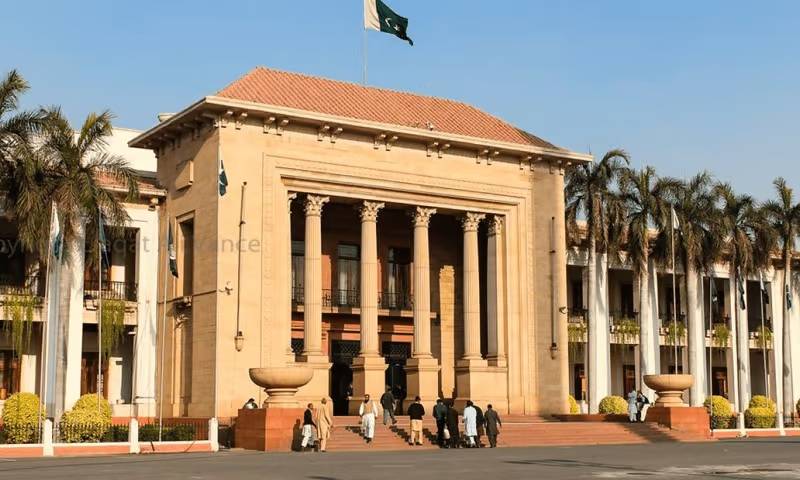

A busy and politically charged day unfolded in the Punjab Assembly as lawmakers approved several significant bills, even as opposition members staged a walkout during the session on Monday.
Despite the opposition’s walkout, the Assembly proceeded with its legislative agenda. Three provincial ordinances were formally presented and referred to the relevant committees for two months of review:
- Provincial Motor Vehicle Ordinance 2025
- Suthra Punjab Authority Ordinance 2025
- Kite Flying Regulation Ordinance 2025
These ordinances will undergo detailed scrutiny before being brought back to the House.
Major Bills Approved by Majority Vote
The Assembly successfully passed several important bills aimed at improving governance, public welfare and sectoral regulation:
- Boards of Intermediate and Secondary Education Punjab (Amendment) Bill 2025, approved by majority vote
- Mines and Minerals Punjab Bill 2025, presented by Minister for Parliamentary Affairs Mujtaba Shuja-ur-Rehman
- Sugar Cane Research and Development Board Bill 2025, also presented by Mujtaba Shuja-ur-Rehman
- Autism School and Resource Center Punjab (Amendment) Bill 2025, passed to strengthen support for neurodiverse students
- Drugs (Second Amendment) Bill 2025, approved to tighten regulatory and safety measures in the pharmaceutical sector
These wide-ranging bills reflect the Assembly’s focus on education reforms, agricultural development, mineral sector regulation, and public health improvements.
Uzma Bukhari Addresses the House
During the session, Provincial Minister for Information and Culture Azma Bukhari delivered a strongly-worded speech responding to comments and social media activity linked to the jailed former prime minister Imran Khan.
She questioned who manages PTI founder’s online accounts and referred to recent statements made by PTI figures, including Aleema Khan. Bukhari accused PTI leaders of politicizing national institutions, stating that “they want to bring the army into politics, while we do not.”
She expressed concern over what she described as negative campaigns involving the family of the DG ISPR and comments being amplified by Indian media. Her remarks also touched on national security, criticizing statements that she said risked undermining the country’s atomic programme.
In a rhetorical exchange, Bukhari emphasized the need for responsible political discourse, questioning the use of inflammatory language and urging restraint.
A Session Marked by Tension and Productivity
Although marked by sharp political exchanges and an opposition walkout, the session resulted in substantial legislative progress. With multiple reform-oriented bills passed and several ordinances moved into committee review, the Punjab Assembly advanced key policy areas ranging from education and agriculture to public health and regulatory oversight.