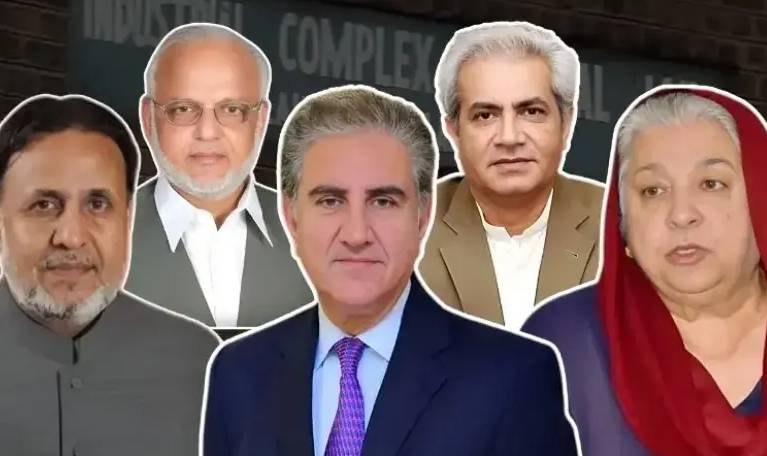

Senior Pakistan Tehreek-e-Insaf leaders detained at Kot Lakhpat Jail have warned that rising global oil and gas prices, coupled with ongoing tensions in the Gulf region, could severely undermine Pakistan’s fragile economic stability in the coming weeks.
In a joint message issued from jail, Shah Mahmood Qureshi, Dr Yasmin Rashid, Ejaz Chaudhry, Mian Mahmood ur Rasheed and Omar Sarfraz Cheema said that while Pakistan may be secure from conventional threats, its economy is being “hit by oil and gas missiles.”
The leaders cautioned that prolonged instability in the Gulf could derail the country’s hard-earned macroeconomic stability, achieved over the past three years through stringent measures. They warned that rising energy prices and economic uncertainty have already hindered progress on key financial commitments, including a staff-level agreement with the International Monetary Fund.
According to the statement, Pakistan is struggling to meet fiscal targets set during the current budget, with exports remaining sluggish and revenue collection falling short. The absence of structural reforms and lack of clarity in economic strategy have further exacerbated the situation.
Highlighting the country’s energy dependence, the leaders noted that Pakistan produces only a fraction of the oil it consumes. Any sustained increase in global oil prices, particularly near $100 per barrel, would significantly raise the import bill, widen the trade deficit, and place additional pressure on foreign exchange reserves.
They also warned of severe implications for the agriculture sector, pointing out that rising diesel prices during wheat harvesting and higher gas and fertiliser costs ahead of the Kharif season would burden farmers and reduce productivity. This, they said, would directly impact rural incomes and purchasing power.
The textile sector, Pakistan’s largest industrial employer, is also at risk due to declining cotton production and increasing reliance on costly imports. Higher petroleum prices are expected to raise the cost of synthetic fibres, further straining the industry.
The statement noted a worrying trend in trade figures, with food imports rising by over 18 percent and exports declining by more than 34 percent in the first eight months of the current fiscal year.
Remittances, described as a key pillar of economic stability, could also come under pressure. The leaders pointed out that nearly 55 percent of remittances originate from Pakistani workers in Gulf countries, and prolonged regional instability could reduce employment opportunities, thereby affecting inflows.
They further warned that rising fuel costs would likely push inflation higher, reversing recent gains achieved by the State Bank of Pakistan in bringing inflation down. In such circumstances, demands from the business community for a reduction in policy rates may be difficult to accommodate, negatively impacting investment and business confidence.
The leaders stressed that improving law and order and ensuring the security of foreign nationals, particularly Chinese workers, is essential for attracting foreign investment. They also expressed concern over shifting patterns in foreign deposit rollovers, cautioning that economic uncertainty and global recession fears could complicate future negotiations.
Criticising government spending priorities, they called for fiscal discipline and questioned expenditures on luxury items for the ruling elite at a time of economic strain. They urged a re-evaluation of development priorities, suggesting greater focus on cost-effective infrastructure such as waterways.
Emphasising the link between political and economic stability, the leaders said that “business as usual is no longer an option,” and called for national interests to take precedence over political considerations.
The statement was issued through their counsel, Advocate Rana Mudassar Umer.