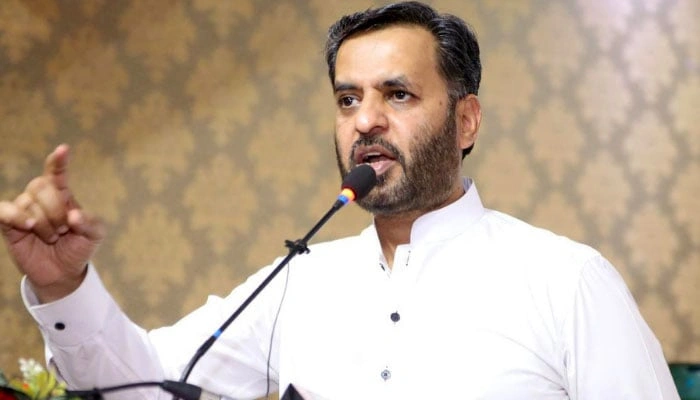

ISLAMABAD: Federal Minister for National Health Syed Mustafa Kamal revealed that Pakistan currently has 84,000 registered HIV patients, of whom 61,000 are under treatment, with the remaining un-traced, vowing to investigate the alleged irregularities in global funds allocated for HIV programmes to external organisations.
Addressing a press conference, the minister said Pakistan had “emerged stronger and more influential globally,” attributing recent diplomatic and strategic gains to the leadership of Prime Minister Shehbaz Sharif, Field Marshal Asim Munir, and Deputy Prime Minister/Foreign Minister Ishaq Dar.
He said Pakistan today stood in a markedly improved position compared to two months ago, having effectively responded to national challenges, strengthened its international standing, and contributed to ongoing global peace efforts.
Turning to HIV/AIDS, Kamal shared details of the 2024–26 programme, stating that $65 million had been allocated for Pakistan. Of this, only $3.9 million was received by the government, while $61.1 million was channelled to the United Nations Development Programme (UNDP) and a private NGO.
He noted that while the government maintained full transparency regarding funds directly handled by it, there was limited visibility over the utilisation of funds managed by external organisations, adding that certain NGOs had declined to share detailed expenditure data.
Highlighting progress in screening and detection, the minister said that in 2020, 37,944 individuals were tested at 49 centres, identifying 6,910 positive cases. By 2025, the number of testing centres had increased to 97, with 374,126 tests conducted and 14,182 cases detected.
He reiterated that Pakistan currently has 84,000 registered HIV patients, of whom 61,000 are under treatment, while the remaining cases remain un-traced.
The minister emphasised that HIV is a manageable condition, stressing that timely diagnosis and treatment enable patients to live normal lives while significantly reducing transmission risks.
According to expert estimates, he said Pakistan could potentially have up to 369,000 HIV cases; however, the current prevalence rate stands at 0.1%, which remains significantly below the global average of 0.5%.
Referring to past concerns over global funding, he said investigations into alleged financial irregularities were nearing completion and those found responsible would be held accountable.
Providing regional updates, Kamal said no new HIV cases had been reported in Taunsa this year, while Islamabad recorded 618 cases, including 208 local infections and 408 referred from other areas.
Reaffirming the government’s commitment, the minister said authorities would continue expanding screening coverage, improving transparency in fund utilisation, and strengthening both prevention and treatment mechanisms nationwide.