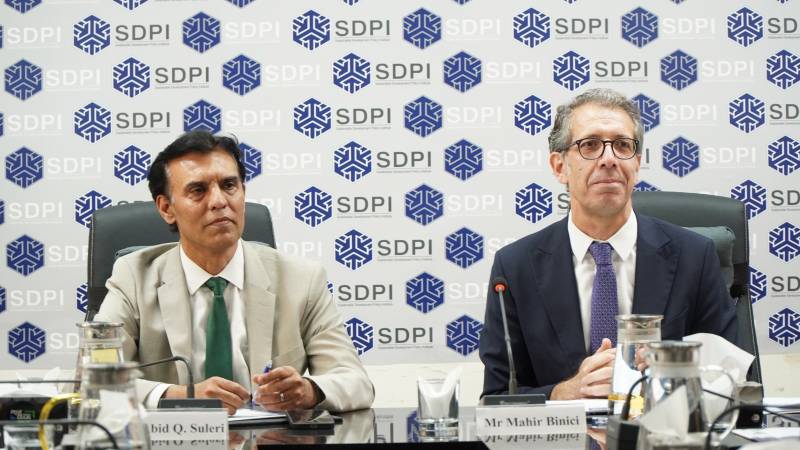

Rising tensions in the Middle East pose significant risks to both the global and Pakistani economies, an International Monetary Fund (IMF) representative said on Friday.
Maher Benyounes, speaking at an event hosted by the Sustainable Development Policy Institute (SDPI), said the ongoing regional conflict had already disrupted key economic channels, increasing uncertainty for countries reliant on imported energy and external financing.
He warned of potential shocks through energy markets, trade routes, and financial conditions.
“Tensions are affecting energy markets, trade corridors, and global financial conditions,” he said, adding that Pakistan could face spillover effects, including higher fuel and food prices.
Benyounes noted that while Pakistan’s IMF-supported programme remained “on the right track,” the country must strengthen its preparedness to deal with external shocks.
He warned that risks such as a potential slowdown in remittances and tightening global financial conditions could further strain the economy.
Pakistan, which relies heavily on imported energy, is particularly vulnerable to price volatility stemming from geopolitical instability.
The IMF official stressed that maintaining prudent fiscal policy, tight monetary discipline, and continuing structural reforms would be critical to sustaining economic stability.