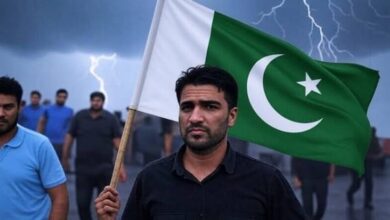
Marqa-e-Haq was a defining moment in Pakistan’s journey. It was a moment when Pakistan affirmed its sovereignty with clarity, courage and dignity. One year later, Pakistan stands not only as a nation that defended its sovereignty, but also as a country actively committed to building peace in the region and beyond.
In the face of the Iran-US-Israel conflict and rising tensions across the Middle East, Pakistan has acted as a responsible voice of restraint, dialogue and de-escalation. Through active diplomatic engagement with friendly countries and international partners, Pakistan has encouraged communication, helped prevent further escalation, supported regional stability and promoted peaceful resolution of disputes.
As we honour the spirit of Marqa-e-Haq, we are moving with equal determination towards Marqa-e-Taraqqi – the struggle for progress, prosperity and economic transformation. National sovereignty is being reinforced by economic sovereignty. Diplomatic confidence is being converted into investment, trade and technological advancement.
Under the Uraan Pakistan framework, this journey from sovereignty to peace and from peace to prosperity is being shaped into a national development mission. Our goal is clear: to build a one-trillion-dollar economy by 2035, while keeping our eyes firmly on the ambition of a three-trillion-dollar Pakistan by 2047, the year of our national centennial. This is a national transformation agenda. The government is building an ecosystem based on peace, political stability, continuity of policies, institutional harmony and an unwavering commitment to reform and modernisation.
Pakistan has begun moving steadily on the path of economic stabilisation and growth. Difficult but necessary decisions have been taken to restore macroeconomic confidence, rebuild credibility with development partners, improve fiscal discipline and revive investor sentiment. Inflationary pressures are easing, external accounts are becoming more manageable and confidence in Pakistan’s economic direction is gradually returning.
However, the Iran-US-Israel conflict and wider tensions in the Gulf region have created fresh and serious challenges. Pakistan is deeply connected to the region through energy imports, remittances, trade routes and diaspora linkages. Instability in the Gulf, therefore, has direct consequences for our economy. Yet challenges do not define a nation; its response does. Temporary shocks may require recalibrating timelines, stronger safeguards and greater resilience, but they do not weaken our resolve.
The central idea behind Uraan Pakistan is that Pakistan is moving from survival economics to growth economics. For too long, our national conversation has been dominated by deficits, borrowing, stabilisation and crisis management. These issues are important, but they cannot become our permanent destiny. We are now focusing on hunting and activating Pakistan’s engines of economic growth – the sectors, enterprises, technologies and people that can create wealth, generate exports and transform national productivity.
Our national ambition is to build an economy that does not merely survive external shocks but grows through competitiveness and value creation. This is why the transition from Marqa-e-Haq to Marqa-e-Taraqqi is so important. Pakistan’s constructive role during regional crises has strengthened its diplomatic standing as a voice for peace and de-escalation. Now Marqa-e-Taraqqi is becoming our collective economic mission for the whole of Pakistan.
The coming decade is a decade of mega changes. The global economy is being reshaped by artificial intelligence, automation, robotics, quantum technologies, biotechnology, climate transition, digital finance, new logistics networks and changing geopolitical alignments. Industrial Revolution 4.0 is already transforming production, services and trade. Industrial Revolution 5.0 is placing even greater emphasis on human-centric innovation, advanced technologies, sustainability and resilience.
For Pakistan, this means one simple truth: mega change requires mega transformation. Business as usual is not an option. A country that refuses to reform in a rapidly changing world falls behind. Therefore, the government is pursuing a bold agenda of reforms to address the challenges and opportunities of Industrial Revolutions 4.0 and 5.0.
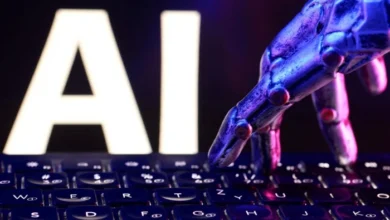
AI is being treated as a national productivity tool, not a distant slogan. We are working to adopt AI in agriculture, industry, exports, education, healthcare, governance, logistics, tax administration, public service delivery and planning. Our firms are being encouraged to use AI to improve efficiency, reduce waste, enhance quality, predict markets and compete globally. Our universities are preparing young Pakistanis for the jobs of the future. Our public institutions are being modernised through data, technology and evidence-based decision-making.
At the heart of this transformation lies the agenda of Productivity, Quality and Innovation: PQI. Pakistan cannot achieve global competitiveness based solely on low wages or traditional production. We are building competitiveness through better productivity, superior quality, stronger branding, international certification, reliable compliance, modern design, innovation, research and timely delivery. The future belongs to nations that continuously improve. It belongs to firms that innovate. It belongs to societies that reward excellence.
Amid regional adversity, Pakistan also sees new opportunities. History teaches us that every crisis reshapes economic geography. Supply chains shift, new trade corridors emerge, countries diversify partners, and markets look for reliable alternatives. Pakistan is positioning itself as a dependable economic partner for friendly countries and beyond. Our recent diplomatic gains are opening new doors for economic diplomacy, and we are converting goodwill into trade, investment and industrial cooperation.
Economic diplomacy is becoming a central pillar of Pakistan’s foreign engagement. Our embassies, trade missions, ministries, chambers of commerce and private-sector leaders are working as one team. Pakistan’s global standing will be strengthened as our products, professionals and enterprises find greater space in markets across the world.
The most important lesson for our economic future is clear: exports are the core of Pakistan’s prosperity. No country can achieve lasting economic sovereignty by relying indefinitely on borrowing. We have to earn our way in the world – and that is exactly the direction we are taking. Whether in textiles, agriculture, information technology, engineering goods, pharmaceuticals, minerals, food processing, creative industries, blue economy or services, Pakistan is expanding its export footprint.
But exports are not driven by government alone. They are led by the private sector. The government’s role is to create an enabling environment: reduce the cost of doing business, improve infrastructure, simplify regulations, ensure policy continuity, support skills development, facilitate access to finance and open new markets. The government is improving this enabling environment through reforms aimed at boosting productivity, facilitating investment, improving energy efficiency, developing infrastructure, advancing digital transformation and developing skills and human capital. Under Uraan Pakistan, we are focusing on sectors that generate exports, create employment and enhance long-term competitiveness. We are also aligning provinces, institutions, academia and the private sector around shared national priorities.
At the same time, our industrialists and exporters are embracing a new mindset. The world is unforgivingly competitive. Quality matters. Branding matters. Compliance matters. Innovation matters. Timely delivery matters. Pakistan is moving up the value chain. Corporates and industrialists are being encouraged to diversify and invest in modern technology, research, design, packaging, certification, logistics and global marketing.
The Gulf crisis has undoubtedly caused economic shocks, but it has also reinforced the urgency of reform. It has reminded us that resilience comes from diversification – diversified exports, diversified energy sources, diversified markets, diversified skills and diversified investment partners. Pakistan is reducing vulnerabilities and building buffers so that external shocks do not derail national progress.
This task is being pursued through a whole-of-nation approach. Government, opposition, provinces, armed forces, judiciary, civil service, academia, media, private sector and overseas Pakistanis all have a role in recognising that economic revival is not the agenda of one party or one government but the national agenda of Pakistan. Political stability, policy continuity and institutional harmony are essential for economic take-off. Above all, Pakistan’s youth are being placed at the centre of this transformation. We are equipping them with quality education, digital skills, scientific thinking, entrepreneurial confidence, civic values and global exposure so that they can transform Pakistan’s destiny. Pakistan Vision 2047 will be written by the hands, minds and dreams of young Pakistanis.
The road ahead may be difficult, but Pakistan has faced difficult roads before. With faith, discipline, hard work and unity, we established our sovereignty through Marqa-e-Haq. One year on, we have shown the world that Pakistan is also a responsible voice for peace, restraint and dialogue. Now, under Uraan Pakistan, we are advancing towards Marqa-e-Taraqqi.
This is the new national mission: a one-trillion-dollar economy by 2035, a three-trillion-dollar ambition by 2047 and a Pakistan that enters its centennial year as a peaceful, modern, competitive and prosperous nation.