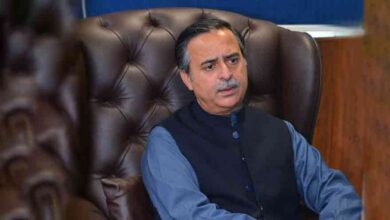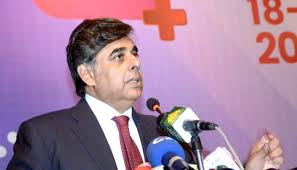

Former federal minister and chairman of the Economic Policy and Business Development (EPBD) think tank Dr Gohar Ejaz has unveiled shadow federal budget, calling for sweeping tax cuts, deep structural reforms and a growth-led fiscal framework for 2026-27, it was reported on Monday.
In a policy paper titled “A Budget for Growth, Not Just Survival,” Ejaz criticised the existing budget-making process as closed, centralised and disconnected from the business community, arguing that those responsible for generating exports, creating jobs and paying taxes are routinely excluded from decisions that directly shape economic activity.
He maintained that the country’s economic challenges are no longer primarily financial but structural and political, requiring fundamental reforms rather than incremental adjustments.
Against this backdrop, EPBD has positioned its shadow budget as a fully costed alternative aimed at shifting the focus from economic survival toward sustained growth.
According to the paper, the proposals are based on five years of official data, benchmarked against international financial institutions’ figures, and shaped through consultations with chambers of commerce and industry stakeholders.
Highlighting the scale of fiscal stress, the paper noted that Pakistan’s public debt has expanded dramatically — rising from around Rs19 trillion a decade ago to nearly Rs80 trillion — while debt servicing alone now consumes close to 60 percent of government revenues.
It argued that once debt repayments, defence spending, and government salaries are accounted for, limited resources remain for essential investments in infrastructure, health, and education.
The shadow budget also points to weak growth performance, noting that Pakistan has averaged less than two percent annual economic growth over the last three years, which it describes as inadequate for a country with a rapidly expanding population and labour force.
According to the paper, low growth has contributed to declining investment, industrial contraction and rising outward migration of skilled workers.
At the centre of EPBD’s recommendations is a broad-based tax reform package designed to lower the burden on documented sectors while expanding the tax net.
The think tank proposed reducing the top personal income tax rate from 35 percent to 20 percent, cutting the corporate tax rate from 29 percent to 25 percent and gradually lowering the General Sales Tax (GST) from 18 percent to 15 percent over three years. It also advocates abolishing the “non-filer” category, arguing that it has failed to improve documentation and instead created distortions within the economy.
The paper argued that despite substantial increases in tax collection over recent years, the country’s tax-to-GDP ratio remains stuck around 10 percent because policymakers continue to rely on the same pool of salaried individuals and formal businesses. It warned that excessive taxation of compliant sectors has accelerated capital flight and brain drain, particularly among young professionals seeking opportunities abroad.
To compensate for revenue losses from lower tax rates, EPBD has proposed a series of measures aimed at broadening the base and improving compliance. These include enhanced enforcement, wider use of e-invoicing, improved documentation of economic activity, rational taxation of tobacco and luxury goods and elimination of exemptions granted through statutory regulatory orders (SROs).
On this basis, the think tank projects that the government could still achieve revenues of Rs14.5 trillion without increasing pressure on existing taxpayers. On the expenditure side, the proposals are equally ambitious.
The shadow budget outlines a pathway to eliminating the federal fiscal deficit within three years by reducing current and development expenditures by Rs3-4 trillion, retiring costly debt, freezing the creation of new government entities, and transferring devolved responsibilities to provincial governments.
The paper concluded that Pakistan already possesses the industrial capacity, entrepreneurial base, and demographic potential required for growth, but lacks a budgetary framework that prioritizes expansion over crisis management.