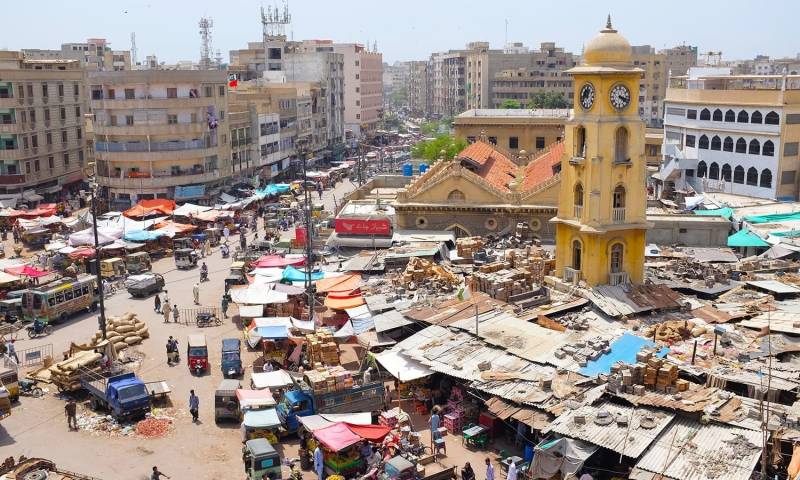

Sindh is Pakistan’s second-largest province by population and one of the country’s most important economic regions. It hosts Karachi, the nation’s financial hub, contributes a major share of national revenue, possesses fertile agricultural lands, and enjoys access to the Arabian Sea through its ports. Despite these advantages, large parts of Sindh, particularly rural and interior Sindh, continue to face widespread poverty, poor public services, inadequate infrastructure, weak educational outcomes, and alarming healthcare deficiencies. The persistent underdevelopment of Sindh raises an important question: why has a province blessed with enormous resources failed to translate its potential into prosperity for its people?
The answer lies in a combination of historical, political, administrative, social, and economic factors. Among these, governance failures stand out as the most significant. For decades, development policies have often prioritized political interests over public welfare. While successive governments have announced ambitious development programs, implementation has frequently remained weak due to corruption, inefficiency, and lack of accountability. As a result, many projects either remain incomplete or fail to deliver meaningful benefits to ordinary citizens.
The role of political leadership deserves particular scrutiny. The Pakistan Peoples Party (PPP) has governed Sindh for most of the period since 2008 and has maintained a strong political presence in the province for decades. Its supporters argue that the party has protected Sindh’s political rights and democratic interests. Prolonged rule should have produced better outcomes in education, healthcare, water management, and infrastructure. Despite substantial provincial budgets, millions of Sindhis still struggle to access clean drinking water, quality schools, and modern healthcare facilities. The gap between political promises and public realities has become increasingly visible.
Feudalism remains another major obstacle to development. Large landholdings continue to dominate much of rural Sindh, concentrating economic and political power in the hands of influential landlords. In many areas, these landowners exert considerable influence over local politics, administration, and voting patterns. Such a system often discourages social mobility and limits opportunities for ordinary citizens. Dependence on powerful local elites has prevented the emergence of stronger grassroots institutions capable of demanding accountability and better governance.
Tribal structures and local power networks have also contributed to underdevelopment in certain regions. While tribal traditions form an important part of Sindh’s cultural fabric, excessive concentration of authority among tribal chiefs has sometimes weakened state institutions. Disputes are often settled through informal systems rather than through effective legal and administrative mechanisms. This has hindered the development of modern governance structures and discouraged private investment in some areas.
The provincial bureaucracy shares responsibility for many governance failures. Administrative inefficiency, political interference in appointments and transfers, lack of meritocracy, and weak oversight have undermined the delivery of public services. Funds allocated for development often fail to reach intended beneficiaries because of bureaucratic delays, corruption, or poor planning. Without a professional and accountable civil service, even well-designed policies struggle to achieve meaningful results.
Numerous reports have highlighted the existence of non-functional schools, teacher absenteeism, inadequate facilities, and poor learning outcomes in many districts of interior Sindh. Although budget allocations for education have increased over times, the quality of education remains unsatisfactory. Many children, particularly girls in rural areas, continue to face barriers to schooling. The consequences are severe: low literacy rates, limited employment opportunities, and continued cycles of poverty.
Healthcare conditions are equally troubling. Many rural hospitals and basic health units suffer from shortages of doctors, medicines, equipment, and trained staff. Patients often travel long distances to receive treatment in urban centers. Maternal and child health indicators remain concerning in several districts even Larkana the base of ruling Pakistan People’s Party . The lack of investment in healthcare infrastructure and human resources has left millions without access to quality medical services.
Water scarcity and access to clean drinking water have become critical issues across Sindh. Many communities consume contaminated water, leading to waterborne diseases and chronic health problems. Poor water management, aging infrastructure, environmental degradation, and disputes over water distribution have compounded these challenges. In some districts, residents continue to rely on unsafe sources despite repeated Sindh government commitments to improve water supply systems.
Economic inequality further explains Sindh’s developmental imbalance. While Karachi generates significant economic activity, the benefits of growth have not been evenly distributed throughout the province. Rural districts often lack industrial investment, modern infrastructure, and employment opportunities. This disparity has fueled migration toward urban centers, placing additional pressure on cities already struggling with housing, transportation, and public services.
Climate-related challenges have intensified existing vulnerabilities. Floods, droughts, waterlogging, and environmental degradation have severely affected agriculture and rural livelihoods. The devastating floods of recent years exposed weaknesses in disaster preparedness and resilience planning. Many affected communities continue to face difficulties rebuilding their lives and livelihoods.
It would be simplistic to place responsibility on a single actor. The underdevelopment of Sindh is the result of collective failures involving political parties, feudal elites, segments of the bureaucracy, weak local governments, and inadequate accountability mechanisms. Federal-provincial disputes, historical inequalities, and broader national governance challenges have also played a role. However, those who have exercised power and authority within the province bear the greatest responsibility for ensuring that public resources translate into public welfare.
The future of Sindh depends on fundamental reforms. These include strengthening local governments, improving transparency in public spending, ensuring merit-based administration, expanding access to quality education and healthcare, promoting industrial development in rural districts, reforming land governance, and investing in water management and climate resilience. Most importantly, governance must shift from serving political interests to serving citizens.
Sindh possesses immense human and natural potential. Its people are resilient, hardworking, and rich in cultural heritage. The province’s continued underdevelopment is not the result of a lack of resources but of a failure to utilize them effectively. If meaningful reforms are pursued and accountability becomes a governing principle, Sindh can overcome its longstanding challenges and emerge as a model of inclusive and sustainable development. The question is no longer whether Sindh has the capacity to prosper; it is whether its leadership and institutions possess the will to make that prosperity a reality for all Sindhis.