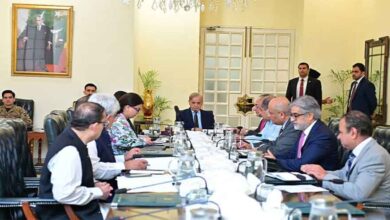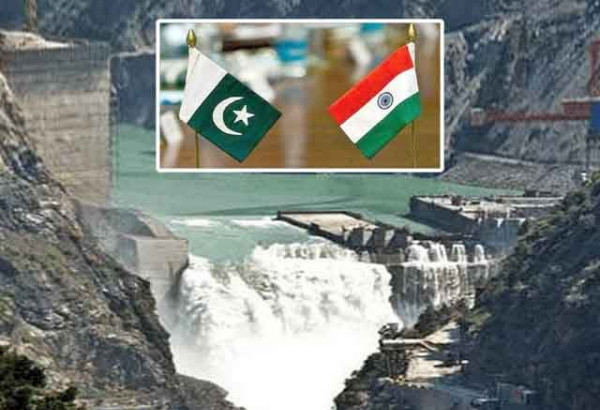

ISLAMABAD: A high-level international seminar on the Indus Waters Treaty (IWT) is underway at the Jinnah Convention Centre in Islamabad, bringing together federal ministers, political leaders, water experts and senior officials to discuss the treaty’s significance, water security and regional cooperation.
Addressing the opening session, Federal Minister for Information and Broadcasting Attaullah Tarar described the event as an important opportunity to reaffirm Pakistan’s commitment to protecting its water rights. He said the discussion was not only about an international agreement but also about the lifeline of Pakistan’s 240 million people.
Tarar said the Indus River has sustained one of the world’s oldest civilizations for thousands of years and remains central to Pakistan’s history, agriculture and economy. He noted that the 1960 Indus Waters Treaty has long been regarded as one of the most enduring international water-sharing agreements and said Pakistan has consistently honoured its commitments through peaceful engagement and constructive dialogue.
The minister reiterated that water is a matter of national survival for Pakistan and warned that any attempt to deprive the country of its rightful share would receive a firm response. He also criticised India’s decision to unilaterally suspend the treaty, saying Pakistan would continue to defend the agreement and safeguard its legal and historical rights over the waters of the Indus River system.
Speaking at the seminar, water expert Mehr Ali Shah said the treaty is more than a legal document, calling it vital to Pakistan’s agriculture, food security and economic stability. He added that the agreement has played a key role in reducing tensions between two nuclear-armed neighbours by providing a structured framework for resolving water-related disputes.
Shah explained that the treaty contains a comprehensive dispute resolution mechanism, including provisions for the exchange of river flow data and referral of unresolved issues to neutral experts or international arbitration. He noted that Pakistan has approached international arbitration on two occasions regarding disputed Indian hydropower projects, adding that arbitration bodies have clarified that India cannot unilaterally suspend or terminate the treaty.
He further stated that international rulings have also directed India not to interfere with the natural flow of the western rivers allocated to Pakistan. According to Shah, India’s reported suspension of the treaty and its failure to implement certain obligations since August 2023 are inconsistent with the agreement’s provisions.
Participants at the seminar emphasized the need to preserve the sanctity of the Indus Waters Treaty and strengthen regional cooperation to ensure sustainable management of shared water resources.