

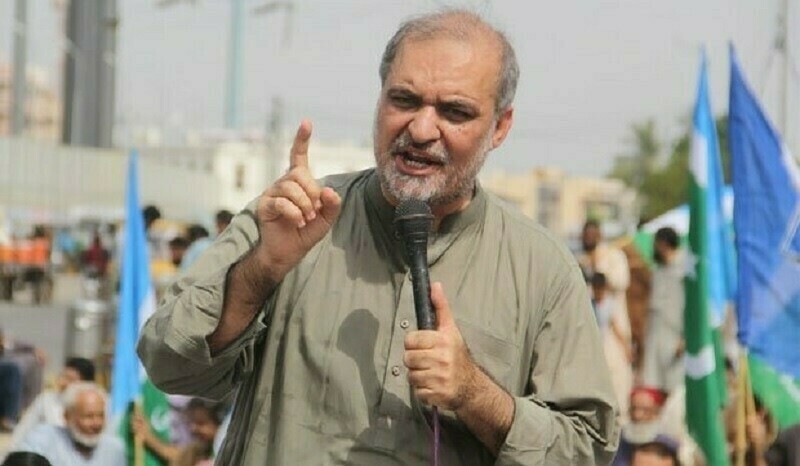

LAHORE: Jamaat-e-Islami chief Hafiz Naeemur Rehman has warned Prime Minister Shehbaz Sharif that his party will be willing to meet the premier, but will not hold further talks if the government fails to provide meaningful relief to the public. He said the struggle would then move to the streets, where decisions would be made through public action.
Addressing a press conference at Mansoorah in Lahore, Hafiz Naeem said Jamaat-e-Islami was preparing for a long march to Islamabad against government policies and the rising financial burden on citizens.
He said the government should implement the solutions proposed by his party to address public concerns. According to him, growing anger among citizens reflects frustration over rising prices, heavy taxation and the continued protection of powerful business interests.
Discussing petroleum prices, the Jamaat-e-Islami chief said oil marketing companies continued to earn substantial profits, while excessive refinery profits and the petroleum levy were adding to the burden on consumers.
He claimed that petrol could be sold for around Rs225 per litre if the petroleum levy were abolished and unjustified refinery profits were eliminated.
Hafiz Naeem said his party had been campaigning against the petroleum levy for a long time through public gatherings, protests, signature campaigns and sit-ins. These efforts had prompted the government to provide some relief through fuel price reductions, he added, but the measures remained insufficient.
He disclosed that government ministers had contacted Jamaat-e-Islami’s committee again to discuss the party’s demands. He said his party had never refused a meeting with the government but did not want negotiations to become a mere formality without producing practical results.
Reiterating his party’s position, Hafiz Naeem demanded the complete removal of the petroleum levy. He criticised the government for citing its commitments to the International Monetary Fund (IMF) as a reason for not abolishing the levy, arguing that the measure was possible if the government demonstrated the necessary political will.
He accused the government of increasing the tax burden on ordinary Pakistanis while allowing influential groups to expand their profits. He said citizens were required to account for their earnings and expenses, whereas powerful business interests enjoyed considerable freedom.
The Jamaat-e-Islami leader also criticised government spending, saying higher diesel prices increased the cost of goods and services across the economy. He argued that although the IMF had called for a reduction in government expenditure, steps to cut official spending had not been taken adequately.
Hafiz Naeem further criticised the country’s banking and interest-based financial system. He said the government should take practical steps to eliminate interest, but had instead raised the policy rate to 11.5 per cent.
He alleged that the country’s economic structure favoured banks and powerful commercial groups, including businesses linked to flour, sugar, oil refineries and private power generation. According to him, the interests of these sectors were interconnected, leaving millions of citizens struggling with rising living costs while a small number of people continued to accumulate wealth.
He questioned why the government continued to make promises about eliminating interest if it was unwilling to take concrete action.
Regarding his proposed meeting with Prime Minister Shehbaz Sharif, Hafiz Naeem said Jamaat-e-Islami would assess the government’s response to its demands. He warned that if the meeting failed to deliver relief, his party would not pursue further negotiations and would instead intensify its street movement.
He also announced that Jamaat-e-Islami would make an important announcement on the evening of the day of the proposed meeting with the prime minister.
Separately, Hafiz Naeem expressed concern over the situation in Palestine, saying Palestinians continued to face displacement and Israeli attacks. He criticised what he described as the lack of effective action to stop the violence and questioned the role of Muslim leaders and the Board of Peace in addressing the crisis.