
Global oil prices remained near multi-month highs on Tuesday after registering sharp gains in the previous session, as investors closely monitored developments surrounding negotiations between the United States and Iran and the future of maritime traffic through the strategically important Strait of Hormuz.
Brent crude futures edged higher in early trading, rising 6 cents to $95.04 per barrel, while U.S. West Texas Intermediate (WTI) crude slipped 17 cents to $91.99 per barrel. Despite the slight movements, both benchmarks retained most of the gains achieved on Monday when prices surged by more than five percent amid heightened geopolitical uncertainty in the Middle East.
Market sentiment has been driven largely by conflicting signals regarding ongoing diplomatic efforts between Washington and Tehran. U.S. President Donald Trump stated on Monday that discussions with Iran were continuing and expressed optimism that an agreement could be reached to extend the existing ceasefire arrangements and facilitate the reopening of the Strait of Hormuz within the coming week.
However, uncertainty persisted after Iran’s Tasnim News Agency reported that Tehran had suspended indirect negotiations with the United States. The conflicting statements left traders struggling to assess the likelihood of a diplomatic breakthrough and its potential impact on global energy supplies.
Adding to the mixed signals, President Trump told CNBC earlier that he would not be concerned if the talks ended, before later taking to social media to reiterate that negotiations remained active. In remarks cited by ABC News, Trump said he expected progress toward a broader agreement that could help restore stability in the region and ease concerns over shipping disruptions.
Energy analysts said the market’s direction would continue to depend heavily on developments in U.S.-Iran relations.
“The market is currently focused on whether there is meaningful progress or any setbacks in the negotiations between Washington and Tehran,” said Tim Waterer, Chief Market Analyst at KCM Trade. He noted that traders are also closely watching Iranian statements regarding the Strait of Hormuz and monitoring actual tanker movements through the waterway.
According to Waterer, the geopolitical risk premium currently embedded in oil prices could either remain in place or gradually fade depending on the outcome of diplomatic efforts.
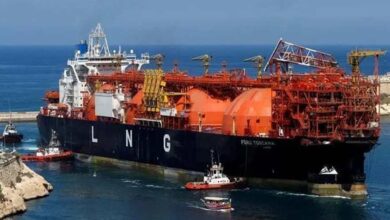
The Strait of Hormuz remains a key concern for global energy markets. The narrow shipping corridor serves as one of the world’s most important energy transit routes, handling roughly one-fifth of global oil and liquefied natural gas shipments. Since the outbreak of regional hostilities, Iran has significantly restricted non-Iranian shipping activity in and out of the Gulf, disrupting trade flows and contributing to a sharp rise in energy prices.
Analysts estimate that oil prices have climbed by more than 50 percent since tensions escalated, reflecting fears of prolonged supply disruptions and growing uncertainty surrounding global energy security.
Meanwhile, Lebanon announced a partial ceasefire agreement between Hezbollah and Israel on Monday, a development that could represent a limited easing of regional tensions. While the arrangement does not directly address the broader conflict involving Iran, investors welcomed any signs of de-escalation in a region that remains central to global oil supply chains.
Tony Sycamore, market analyst at IG, said oil markets are likely to remain highly sensitive to developments in the Middle East.
“With geopolitical headlines continuing to emerge almost daily, oil prices are expected to remain volatile until investors see clear and verifiable progress toward a lasting peace agreement,” he said.
The recent surge in crude prices has also boosted demand for alternative supply sources. U.S. crude exports climbed to a record 5.6 million barrels per day in May, according to ship-tracking estimates, as refiners in Europe and Asia sought additional supplies amid concerns over Middle Eastern exports.
At the same time, expectations of tighter supplies in the United States have provided additional support to prices. A preliminary Reuters survey indicated that U.S. crude inventories likely declined by around 3.6 million barrels during the week ending May 29. Stocks of gasoline and distillates are also expected to have fallen, suggesting steady fuel demand and tighter market conditions.
Industry leaders gathered at a shipping conference in Athens on Monday stressed that any future agreement between the United States and Iran would need to include clear guarantees regarding freedom of navigation through the Strait of Hormuz. Shipping companies remain cautious about resuming normal operations without firm assurances on safety and access.
For now, traders are expected to remain focused on diplomatic developments, shipping activity, and inventory data, all of which will play a critical role in determining whether oil prices continue their upward trajectory or retreat as geopolitical tensions ease.