
Pakistan’s mango export industry is bracing for a challenging season after exporters lowered their export target by nearly 30 percent, citing geopolitical instability in the Middle East, escalating transportation costs, and weather-related damage to mango orchards.
The Pakistan Fruit and Vegetable Exporters, Importers and Merchants Association (PFVA) announced that mango exports for the current season are now expected to reach around 80,000 tons, significantly lower than last year’s 110,000 tons. As a result, export earnings are projected to decline to between $75 million and $80 million, compared with approximately $110 million generated during the previous season.
The export season officially commenced on Sunday, with the first consignments of fresh Pakistani mangoes dispatched to international destinations. However, industry stakeholders fear that multiple challenges could substantially limit export volumes and reduce foreign exchange earnings.
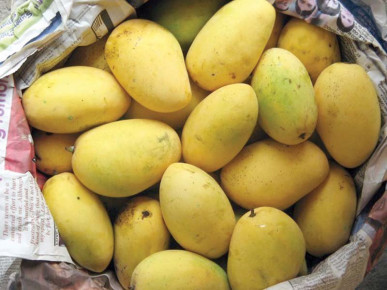
Pakistan ranks among the world’s leading mango-producing countries and is renowned for premium varieties such as Sindhri, Chaunsa, Anwar Ratol, Langra, and Dussehri. The fruit remains one of the country’s most valuable horticultural exports, with Gulf countries traditionally accounting for the largest share of overseas demand.
According to PFVA Patron-in-Chief Waheed Ahmed, exporters have been compelled to revise expectations due to an increasingly uncertain regional environment.
He noted that the industry is facing extraordinary circumstances that have disrupted trade flows and complicated export planning. As a result, the association decided to reduce the export target from 110,000 tons to 80,000 tons for the current season.
A major concern for exporters is the ongoing instability across the Middle East, a region that represents a crucial market for Pakistani mangoes. Trade routes have been affected by heightened tensions involving Iran, Israel, the United States, and several regional actors, leading to delays in cargo movement and increased shipping risks.
The Gulf region alone absorbs roughly 35 percent of Pakistan’s mango exports each year. Exporters also rely on land routes through Afghanistan to access Central Asian markets, but ongoing regional uncertainties have complicated logistics and raised concerns about supply chain disruptions.
Industry representatives say the closure of key transit corridors and uncertainty surrounding regional conflicts have made it difficult to forecast market conditions for the coming months. Exporters are increasingly cautious about committing large volumes to overseas buyers amid fears of sudden transport interruptions.
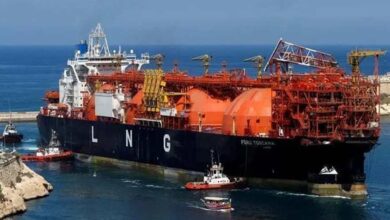
Adding to the pressure is a sharp increase in freight charges. Exporters report that sea freight costs to Gulf destinations have surged dramatically compared with last year. Container shipping rates that previously ranged between $1,200 and $1,400 have climbed to as much as $6,000 to $7,000 per container in some cases, significantly raising export costs.
Air cargo rates have also witnessed substantial increases, more than doubling from previous levels and approaching $2 per kilogram. The higher transportation expenses are squeezing profit margins and making Pakistani mangoes less competitive in key international markets.
Climate-related factors have further compounded the industry’s difficulties. Unseasonal weather patterns, including extreme heat and fluctuating temperatures during critical stages of fruit development, have affected mango production in several growing regions. Exporters and growers fear that lower yields could reduce the volume of export-quality fruit available this season.
Agriculture experts warn that climate variability is becoming an increasingly serious challenge for Pakistan’s fruit sector, affecting both production and quality. Combined with geopolitical uncertainties and rising logistics costs, these factors are creating significant headwinds for exporters.
Despite the challenges, exporters remain hopeful that strong international demand for premium Pakistani mango varieties will help sustain sales in major markets across the Gulf, Europe, North America, and East Asia. Industry leaders are urging the government to facilitate exporters through improved logistics support, trade facilitation measures, and efforts to reduce freight-related costs.
With the mango season now underway, stakeholders will be closely monitoring regional developments and market conditions, hoping that stability in trade routes and shipping networks will help minimize losses and support one of Pakistan’s most celebrated agricultural exports.