
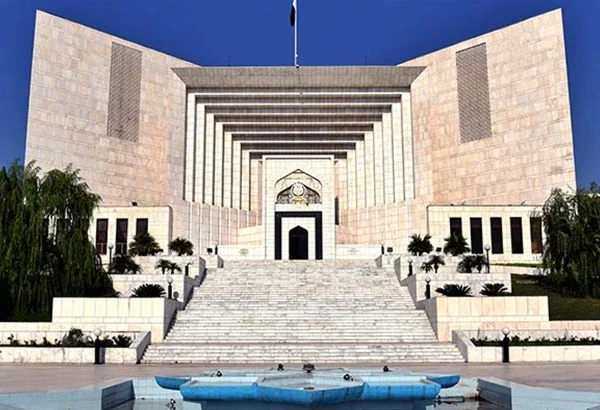

ISLAMABAD: The Supreme Court of Pakistan has introduced a modern digital system that allows hearings to take place online across different cities, marking a major change in how justice is delivered in the country.
According to an official statement, the court has adopted advanced technology to make the judicial process more transparent, efficient and accessible for citizens. The new system enables judges, lawyers and litigants to join hearings from different locations without needing to be physically present in one courtroom.
In a recent important case, a bench sat at the court’s main seat in Islamabad while lawyers appeared through video link from Quetta, Hyderabad and Karachi. The hearing was conducted smoothly, showing that the new system can effectively connect multiple cities at the same time.
Earlier this week, the court also demonstrated flexibility when there was a sudden change in the bench. Chief Justice of Pakistan Yahya Afridi presided over the proceedings from Islamabad, while Justice Ayesha A. Malik joined from Lahore through video link. Despite being in separate cities, the hearing continued without any disruption.
On Wednesday, the entire cause list was heard with the bench sitting in Islamabad and lawyers appearing from Quetta, highlighting the growing use of digital tools in court proceedings.
One of the most significant changes is the shift from traditional paper files to fully digital case records. Judges and lawyers now use electronic files during hearings, removing the need to physically retrieve documents from court offices. This move is expected to save time and improve transparency.
The court has also introduced several other reforms as part of its digital transformation. Case files have been digitised and barcoded for better tracking. Online case filing has been launched to reduce delays. Court orders are now sent electronically for quicker delivery. Digital payment systems have been introduced to simplify procedures, and an e-office system has been set up to manage internal operations more efficiently.
With these reforms, the Supreme Court is moving towards a technology-based judicial model that reduces distance barriers and makes the justice system more citizen-friendly. Officials say the changes are aimed at ensuring faster, more transparent and more inclusive access to justice across Pakistan.